
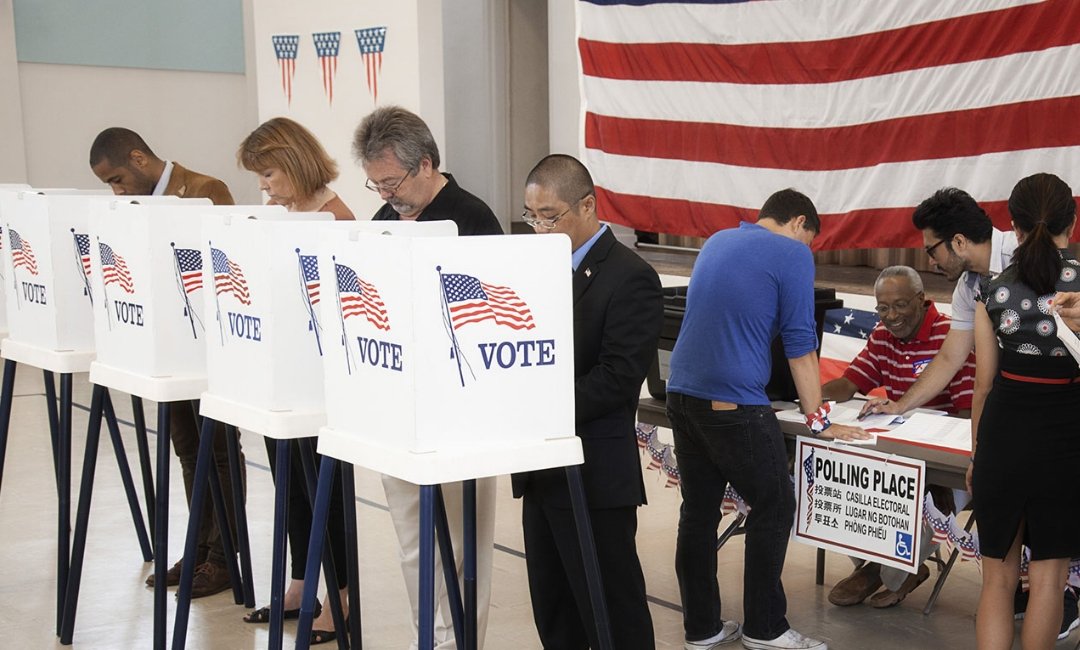
Why So Much Hate Against Us? Fight It – Go Vote
By Ajay Jain Bhutoria
Ask any Indian American family what this October feels like.
A mother checks the temple parking lot before she lets her kids out of the car. An engineer refreshes the Visa Bulletin and sees the same date he saw last year. A grandmother quietly asks whether we are still welcome here.
We heal patients, teach, build companies, create jobs, serve our communities and pay taxes. India has been a steady democratic friend to America. And yet the message we keep hearing is that we are a problem. It is literally too much.
We are anxious. We are tired. And underneath it all, we are angry. That anger is turning into resolve.
The hate is real, it is measured, and it is turning violent
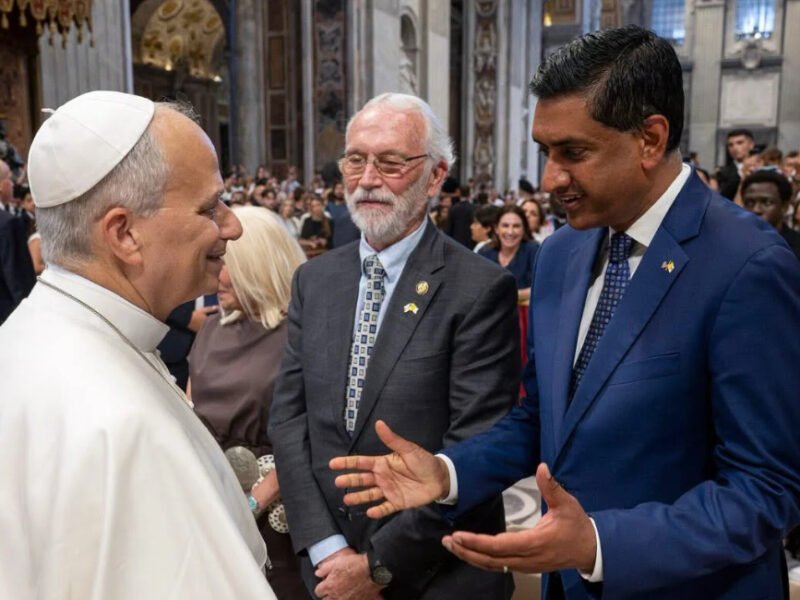
On October 11, a 19-year-old drove to the Sri Venkateswara Swami (Balaji) Temple in Aurora, Illinois. He tried to shoot a man outside, and his rifle jammed. Investigators reported a manifesto targeting people of Indian descent.Rep. Raja Krishnamoorthi was praying inside with his family.
Secretary of State Marco Rubio said the same day: “There are individuals within our country, sadly, who are stupid, who are dumb or hateful. I don’t believe anti-India hate in the US is widespread.”
With respect, Mr. Secretary, the numbers say otherwise:
· 542,000+ anti-South Asian hateful posts on X between January 2025 and June 2026.
· 1 in 4 Indian American adults say they have been called a slur since early 2025 (Carnegie Endowment).
· 32 anti-Hindu hate-crime offenses reported to the FBI in 2025. A record, even as overall hate crime fell.
· 20 temple vandalism incidents since 2022 in the U.S., Canada and Australia (Hindu American Foundation).
Why now?
Hate does not appear from nowhere. Start with our screens. Platforms earn ad revenue from engagement, and nothing engages like outrage, so their algorithms amplify provocative, polarizing posts and trap users in echo chambers. Half a million hateful posts did not spread by accident.
Then there is economic strain: competitive, market-driven systems can foster a “me-first” mindset in which success or failure feels purely personal, despite broader economic hurdles. When people fall behind, a visible, successful immigrant community becomes an easy target.
Our politics adds fuel. Disagreements over national identity, governance, leadership and social values are heightened by public rhetoric and political branding on every side, until policy debates sound like arguments over who belongs.
Finally, there are diverging expectations. Many Americans feel they followed the traditional rules to build a stable life, yet structural shifts, cost-of-living increases and changing cultural norms make those efforts feel unrewarded or unfair. That frustration is real, and we share it. We, too, did everything right. Blaming one another deepens the wound for everyone.
Then there is the exhaustion of living one USCIS notice away from upheaval:
· $100,000 fee on new H-1B petitions under a 2025 proclamation, blocked by federal courts and under appeal.
· Oct. 8: The Labor Department froze green-card labor certifications for Microsoft, Adobe, Infosys, TCS, Wipro, HCL, Cognizant and Capgemini. No end date.
· Oct. 14: DHS proposed ending “deference” to prior approvals, so every H-1B renewal starts from zero.
· H-4 spouses lost automatic work-permit extensions on renewals filed from Oct. 30, 2025.
· Nov. 1, 2013: India’s EB-2 cutoff in the November Visa Bulletin. A 13-year wait.
If the concern is fraud, let’s have transparency: post every PERM and H-1B job on one national public portal. American workers see every opening, and lawful immigrants stop being punished for following the rules.
Let’s not forget the tariffs.
In August 2025, Washington imposed a 50% tariff on Indian goods, including a 25% penalty over Russian oil. February’s interim framework brought it down to 18%. Rubio says a deal is “99%” done, but it is unsigned, and trust takes longer to rebuild than tariffs take to impose.
Our voice has a number
Carnegie’s 2026 Indian American Attitudes Survey finds 20% approve of President Trump’s handling of U.S.-India relations (55% disapprove) and 29% approve of his overall performance.
The June–July 2026 AAPI Voter Survey from APIAVote and AAPI Data found that 66% of Indian American registered voters back Democrats for the House, 18% Republicans, and 92% plan to vote.
Carnegie adds a caution: our attachment to Democrats has softened since 2020, and more of us call ourselves independents. Nobody owns our vote.
Other Americans are hurting too: EIA put diesel at $6.28 a gallon on Oct. 19, $2.66 above a year ago. Their pain and ours have more in common than the algorithms let on.
But polls are not votes.
We do not answer fear with fear, or hate with hate. We can answer with participation:
· Check your registration.
· Vote by Nov. 3.
· Bring your parents and mandir friends.
· Then file a comment on docket USCIS-2026-0529.
We build here. We pray here. We serve here. We play by the rules. We create jobs. We are patriots. We are Americans. And we vote.
(Bhutoria is based in Fremont, CA. He served as a member of the President Biden’s Advisory Commission on Asian Americans.)

Vijay
/
I am hoping that things will change after November 3 for the better.
October 30, 2026pemba
/
It is Karma, Hindus hate members of Dalit, community, so they get hate in return. No need for all this fuss.
October 30, 2026