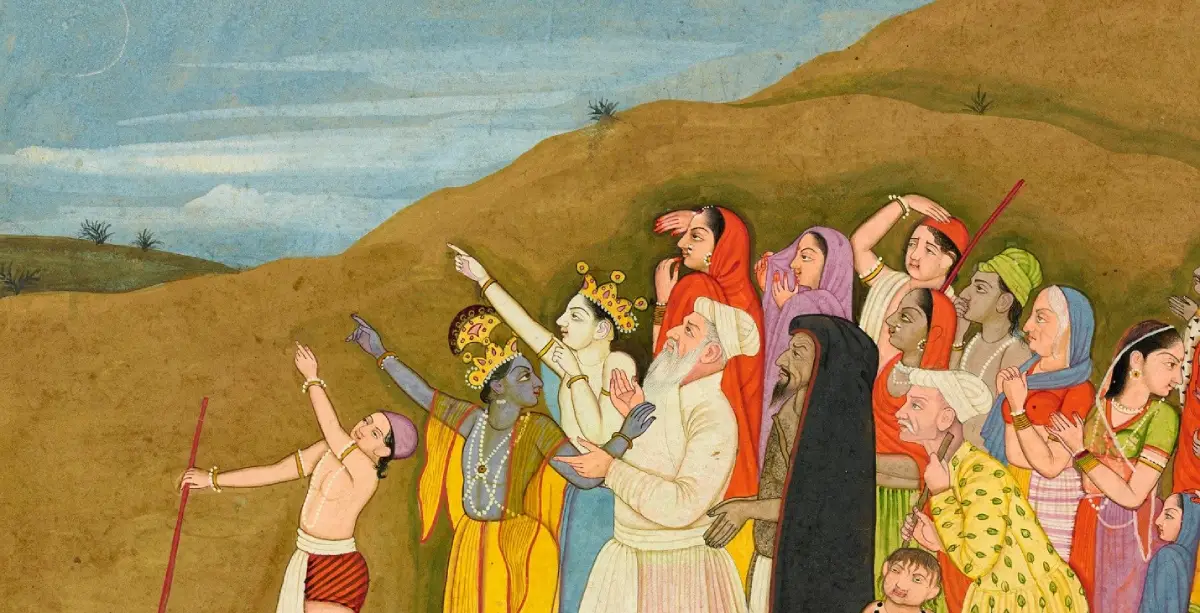
Sacred Landscapes And Courtly Art: Pahari Paintings To Be Showcased At The Smithsonian
Photo: Smithsonian
India-West Staff Reporter
WASHINGTON, DC – High in the Himalayan foothills, in small courtly kingdoms far from imperial capitals, artists once created some of the most intimate and refined paintings in South Asia. Next spring, many of those works, including several never shown publicly, will come into view thousands of miles from their place of origin, at the Smithsonian’s National Museum of Asian Art, here.
Titled ‘Of the Hills Pahari Paintings from India’s Himalayan Kingdoms,’ the exhibition will run from April 18 through July 26, 2026, bringing together 48 paintings and drawings made between 1620 and 1830. Drawn from the museum’s holdings, the renowned Benkaim collection and loans from the Cleveland Museum of Art, the show traces the evolution of Pahari painting, a tradition known for its lyricism, spiritual depth and technical brilliance.
At the heart of the exhibition is an international scholarly collaboration that bridges Indian cultural expertise and American museum practice. Curators worked closely with Indian specialists Catherine Glynn Benkaim, Vijay Sharma and Sarang Sharma, a partnership that also produced a new catalogue, the museum said. Together, the exhibition and publication aim to deepen understanding of a body of work that remains beloved but often misunderstood.
The exhibition is organized into three chronological sections, reflecting shifts in style and patronage across two centuries. These were works created for small Hindu courts tucked into the mountains, where artists adapted broader Mughal and Rajput influences into something distinctly local. Using opaque watercolors made from ground minerals, gold leaf and even beetle wings, painters achieved jewel like surfaces and remarkable durability.
Among the highlights is a folio from the Bhagavata Purana dating to around 1775 to 1780, attributed to the successors of the celebrated artists Manaku and Nainsukh. The painting exemplifies the maturity of the Pahari style, balancing narrative clarity with emotional subtlety and finely observed natural settings.
Visitors will enter the show through a gallery that introduces the Himalayas as a sacred geography. For Pahari painters, the surrounding peaks were not merely landscapes but living presences, infused with myth, devotion and regional identity. By blending local traditions with transregional ideas, artists created images that feel both intimate and expansive.
The Washington exhibition coincides with a wider institutional focus on Himalayan art in the United States, including Epic of the Northwest Himalayas at the Cleveland Museum of Art and Longing Painting from the Pahari Kingdoms at the Cincinnati Museum of Art. Together, these shows mark a rare moment of sustained attention to a tradition long overshadowed by larger imperial schools.