One City, One Home For All: The 66th Annual LA County Holiday Celebration
By Fatema Baldiwala
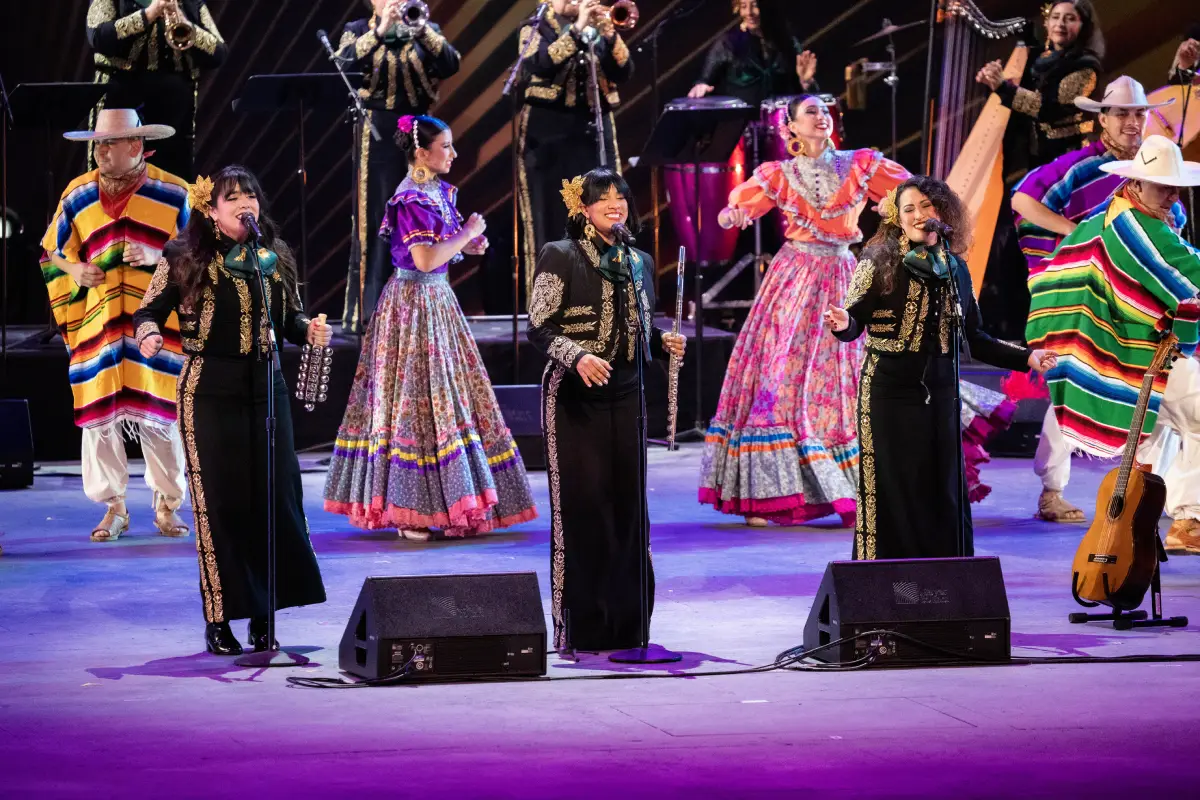
LOS ANGELES, CA – On December 24, the Dorothy Chandler Pavilion opened its doors, freely and fully, to the people of Los Angeles County for the 66th Annual LA County Holiday Celebration, hosted by Aloe Blacc and Maya Jupiter. Sponsored by the Los Angeles County Board of Supervisors, the annual event stands as a living promise: that culture, like belonging, should never be gated by cost, status, or background.
This three-hour production brought together community-based and professional choirs, music ensembles, and dance companies, weaving a vibrant tapestry of how Los Angeles celebrates the holidays. The 2025 theme: “Home” felt especially resonant in a year shaped by uncertainty, rebuilding, and quiet resilience.
In the opening moments, home was defined not as a single location, but as a metropolis: Los Angeles, “made of more than 140 cultures, where our diverse sounds, songs, and art keep all 10 million of us connected.” It was a definition that resonated deeply with many South Asian audience members, for whom plurality is not an abstraction but a lived reality.
From Downtown to San Fernando Valley, Antelope Valley to the South Bay, Pomona to the Pacific Coast Highway, Los Angeles County showed up for itself. Home, the evening suggested, is not merely a place the region’s many communities gather, not to erase difference, but to celebrate it. Home, the evening suggested, is not merely a place you arrive at. It is something you are allowed to define for yourself.
Supervisor Lindsey Horvath captured this sentiment poignantly: “When I arrived here, I found community- a chosen family and a sense of belonging I had never known before. In choosing Los Angeles, I chose a place where service matters and diversity is our strength.”
For many in the audience-particularly immigrants and children of immigrants-those words landed deeply.
Hosts Maya Jupiter and Aloe Blacc brought both joy and intentionality to the stage. Introducing the theme of Family, Jupiter invited her children, Mandela and Satya, to join her before welcoming her husband, Aloe Blacc, to perform a Christmas song- a gift, she said, from their family to the community.
Blacc, the Grammy-nominated singer-songwriter behind anthems like Wake Me Up and I Need a Dollar, continues to use music as a vehicle for purpose. His work draws from real-life stories of nonprofit founders, humanitarians, and everyday heroes, reminding audiences that one good song can still change everything.
Jupiter’s own work reflects this ethos. Through collective songwriting, youth workshops, and her involvement with Evolve Altadena: an organization grounded in native land stewardship and equitable recovery-she demonstrates how art can heal, empower, and rebuild community.
Notably, while this year’s celebration did not feature Indian or South Asian dance or musical performances as in some previous years, the audience itself reflected Los Angeles’ deep South Asian presence.
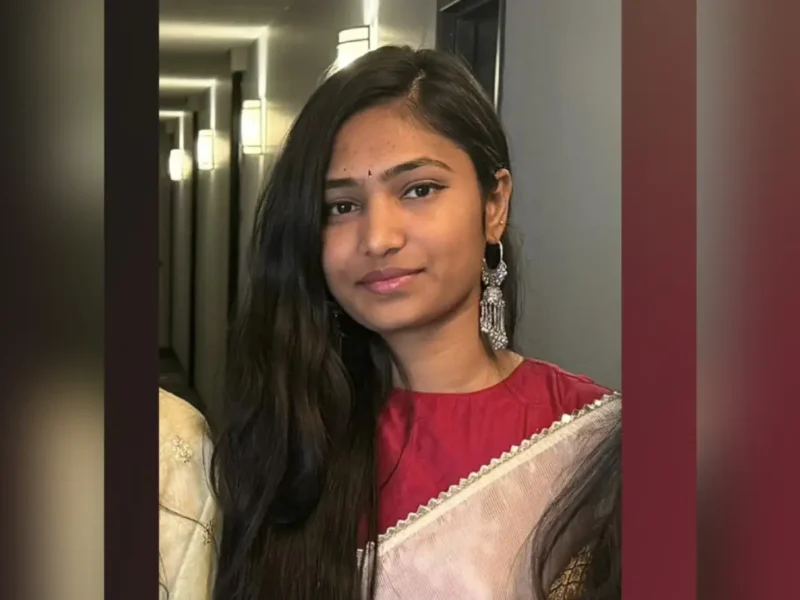
Among them was a young, newly graduated Indian student from CSUN, Los Angeles, can feel surprisingly familiar. Like India, it is not one culture but many-layered, overlapping, sometimes chaotic, and often beautiful. Both are places where languages change every few miles, where food, music, and faith travel across neighborhoods, and where identity is something, you carry, not something you leave behind.
Yet as the music swelled, something shifted.
“I didn’t know if I belonged here,” he said softly. “But when everyone started singing together, it felt safe. Music doesn’t ask where you’re from. It just lets you be.”
His words echoed the unspoken truth of the evening: music bridges difference, and community is built in moments like these.
For immigrants and children of immigrants, especially those newly finding their footing, that idea matters. In India, home often stretches across cities, states, and generations. In Los Angeles, it stretches across borders, languages, and lived experiences. Both demand resilience. Both offer reinvention.
As music filled the Dorothy Chandler Pavilion, the message was unmistakable: belonging does not require sameness. It requires presence, participation, and the courage to take up space.
For that young Indian graduate sitting quietly in the audience, navigating a new city, new rules, and unspoken fears Los Angeles felt less foreign in that moment. Like India, it revealed itself as a place held together not by uniformity, but by shared sound, shared breath, and shared hope.
And in that realization, Los Angeles became something more than a city.
It became home.