
Dislike Of Trump, Rising Hate, And Tepid Dem Gains Shape Indian American Politics
India-West News Desk
WASHINGTON, DC – Indian Americans express broad dissatisfaction with the Republican Party and President Donald Trump. Roughly seven in ten disapprove of Trump’s overall job performance, and majorities reject his handling of immigration and the economy.
Nearly half fault the GOP for fostering discrimination against Indian Americans, and at least one third view the party as intolerant of minorities. Many respondents also report rising concern about online hostility and anti-Indian rhetoric.
In Indian Americans in a Time of Turbulence: 2026 Survey Results, authors Sumitra Badrinathan, Devesh Kapur, Andy Robaina, and Milan Vaishnav draw on fresh data from the 2026 Indian American Attitudes Survey to map these shifts. The nationally representative online poll of 1,000 Indian American adults, conducted between November 25, 2025, and January 6, 2026, in partnership with YouGov and published by the Carnegie Endowment for International Peace, finds that Democratic support has not returned to its 2020 peak.
On the surface, these attitudes toward the GOP and Trump would seem to create fertile ground for a Democratic resurgence.
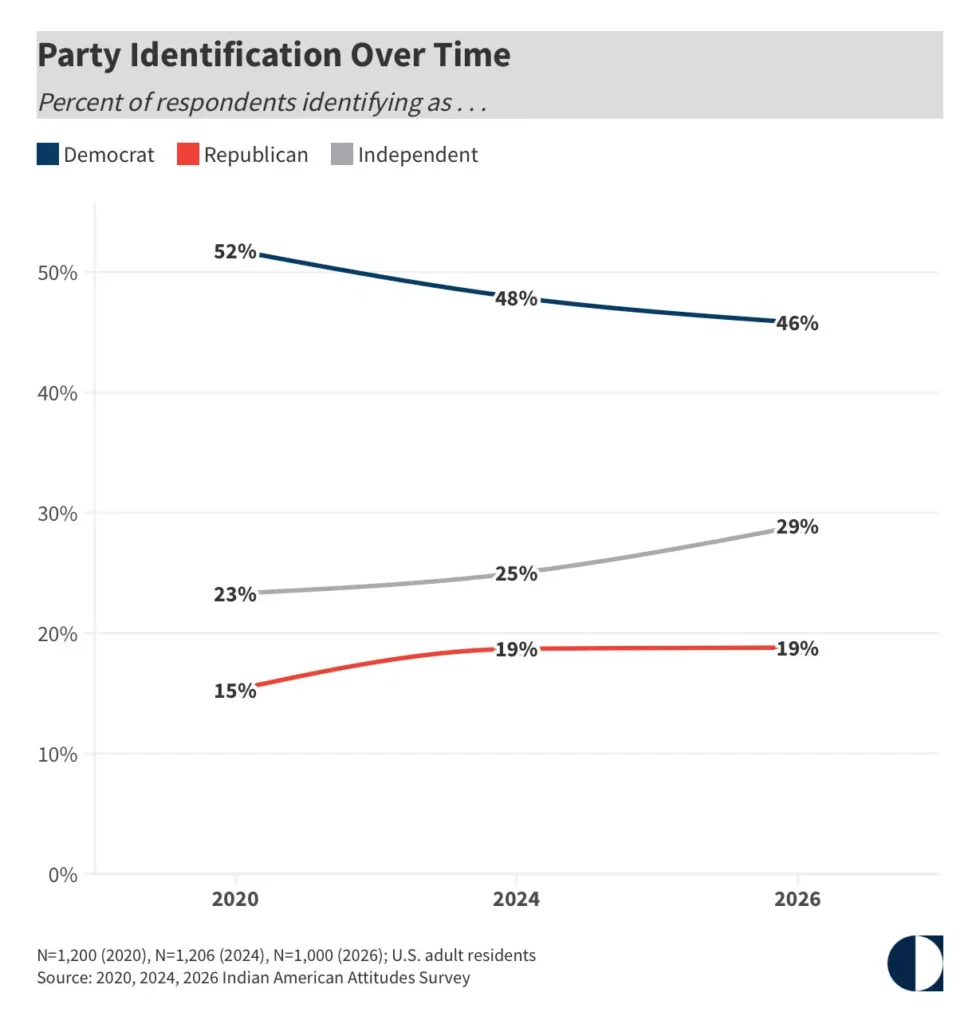
But Democratic gains have stalled. In a hypothetical rerun of the 2024 presidential election, Democratic support remains about ten percentage points below its 2020 high watermark. Party identification has shifted as well. The share of Indian Americans identifying as Democrats has declined from 52 percent in 2020 to 46 percent in 2026, while nearly one third now identify as independents. Ratings of the Democratic Party have cooled, falling from 75 out of 100 in 2020 to 69 in 2026 on a feeling thermometer scale.
By contrast, Indian American Republicans have consistently rated their party at 72 across survey waves, reflecting steadier partisan intensity on the right.
Ideologically, Indian Americans remain concentrated in the center left. Moderates comprise about one third of respondents, while only around one in five identify as conservative, leaving the community more Democratic leaning than the national electorate.
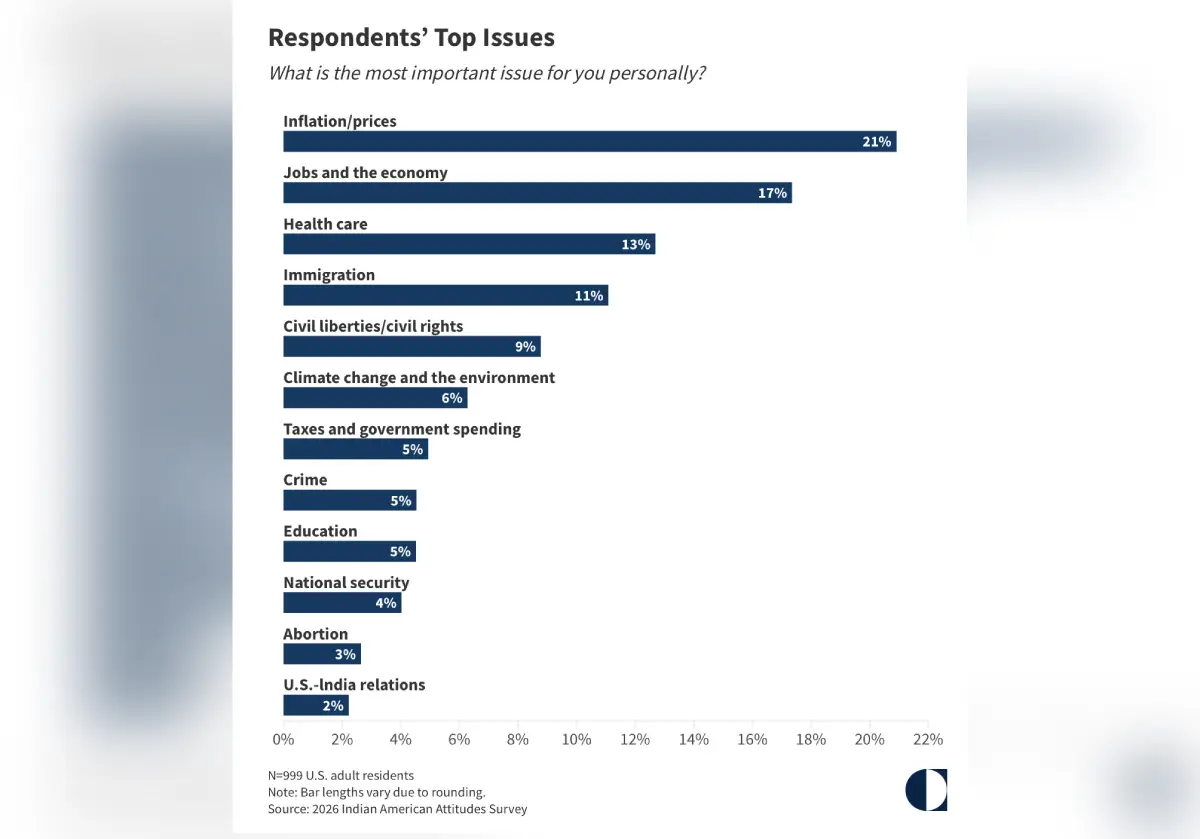
When asked to name the most important issue facing them personally, respondents overwhelmingly cited inflation and rising prices, followed by jobs and the broader economy. Immigration registered as important but not decisive, and foreign policy barely figured into vote calculations.
Dissatisfaction with Trump’s management of U.S. India relations had little measurable impact on partisan preference. Like many Americans, Indian Americans are evaluating politics through the lens of cost of living pressures, not relations with the mother country.
As the 2026 midterms approach, the lesson for both parties is clear. Indian Americans are not abandoning the left, but they are signaling that their support cannot be assumed, the authors of the study noted.
S P
/
Indians have good respect in USA.Big positions several Indians. All business people love Trump as crime gone down as well Trump is hard on Century cities. We have to raise kids here so do not need drugs in school or school changing sex of kids with out parent consent and parents can’t go after school who did it. Drugs/ Crime is down and lots of people who benefited from this thing s they loosing money so they do not like or their free benefit( Not working and getting free money by showing wrong disabilities) but all business and hard working people are happy. Even Modi is famous in whole world but our congress follower do not like Modi but For India Modi is best thing happened. But people who get free Saree or Bike they vote otherwise.
March 2, 2026