Folk Legend Gafruddin Is Preserving The Art Of The Bhapang
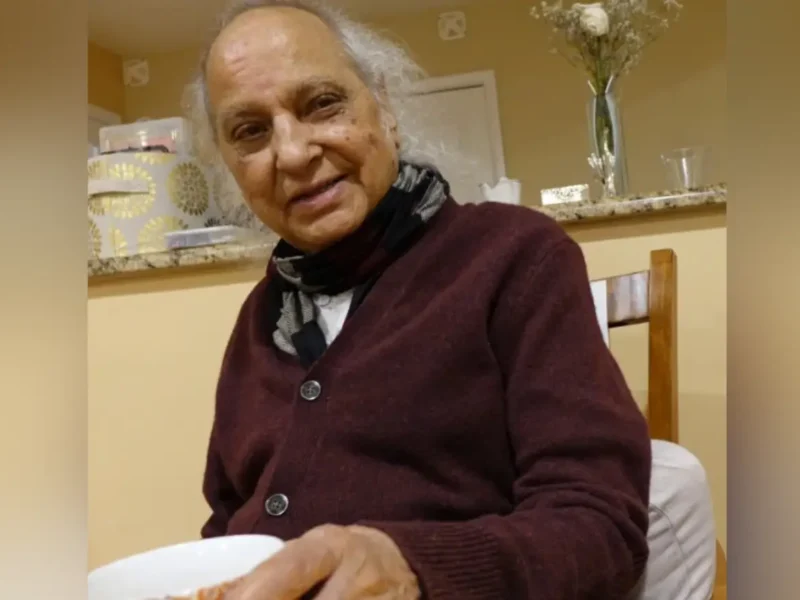
ALWAR — Renowned Bhapang player Gafruddin Mewati Jogi of Alwar has devoted his life to preserving one of Rajasthan’s most ancient folk traditions, an achievement recently crowned with the Padma Shri.
Originally from Kaithwada village in the Bharatpur district, now part of Deeg, Gafruddin moved to Alwar in 1978. He said he never imagined receiving an honour as prestigious as the Padma Shri. While he had earlier been recognised by the Prime Minister, the President, the Rajasthan government, the Sangeet Natak Akademi and district authorities, he described the Padma Shri as the most fulfilling moment of his life.
Gafruddin has dedicated decades to mastering the traditional instrument Bhapang, inspired by Lord Shiva’s damru. The instrument is used to render verses from the Mahabharata era, Bhartṛhari’s Shatak, and devotional and ascetic poetry. He is the only surviving singer of Pandun ka Kada, a Mewati tradition that narrates episodes from the Mahabharata through music. These performances recount the period when the Pandavas lived in Viratnagar, present day Alwar, during their exile.
Over the years, Gafruddin has preserved more than 2,800 folk songs and couplets through Bhapang performances. Many of these, he says, were later adapted in Bollywood. His son, Dr Shah Rukh Khan Mewati Jogi, represents the eighth generation of the family to carry forward the tradition. Shah Rukh has completed a PhD on Mewat culture, and younger members of the family are also being trained in the art form.
Recalling his early struggles, Gafruddin said he began accompanying his father at the age of four. As a child, he went door to door in Alwar collecting wheat flour to survive. “There was no other means to earn a living,” he said.
His talent eventually earned international recognition. After his first overseas visit in 1992, he performed in more than 60 countries, including England, Australia, Canada, France and the UAE. He also played the Bhapang at a birthday event for Queen Elizabeth in London.
When the Padma Shri announcement was made, Gafruddin was performing at an exhibition marking the 150th anniversary of Vande Mataram at Alwar’s Information Centre. He received a call from the Union Home Ministry during the programme. “At first, I thought it was a joke,” he said. “But when the announcement was confirmed, I could not contain my happiness.”
Comparing the moment to the satisfaction of daily labour, he said it felt like “a worker who goes out in the morning and receives his wages in the evening.” He added that while he had received many honours, the Padma Shri was the greatest achievement of his life.
Gafruddin said his brother and sons are actively engaged in promoting the art form. He appealed to the government for support in setting up a free cultural school dedicated to folk traditions. “The younger generation is gradually losing touch with these traditions. We want to revive them and take them forward with full support,” he said. (IANS)