Researcher Shares His Path To Tesla After Two Visa Rejections
India-West News Desk
An Indian researcher working at Tesla has shared how two failed attempts to secure a U.S. student visa eventually led him to focus on strengthening his academic and professional credentials before finally making it to the United States.
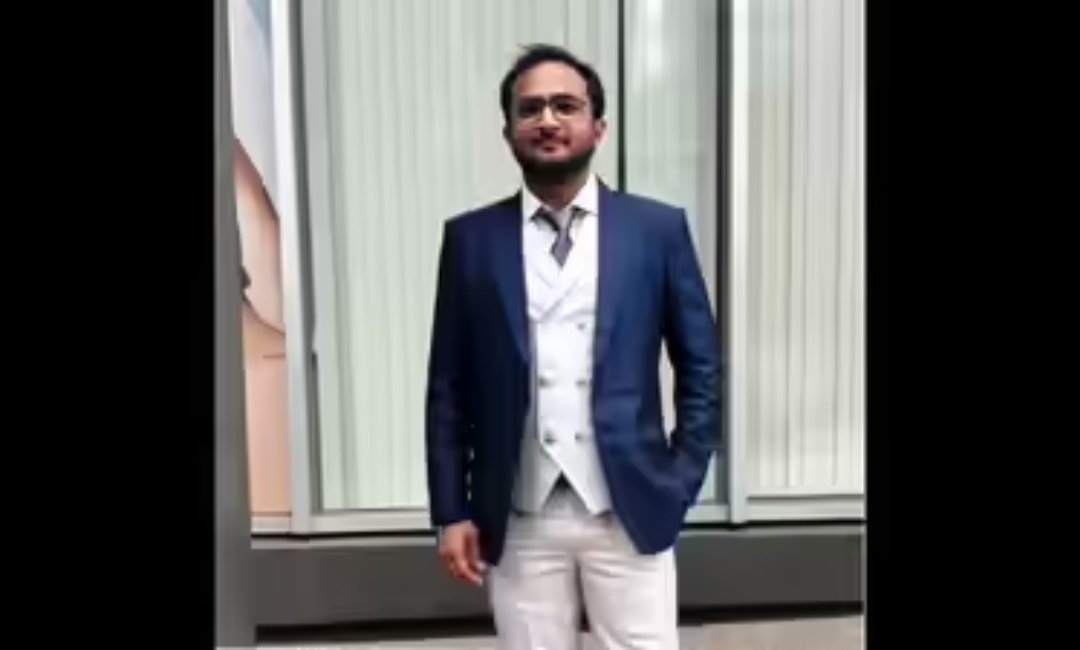
Mayank Vadaliya, a Tesla engineer and doctoral researcher in Information Technology at the University of the Cumberlands, recounted his journey to several media outlets. He said he is currently in the U.S. on an F-1 visa with work authorization through Curricular Practical Training (CPT), valid until 2028. If eligible, Tesla could later sponsor him for an H-1B or O-1 visa.
Vadaliya said his doctoral research focuses on real-time traffic prediction. His open-source Python framework combines convolutional neural networks, long short-term memory networks and gradient-boosted models to forecast urban traffic congestion. According to him, it reduced prediction error by more than 30 percent over each model used individually on the METR-LA freeway sensor benchmark. He said the framework is designed to integrate with existing cloud and edge infrastructure, including systems used under India’s Smart Cities Mission.
He also said he is a Full Member of Sigma Xi, the Scientific Research Honor Society, and has completed more than 40 invited peer reviews for IEEE, Emerald and Taylor & Francis journals in 2026.
That success, however, followed nearly a decade of setbacks that began with two consecutive F-1 visa rejections. Vadaliya said he first applied for an F-1 visa in 2015 after finishing school, hoping to pursue a bachelor’s degree at Montana State University. His application was rejected after the visa officer asked only three questions. A second application to the same university the following year was also denied.
After the second refusal, Vadaliya enrolled at Gujarat Technological University and completed his undergraduate degree before applying to U.S. graduate schools. “After my two refusals I stopped trying to win over the officer in the moment and started building a profile that speaks for itself. I finished my degree, got clarity on what I wanted to study and clearly stated my intent in the application,” he shared.
He said his outlook had changed by his third visa interview because he already had an admission offer from Australia.
“By my third interview, I already had an offer from Australia in hand, so I walked in calm instead of desperate. I genuinely wasn’t afraid of another ‘no’ and it showed,” he said.
Vadaliya was granted the visa and moved to the United States in 2020 to pursue a master’s degree in computer science at Cleveland State University before later joining Tesla.