
Students Press On After Police Crackdown; Wangchuk Restarts Hunger Strike; Rahul Arrested
India-West News Desk
NEW DELHI – India’s youth-led Cockroach Janta Party and its student supporters vowed on July 21 to continue their protests despite a violent police crackdown a day earlier, as opposition leaders intensified pressure on the government and activist Sonam Wangchuk extended his indefinite hunger strike in solidarity with demonstrators.
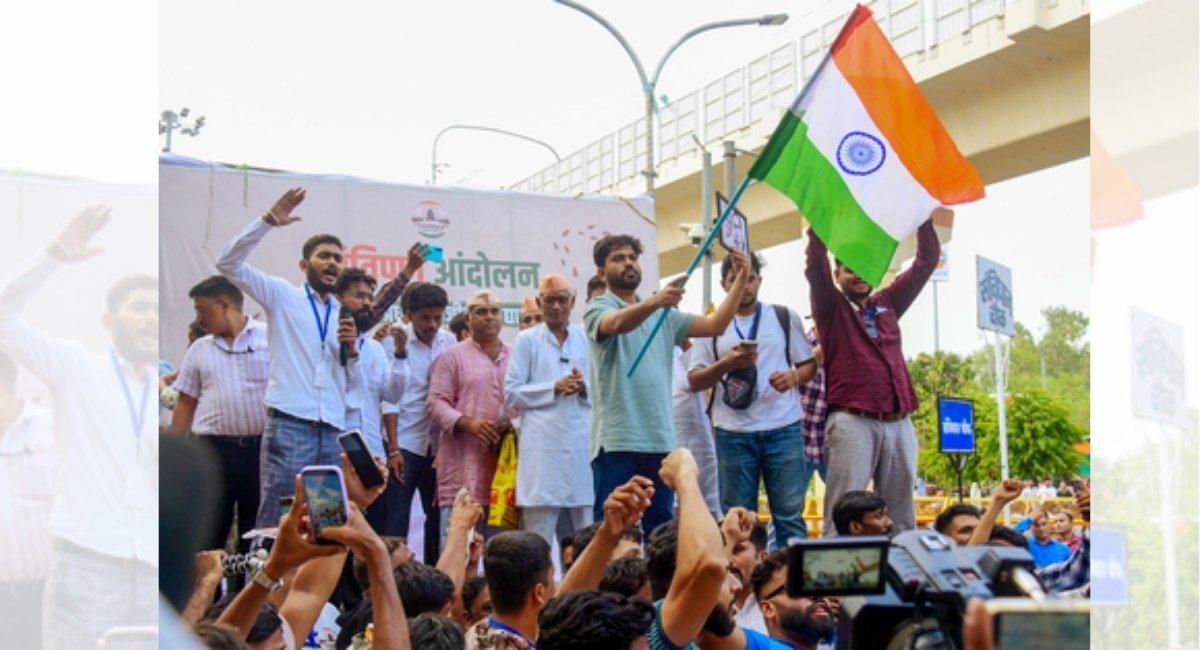
Hundreds of protesters remained camped at Jantar Mantar under heavy police deployment, refusing to end their sit-in until Education Minister Dharmendra Pradhan resigns over alleged failures in the country’s examination system. The movement, which began as a commentary just two months ago has caught traction and has become a nationwide youth-led protest against exam paper leaks, unemployment and what organizers describe as a lack of government accountability.
“We are going to continue our protest,” Abhijeet Dipke, a Boston University alumnus and founder of the Cockroach Janta Party, told The Associated Press. Protest leaders said they would accept nothing short of concrete action, including reforms to the examination system, Pradhan’s resignation, and compensation for families of students who died by suicide following examination irregularities.
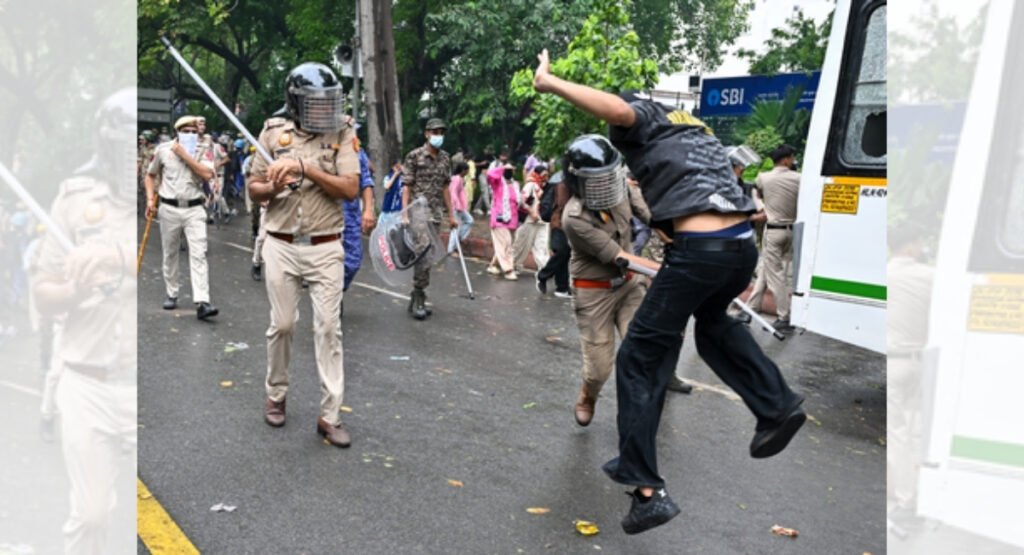
The protests escalated on July 20 when thousands attempted to march toward Parliament during the movement’s “Sansad Chalo” campaign. Police stopped the march using tear gas, batons and barricades, triggering clashes that left nearly 180 people injured, according to Delhi Police.
Videos circulating on social media showed police dragging away demonstrators and using force against protesters, many of them students. The footage drew widespread attention and added momentum to the movement, particularly among young Indians frustrated by repeated examination controversies and limited employment opportunities.
Dipke alleged that authorities had invited protest representatives for talks but later resorted to force against demonstrators. The Modi government which usually does not get into discussion with protestors engaged with protest leaders after a month of protests on July 20.
The crackdown also prompted a political response. On July 21, Congress leader Rahul Gandhi and dozens of party lawmakers staged a sit-in protest outside Prime Minister Narendra Modi’s residence, signaling growing opposition support for the student movement and criticizing the government’s handling of the demonstrations.
Meanwhile, Wangchuk, the educator and climate activist whose hunger strike has become one of the defining symbols of the protests, announced he would continue fasting after police action against students during the Parliament march.
Wangchuk, who has been on a hunger strike for 24 days, was transferred on July 21 from Safdarjung Hospital in New Delhi to Medanta Hospital in Gurugram after the Delhi High Court permitted him to receive treatment at the hospital of his choice, according to IANS.
A medical bulletin issued by Safdarjung Hospital said Wangchuk’s vital signs were stable at the time of discharge but noted that he continued to suffer from pancytopenia, a serious condition in which the bone marrow produces abnormally low levels of red blood cells, white blood cells and platelets. His serum potassium level was also reported to be below normal.
The Delhi High Court observed that medical experts agreed that his condition required continuous monitoring before approving his transfer.
Following the court’s order, Wangchuk’s wife, Gitanjali J. Angmo, said he had decided to continue his hunger strike until Parliament takes cognizance of what she described as the “brutal action” against students during the “Sansad Chalo” march.
“He has decided to continue his hunger strike because of the cruelty and ruthlessness with which the students were treated,” she told reporters, adding that he was extending the fast in solidarity with those demanding to be heard by lawmakers.
Human rights organization Amnesty International also criticized the police response. In a statement, Aakar Patel, chair of Amnesty International India’s board, said the events at Jantar Mantar reflected the suppression of peaceful dissent. It said that police used unnecessary and excessive force, while authorities also imposed restrictions, including barricades, suspension of metro services and temporary mobile internet disruptions.

pemba
/
Opposition Parties are causing problems in India, a sort of hindrance in the progress of developements in India.
July 21, 2026