Diwali May Be Over, But The Stories We Share Around The Table Stay With Us
By Suneet Bhatt
Kiran (KEE-run). Origin: Sanskrit. A ray of light. A beam. A spark of hope and energy.
Kiran is my father’s name.
He was not here to sit at our Diwali table. So I turned to the men he trusted, turned to, and honored the most: my mom’s brothers. My Mamas. In their words:
“Ours was a family shaped by migration. We crossed continents in search of education, opportunity, and a life of dignity. Kiran built the bridges that made those crossings possible. He found us shelter, helped us enroll in schools, and offered his time and belief. He built the bridge to our future and walked each of us across. Some stayed. Some returned. But none crossed alone.”
Every family at the Diwali table carries a story like that. The stories are how heritage becomes values. And they only get passed down if someone asks.
Wayne Ho’s story shows why.
In college, Wayne left the pre-med track and declared a double major in English and Ethnic Studies. A hard pivot. It was a bold decision. And one Wayne never got to explain.
A month later, his father passed away. Suddenly. Without warning. Before they ever had the conversation about his pivot.
“He never outright rejected it, but I knew he didn’t fully understand it.”
Wayne carried that weight for nearly 30 years. Quietly. Not just as grief, but as guilt. As unfinished business.
Then he read aloud to his mother what he had written about his father’s presumed disapproval and silence. Her silence after was brief. And then she said something that stopped him cold.
“You have it wrong.”
His mother told him that his dad had once faced the same dilemma. He had studied a major he didn’t enjoy. He had followed orders from his own parents. And he had always regretted it. When Wayne came to him, unsure and anxious, his father knew exactly what was happening. He pulled Wayne’s mom aside and told her, quietly and clearly, they needed to support their son.
What Wayne thought was a missed connection was actually a moment of quiet solidarity. His father had seen him. Had chosen to break the cycle.
There’s a good chance Wayne would have carried that misunderstanding for the rest of his life.
Most of us are walking through life with a version of ourselves that doesn’t fully match who we really are. After studying thousands of people over several years, Tasha Eurich and her team found that 95% of us believe we are self-aware, but only about 10 to 15% truly are. The same is true of the stories we hold about our families.
As we reflect on this Diwali, think about the conversations that can continue beyond the celebrations. Around the table, after the sweets, go around and answer three questions:
What still makes you smile?
What have you done recently that impressed you?
A year from now, what would you love to add to your Happy or Proud list?
Then ask the elders the question only they can answer: What did you carry with you when you crossed?
I’ve done this with leaders, teams, students, and families, during exciting moments and through grief. Most often now, with my own kids, in the car. They ask for it. They lead it. And every time we go around, something shifts. That mental backpack we’re all carrying becomes a little lighter.
Diwali is one of our most cherished holidays. What if we made it just as meaningful, a gift, to the rest of the world? Invite a neighbor to the table. Ask them the same questions.
The Diwali celebrations may be over, but the light can continue to be shared.
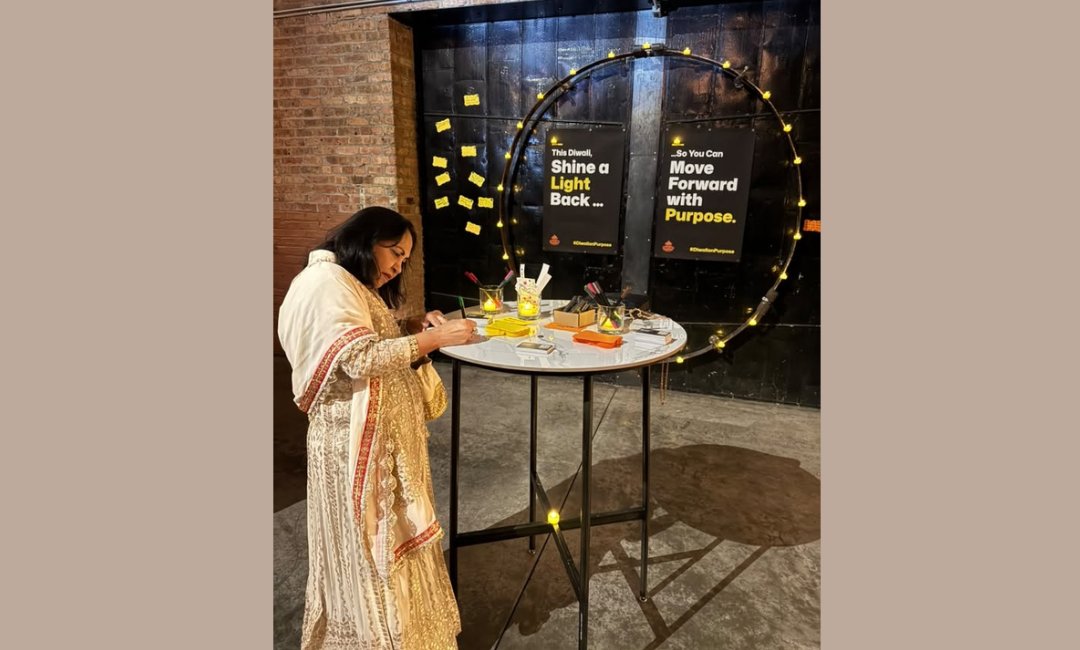
(Bhatt teaches at Rutgers University and is the bestselling author of ‘Making Sense of Purpose.’ He held a week long ‘Diwali on Purpose’ campaign inviting people to use Diwali as a spark for reflection.)