
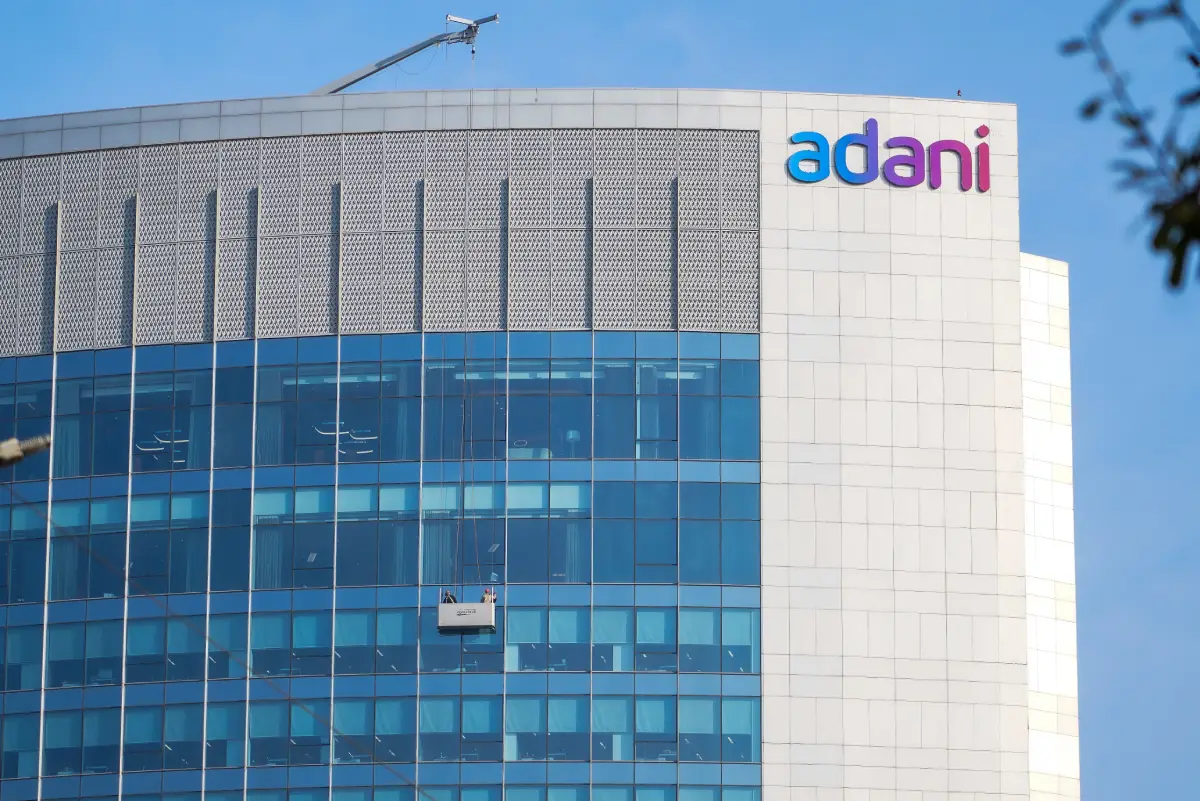
Ravi Nair, Co-Author Of Washington Post Report On Adani, Sentenced For Defamatory Tweets
GANDHINAGAR – Journalist Ravi Nair, who drew headlines for the high profile Washington Post investigation piece alleging state-backedfinancial support to the Adani Group, has now been sentenced to a year in prison in India in connection with tweets a Gujarat court found to be defamatory.
A magistrate’s court in Gandhinagar convicted Nair in a criminal defamation case filed by Adani Enterprises Ltd and imposed a sentence of one year’s imprisonment along with a fine. The case stemmed from a complaint by the Adani Group’s flagship company alleging that Nair had published and circulated a series of tweets containing false statements intended to harm the reputation of Adani Enterprises and the broader conglomerate.
According to the prosecution, the tweets did not qualify as fair comment or legitimate criticism. Instead, the company argued, they were designed to undermine confidence in Adani Enterprises among the public and investors.
After what the court described as a full trial, the Mansa magistrate held that the company had successfully proved its case and found Nair guilty of criminal defamation.
In its ruling, the court emphasized what it called the need for accountability in public discourse. A senior lawyer associated with the case said the judgment reinforced the principle that the right to free speech cannot override the equally protected right to reputation under Article 21 of the Constitution. He noted that defamation is a recognized restriction on free expression under Article 19(2) and cited the Supreme Court’s 2016 ruling in Subramanian Swamy v. Union of India, which affirmed reputation as a facet of the right to life.
The lawyer also argued that repeated and unverified allegations amounted to a trial by media, a practice courts have consistently cautioned against. He pointed to the Supreme Court’s decision to order an investigation into Hindenburg Research, which had acknowledged short selling Adani stocks, as evidence of the broader market impact that unsubstantiated claims can have.
Nair has drawn international attention as the coauthor of a Washington Post article that accused India’s state run insurer, the Life Insurance Corporation of India, of being directed by government officials to channel billions of dollars into the Adani Group. Published on October 24, 2025, the article, titled ‘India’s $3.9 billion plan to help Modi’s mogul ally after U.S. charges’, alleged that Indian officials drafted internal documents to steer about $3.9 billion from LIC into Adani Group companies as part of a rescue effort.
The Washington Post report claimed that the plan involved LIC investing through bond issues and equity stakes and relied on what it described as internal documents from the Department of Financial Services and NITI Aayog, as well as interviews with current and former officials and bankers, some of whom spoke anonymously. The article also referenced alleged United States actions by the Securities and Exchange Commission and the Department of Justice related to Adani entities, framing the LIC investments as particularly sensitive in that context.
The criminal defamation case, however, relates specifically to Nair’s social media posts and not to the Washington Post article itself. The conviction has generated debate over the boundaries of press freedom, social media commentary, and criminal defamation laws in India. (with IANS inputs, which is owned by a Adani company.)

Natarajan Sivsubramanian
/
ATROCIOUS
February 10, 2026