Across Oceans And Operating Rooms, A Family Legacy Becomes A Living Classroom
India-West News Desk
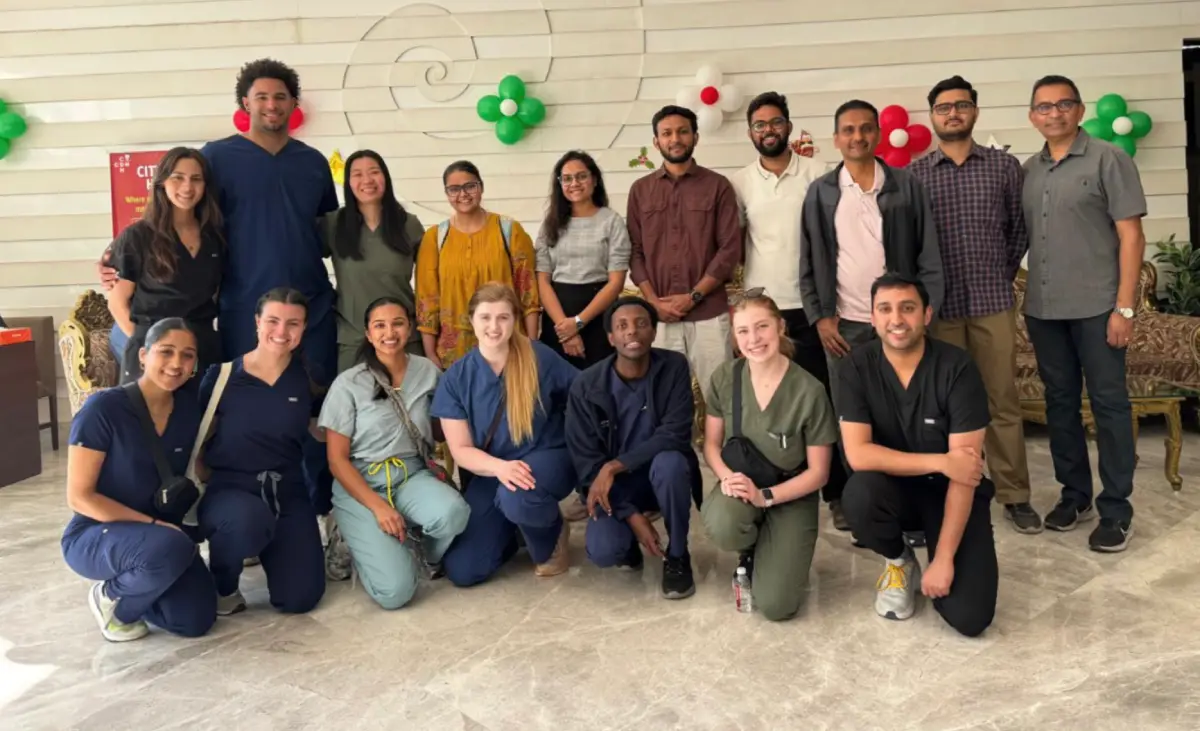
IRVINE, CA – When Alicia Wells walked into the bustling wards of a government hospital in Rajkot, India, she expected difference. What she did not expect was how quickly those differences would sharpen her sense of purpose as a future physician. A fourth year medical student at the University of California, Irvine, applying for residency in Child Neurology, Wells had traveled to Gujarat as part of a short clinical exchange. Within days, the experience began reshaping not just how she understood medicine, but how she understood care, community, and herself.
“I thought I was going there to observe another healthcare system,” Wells said. “Instead, it made me reflect on the kind of doctor I want to become.”
At Zanana Hospital, where she rotated through obstetrics and gynecology, the scale of care was staggering. The hospital manages nearly 10,000 births annually, sees hundreds of outpatient visits a day, and performs dozens of procedures daily. Tubal ligations were completed in five to ten minutes per patient, a pace that contrasted sharply with the hours such procedures can take in the United States. What impressed Wells was not just speed, but coordination. Physicians, residents, and interns moved with calm efficiency, adapting constantly to limited resources and overwhelming demand.
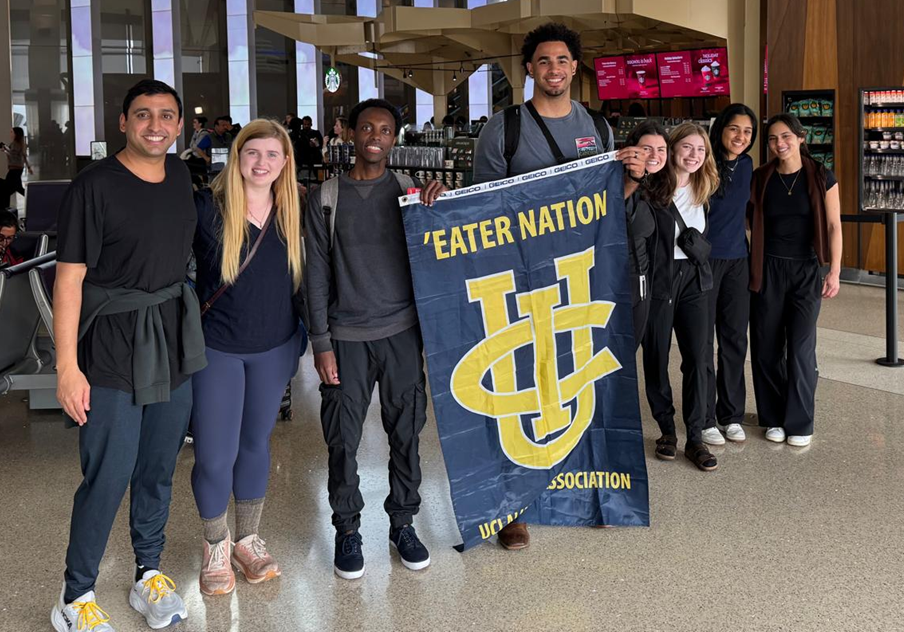
“The efficiency was incredible,” she said. “But what stood out even more was how composed everyone remained despite the volume and resource limitations.”
Her time in the pediatric and neonatal intensive care units left an equally deep impression. Wells encountered clinical conditions she had previously only seen in textbooks, including congenital CMV, cobra bites, and Guillain Barre syndrome. Yet what stayed with her most was the role of families. Parents and relatives were ever present, performing bedside care that would typically fall to nursing staff in American hospitals. Across departments, families functioned as integral members of the care team, united by responsibility and resilience.
“In the U.S., we talk about family centered care,” Wells reflected. “In Rajkot, I saw it lived out every day.”
The learning extended far beyond hospital walls. A visit to Gondal High School became one of the most emotional moments of the trip. Hundreds of students welcomed the visiting medical students with unfiltered enthusiasm, teaching them Garba, playing games, and proudly showing their classrooms. As Wells hugged a long line of girls goodbye, she felt both gratitude and humility, aware of the privilege that had brought her there and the responsibility she carried forward.
Equally formative were the friendships that developed with interns at Pandit Deendayal Upadhyay Medical College. After long days in the hospital, they still made time to show the visitors Rajkot, navigating busy streets on mopeds, sharing meals at local restaurants, playing cricket and pickleball, and guiding them through markets and temples. What began as hospitality quickly became connection.
One small moment captured that spirit. When Wells realized she might miss the closing time for a required yellow fever vaccine, one intern immediately dropped everything, raced through traffic, and got her there with minutes to spare before returning her to the hospital so she could continue her rotation. By the end of two weeks, colleagues felt like family.
That feeling was mutual. Mihir Solanki, an intern at the medical college, described hosting the UCI students as both academically enriching and personally meaningful. “Their curiosity during ward rounds and the way they engaged with our professors made discussions more dynamic,” Solanki said. “It pushed us to think more deeply about our own approaches.”
Seeing how medical education functioned in another system prompted reflection on his own training, while reinforcing how much was shared across borders. “Despite differences in infrastructure, our core values were the same,” he said. “Empathy, service, and commitment to patients do not change with geography.”
Outside the hospital, Solanki valued the unstructured time spent together, riding mopeds, trying local food, visiting temples, shopping in markets, and playing informal sports. “Those moments made the exchange feel natural rather than formal,” he added. The experience left him eager for more global exchanges and hopeful for an opportunity to one day visit UCI himself.
Only midway through stories like these does the larger framework come into view. The India Summer Travel Program exists because of a belief that medicine is learned most deeply through exposure and humility. That belief is embodied by Dr. Rimal Bera, Clinical Professor of Psychiatry and Human Behavior at the UC Irvine School of Medicine, whose family made the program possible.
In 2020, the Bera family donated $100,000 to UCI to permanently support medical student travel to Rajkot. The gift reflects a family history shaped by education and perseverance. Dr. Bera’s parents, Kanta and Babulal Bera, grew up in modest circumstances in Gujarat before immigrating to the United States in the late 1950s. They worked multiple jobs, pursued higher education, and raised three sons, Raja, Rimal, and Ami, instilling a belief that education was both opportunity and responsibility.
That philosophy carried two generations of the family to the UC Irvine School of Medicine and now back to India, creating a bridge between personal history and global learning. For Dr. Bera, the program is not charity but continuity, a way to prepare future physicians for a world where medicine is practiced under vastly different conditions, yet guided by shared values.
For students like Wells and interns like Solanki, the exchange offers something increasingly rare in modern medical training, time and space to see medicine through another lens. They return with sharper clinical instincts, deeper cultural awareness, and a renewed respect for collaboration with families and colleagues alike.
Across crowded wards and school courtyards, mopeds and hospital corridors, the program quietly does what education has always done at its best. It builds understanding, forges connection, and reminds future doctors on both sides of the world why they chose this path in the first place.