
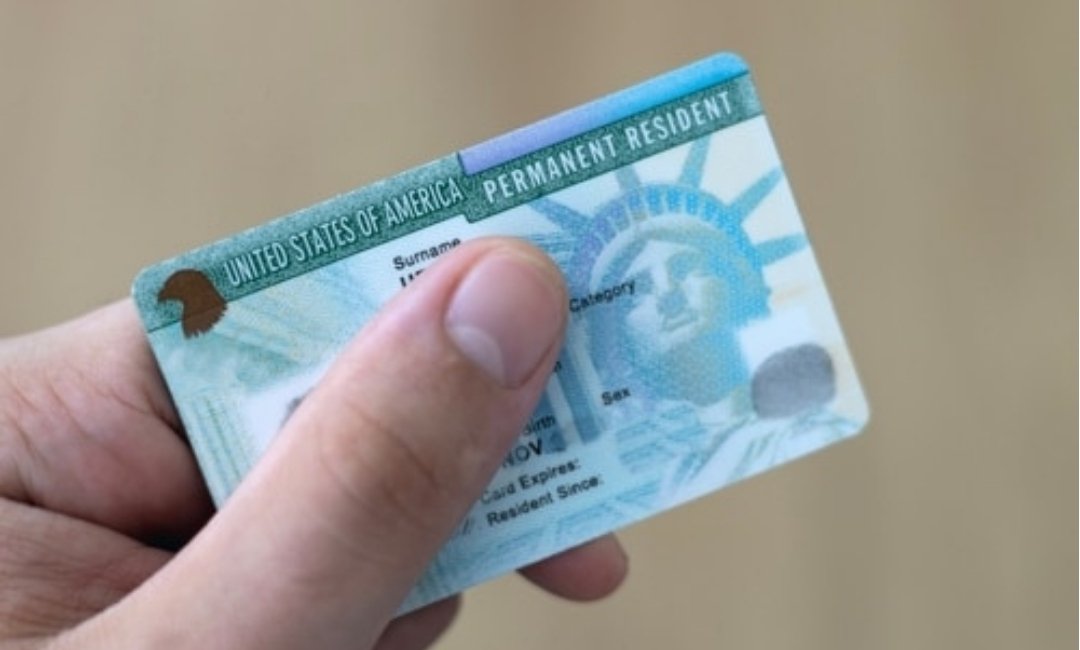
Green Card Backlog Hits 1 Million Indians; Could Leave Applicants Waiting 179 Years
India-West News Desk
WASHINGTON, DC – Nearly one million professionals are currently trapped in the United States employment-based green card backlog, with Indians comprising nearly 80 percent of all applicants waiting for permanent residency across the nation’s primary skilled immigration channels.
According to a new analysis released by the National Foundation for American Policy (NFAP), a public policy research organization, the severe accumulation of applications could leave new Indian applicants facing waits of up to 179 years for permanent residence. People who were born in countries where there is a high demand for U.S. employment-based green cards face the longest waits.
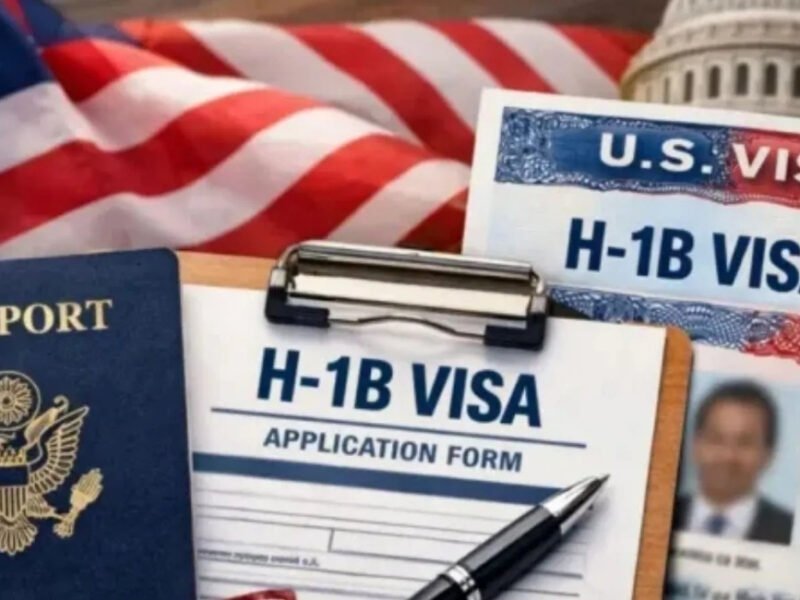
The crisis primarily impacts high-skilled workers on H-1B visas seeking legal permanent residence through the EB-2 category—which covers professionals with advanced degrees or exceptional ability—and the EB-3 category for skilled workers and other professionals.
NFAP estimates that out of a total nationwide employment-based backlog of 1.26 million people across the EB-1, EB-2, and EB-3 preference categories as of December 2025, Indian nationals account for 996,599 applicants. The concentration is heaviest in the EB-2 tier, where 731,566 Indians remain in limbo, alongside another 213,414 in EB-3. Meanwhile, the Indian EB-1 category for extraordinary talent and multinational executives saw a drop from 71,988 in 2020 down to 51,619 in late 2025.
Overall, the total U.S. employment-based backlog grew by 20.6 percent between April 2020 and December 2025. Researchers warn that without structural changes to federal law, the queue could exceed two million people by 2040.
The gridlock stems from two statutory constraints established by Congress in 1990. First, federal law caps total employment-based immigrant visas at 140,000 per year, a number that includes both primary workers and their dependent family members. Dependents typically consume more than half of the available slots.
Second, the Immigration and Nationality Act imposes a 7 percent annual per-country cap on foreign nationals. This strict ceiling applies the same numerical limit to high-volume countries like India and China as it does to significantly smaller nations such as Iceland or Luxembourg.
This structural mismatch between approved workers and available green cards has compiled over decades. In fiscal year 2016 alone, U.S. Citizenship and Immigration Services approved 47,601 EB-2 applications for Indian applicants—representing 98,594 individuals including dependents. However, only 4,407 Indian nationals received green cards in that category that year, adding over 90,000 people to the backlog in a single 12-month window.
The consequences are underscored by the August 2026 U.S. Visa Bulletin, which sets processing dates. To file for an adjustment of status, an Indian applicant currently requires a priority date earlier than October 15, 2022, for EB-1, or January 1, 2014, for EB-3. The EB-2 category remains completely unavailable for August processing after hitting a cut-off date of September 1, 2013, in June.
Under current conditions, an Indian national filing a green card petition in 2026 faces a potential wait of 179 years in the EB-2 category and 38 years in EB-3. The report notes that for most recent applicants from India, the wait is now measured in decades rather than years.
Paradoxically, the backlog expanded even after the U.S. issued roughly 280,000 extra employment-based green cards between fiscal years 2020 and 2024. Pandemic-related disruptions left unused visas in family-sponsored categories that rolled over into the employment system, allowing the government to issue 980,460 visas over five years instead of the standard 700,000 baseline. Even this temporary surge failed to clear the structural deficit.
Long before applicants reach the green card queue, they encounter significant administrative delays. Labor certifications (PERM) managed by the Department of Labor take two to three years on average. As of August 2026, average processing times stood at 403 days for standard analyst reviews and 290 days for audit reviews, on top of multi-month prevailing wage determinations and mandatory recruitment periods.
Because green card applicants must maintain temporary H-1B visa status while waiting, their livelihoods remain tied to continuous employment extensions and ongoing administrative compliance.
“These long waiting times for green cards create significant hardships for individuals and their families and undermine the ability of companies to attract and retain talent in America,” said Stuart Anderson, executive director of NFAP.
Ryan
/
Years of abuse has consequences.
September 3, 2026