In California, AAPI Communities Urge Voting No On Prop. 39
By Fatema Baldiwala
LOS ANGELES, CA- A proposed California voting measure is drawing concern from Asian American and Pacific Islander advocates and lawmakers, who say it could create additional barriers for voters, particularly those who rely on language assistance at the polls.
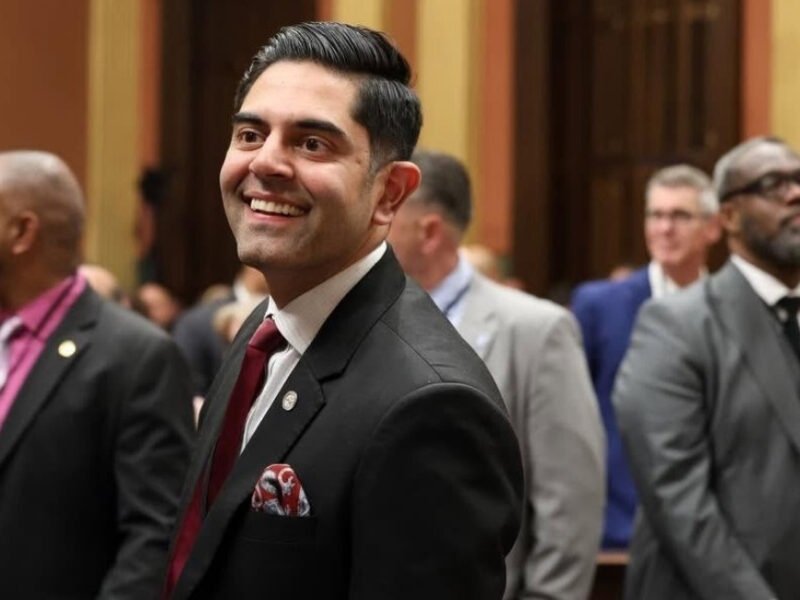
During a recent press briefing, Assemblymember Mike Fong, chair of the California Asian American and Pacific Islander Legislative Caucus, Assemblymember Stephanie Nguyen (CA-10), who serves as an officer and incoming leader of the California Asian American & Pacific Islander Legislative Caucus (AAPILC), and Sydney Fang, MPP, MUP, who is the Policy Director for Asian Americans & Pacific Islanders for Civic Empowerment, discussed their opposition to Proposition 39 and its potential impact on voters across the state.
A central concern raised during the briefing was language access.
Assemblymember Fong said lawmakers have worked for years to expand language access to government services and argued that any additional requirements at polling places could create difficulties for voters who are not comfortable voting in English.
For many immigrant families, he said, voting is not simply a matter of receiving a ballot. Voters may need assistance understanding instructions, candidate information and the voting process itself.
Nguyen offered a personal perspective, pointing to parents and other older community members who speak limited English.
“If there isn’t somebody there to answer that question for them in person,” Nguyen said, voters may become uncertain about why additional information is being requested or how it will be used.
That uncertainty, she argued, could discourage some voters from completing the process.
The speakers repeatedly emphasized that California’s Asian American communities are linguistically diverse, making language assistance particularly important.
“Whether you’re limited in English or speaking English just fine,” Nguyen said, voters should be able to exercise their right to vote without having to navigate unnecessary additional hurdles.
Concern Over Costs and Election Administration
Another issue raised during the briefing was the potential cost of implementing Proposition 39.
The speakers cited an estimate from the state’s nonpartisan Legislative Analyst’s Office that they said could put the additional cost in the tens of millions to hundreds of millions of dollars. They argued that those resources could otherwise be directed toward education, health care and community programs.
Because the discussion was conducted by opponents of the measure, those cost concerns represent the speakers’ characterization of the proposal and its potential consequences.
Sydney Fang, of AAPI Force, also raised concerns about the potential security implications for voters, particularly older adults. She argued that requirements involving personal identification information could raise concerns about scams and identity theft among voters who are already vulnerable to such threats.
Sydney Fang said the issue should be viewed in the broader context of voter participation among AAPI communities.
“AAPI voters are already underrepresented in the electorate,” she said, pointing to existing challenges involving language access and understanding the voting process.
Organizers Target Ethnic Media and Multilingual Outreach
The campaign opposing Proposition 39 also described an extensive outreach effort aimed at communities that may be affected by changes to voting procedures.
Organizers said they are working with ethnic media organizations, community groups and the Million Voters Project Action Fund, a statewide coalition they identified as comprising 34 organizations.
They said outreach is being conducted in multiple languages through phone calls, door-to-door canvassing and text messaging.
AAPI Force, described during the briefing as an anchor organization for the Million Voters Project Action Fund, said it has developed a voter guide for AAPI communities in 10 languages.
The emphasis on multilingual communication reflects a broader reality of California’s electorate: for many immigrant families, political information does not always reach every generation in the same language.
That makes ethnic media, community organizations and places of worship important channels for voter education, the speakers said.
A Question of Access and Representation
The discussion ultimately returned to a larger question: how easily Californians can participate in elections.
Assemblymember Fong invoked the experience of older family members who may need help understanding voting materials and said language access remains essential to encouraging participation.
Nguyen connected the issue to representation, noting that local elections, school boards, county governments and state offices all affect communities.
Sydney Fang similarly argued that voting access has consequences beyond a single election, saying that participation determines who represents communities in decisions affecting neighborhoods and the state.
The speakers urged voters to learn about Proposition 39 before casting their ballots and encouraged community organizations to continue providing information in multiple languages.
As California’s increasingly diverse electorate prepares for another election, the debate over Proposition 39 is therefore also becoming a debate over accessibility: how voting rules should balance election administration, identification requirements, costs and security with the practical realities faced by voters who speak languages other than English.
For AAPI communities, the speakers at the briefing argued, ensuring that voters understand the process may be just as important as ensuring that they have access to the ballot itself.