India-West Interview: Kalki Koechlin On The Craft Of Cinema And The Power Of Choice
By MANISHA KOSHY
For Kalki Koechlin, reinvention has never been a strategy; it’s been instinct. Whether moving between theatre and cinema, indie and mainstream, or languages and cultures, she has built a career on curiosity rather than calculation. Known for her work across independent and mainstream cinema, from ‘Dev D’ to ‘Zindagi Na Milegi Dobara,’ to winning the National Award for ‘Margarita with a Straw,’ Koechlin has long carved a space for herself as an actor drawn to unconventional narratives.
With ‘Her Song,’ her first international feature, that instinct finds a new expression: one that demanded not only emotional depth, but a complete reworking of voice, rhythm, and identity.
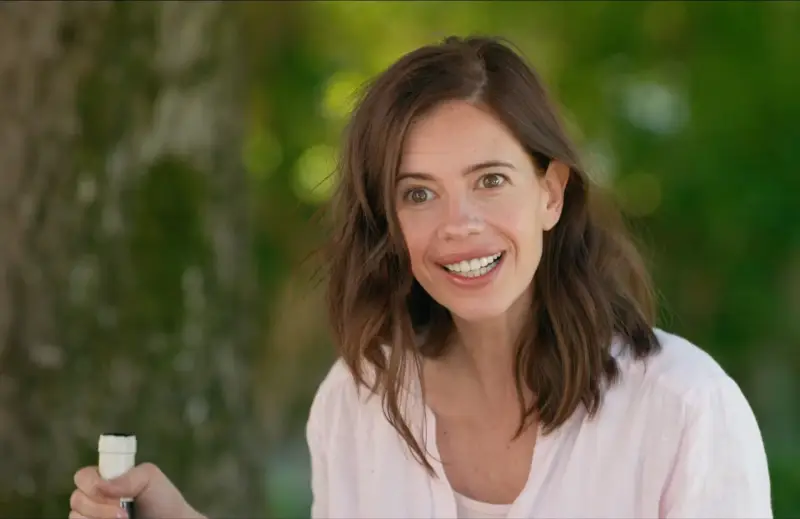
At its core, ‘Her Song’ is an intimate, cross-cultural narrative set in a quiet European village, weaving together themes of memory, identity, and displacement. The independent feature opened in early March at the Cinequest Film Festival in the heart of Silicon Valley. It follows Olivia, a Franco-American novelist played by Koechlin, as she navigates personal transitions while writing about her grandmother’s escape from Nazi-occupied Paris. The film brings together an eclectic international creative team, including screenwriter-director John M. Keller and veteran filmmaker James Ivory, whose long association with India adds a unique resonance to the project.
In this exclusive conversation with India-West, the actor talked about her latest journey:
At the heart of ‘Her Song’ was a unique linguistic challenge. Koechlin performed in French while adopting an American accent, a duality that demanded precision and required a complete vocal transformation.
“I actually practiced speaking French with a pen in my mouth,” she says, laughing. “We had several sessions just to decide what kind of French accent would suit the film.”
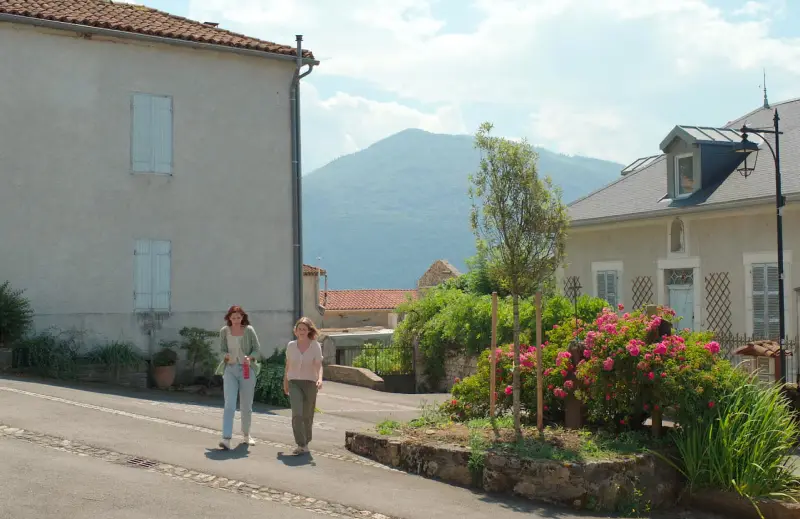
For Koechlin, performance begins beyond analysis. “I suppose observing people is the first step of transforming into characters. I do like to observe. But I tend to use physicality and muscle memory to get into character. The intellectual approach only gets me so far, then I want to actually try things,” she told India-West.
She revisited performances by Julia Roberts, tuning into rhythm and cadence, before carrying that work into real interactions on set. As she refined her accent, she turned to executive producer Eric Gruendemann. “I kept telling him, ‘Talk to me, talk to me,’” she recalls. “And then I just began mirroring his accent. Voice is so closely tied to identity. The moment you shift your accent, you shift how people see you, and how you see yourself.”
The Quiet Power of Small Stories
The production was deliberately small, a far cry from the sprawling sets of Bollywood. “I’ve worked on films with very big setups,” Koechlin told India-West. “But here, we were a tiny team, barely 15 people at times.”
That scale fostered a deep sense of community, where even the villagers became part of the process. The slower rhythm also shaped the storytelling, offering a counterpoint to the frantic pace of contemporary media.
“With the world feeling like it’s on fire, this film slows down,” she reflects. “It looks at how we repeat cycles, how we make the same mistakes, and still offers hope. Today’s digital ecosystem pushes you into a kind of fight-or-flight mode. It’s lovely to work on something that allows you to breathe.”
Beyond the Noise
Koechlin is thoughtful about the evolving landscape of storytelling and the pressure of the “instant impact” era. “There’s a lot of good that’s come out of OTT: more opportunities, more diverse roles. But people can switch off so quickly, so there’s a tendency to make everything immediately engaging.” Still, she remains committed to slower narratives. “I believe in stories that unfold over time. Audiences need to allow that, to sit with something.”
A Career Without a Fixed Pattern
Looking back, Koechlin resists the idea of a clear trajectory. “It’s very hard to see a pattern in my filmography,” she says. “I’ve tried everything: commercial cinema, indie films, theatre, spoken word.”
The contrasts are stark. “One moment you’re traveling in a train with three trunks, the next you’re in a five-star hotel.” However, her relationship with time has shifted. “I’m getting better at slowing down and deciding what I want to spend my time on—mainly because I’ve become a mother. I want to be with my daughter. I don’t just jump onto every passing bus anymore. I wait for the right moment.”
As she shared with India-West, while ‘Her Song’ is her first international project, she is measured about its significance. “I don’t think it’s a turning point artistically. I’ve always done small, independent films. It feels like a one-stop right now, I’m going back to Indian cinema. But it’s exciting to have a film in another language, reaching a different audience.”
The Actor and the “Brand”
Koechlin is candid about the modern pressures of visibility. “Yes, we are expected to be more brands than artists, and yes, I struggle with that,” she admits. At the same time, she acknowledges its necessity. “That version of me has helped me survive when acting work has been very slim.”
Yet, the expectations can blur boundaries. “Sometimes people expect me to be an expert in everything. I can share my opinion, but decisions should be made by people with real expertise. I wish people would focus on my expertise, which is acting.”
Redefining Success
If there is one idea that anchors her journey, it is choice. “Success, for me, is having choice,” she told India-West. “The choice to do what I want and also the choice to not do anything. When you’re starting out, you say yes to everything. But over time, you realize freedom lies in being able to say no.”
Koechlin continues to resist long-term mapping. “I don’t think in terms of plans. I just want to keep doing work that excites me.” With Her Song, she reaffirms a deeper truth: that the most meaningful artistic journeys are guided not by strategy, but by curiosity. In an industry defined by speed, her insistence on slowing down may be her most radical act yet.