Smithsonian To Return Indian Bronzes Of Antiquity Taken From Tamil Nadu
India-West News Desk
WASHINGTON, DC – The Smithsonian’s National Museum of Asian Art here, has formally agreed to the repatriation of three significant antiquities to India after internal provenance research confirmed the items had been illegally removed from their original sites.
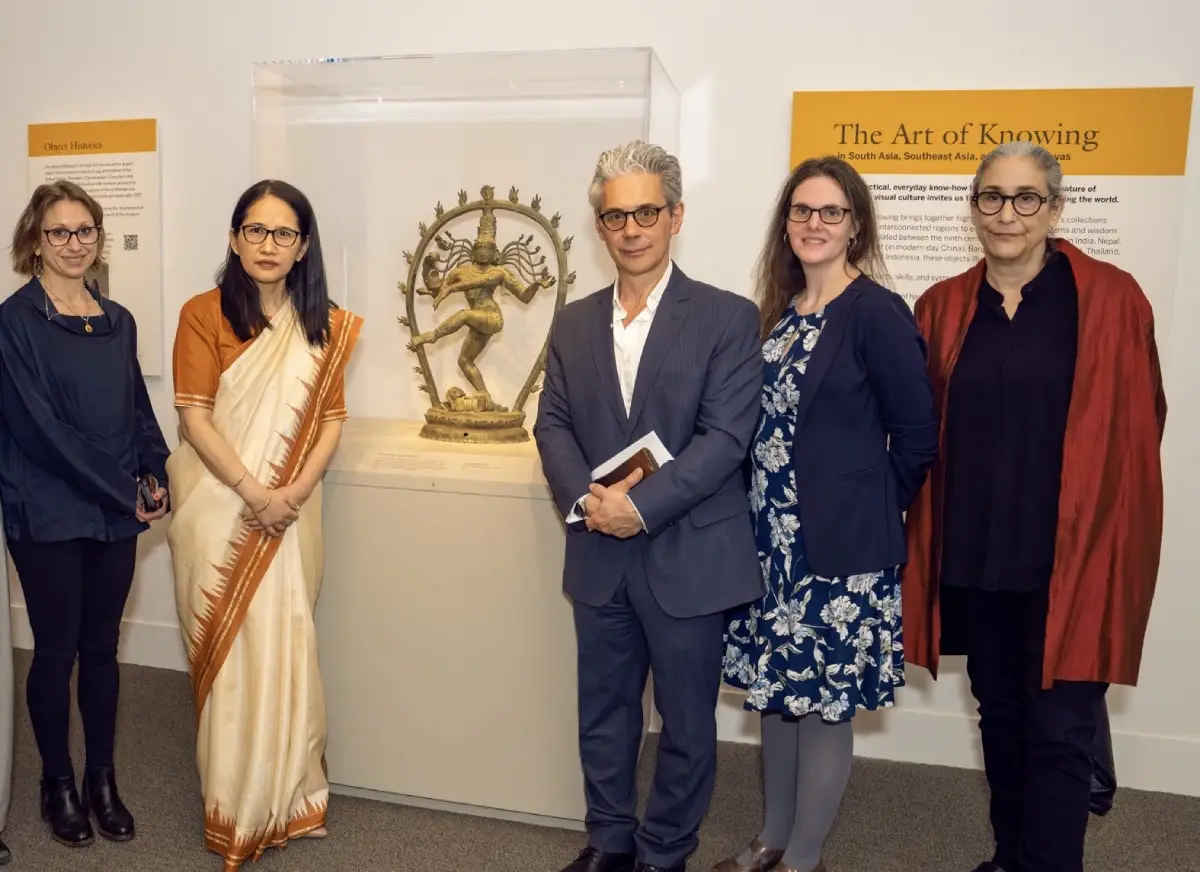
The artifacts, which span several centuries of Indian religious artistry, include a ninth-century bronze of Shiva Nataraja, a 12th-century stone sculpture depicting Shiva and Uma—also known as Somaskanda—and a 16th-century representation of Saint Sundarar with Paravi.
The legal transfer was signed by Namgya Khampa, Deputy Chief of Mission at the Embassy of India, and NMAA Director Chase Robinson. Reflecting on the significance of the return, the Embassy of India in Washington stated that the move followed rigorous historical investigation which “confirmed the antiquities had been illegally removed from India,” marking a pivotal step in the ongoing effort to recover the nation’s stolen cultural heritage.
The investigation into the pieces was bolstered by the Photo Archives of the French Institute of Pondicherry, which provided the “smoking gun” for the objects’ illicit origins. Archives showed the Saint Sundarar sculpture in its original home at a Shiva temple in Veerasolapuram, Tamil Nadu, as recently as 1956. Similar records from 1959 placed the Shiva and Uma sculpture at the Vishvanatha Temple in Alathur, while the Shiva Nataraja bronze was traced back to a 1957 photograph taken at the Sri Bhava Aushadesvara Temple in Thanjavur.
While the ownership of all three pieces has been officially transferred back to the Indian government, the Shiva Nataraja bronze—which the museum originally acquired from a New York gallery in 2002—will remain at the Smithsonian on a long-term loan. This arrangement ensures that the public can still view the masterpiece while acknowledging India’s rightful sovereignty over the work.