Sri Sri Ravi Shankar, Others, Lead Meditation In The UN
NEW YORK, NY – Sri Sri Ravi Shankar invoked Lord Krishna’s timeless lesson on meditation at the United Nations, framing the ancient practice as an essential response to a modern world marked by conflict, anxiety, and fractured communication.
Speaking in New York during the observance of the Second World Meditation Day on December 19, the Art of Living founder recalled Krishna’s teaching of dhyana yoga to Arjuna not in a place of retreat, but on the battlefield itself. That context, he said, makes the message especially relevant today. The world, he noted, is no less a battlefield now, with social tensions, wars, and mental health crises unfolding simultaneously. In such circumstances, turning inward through meditation becomes vital.
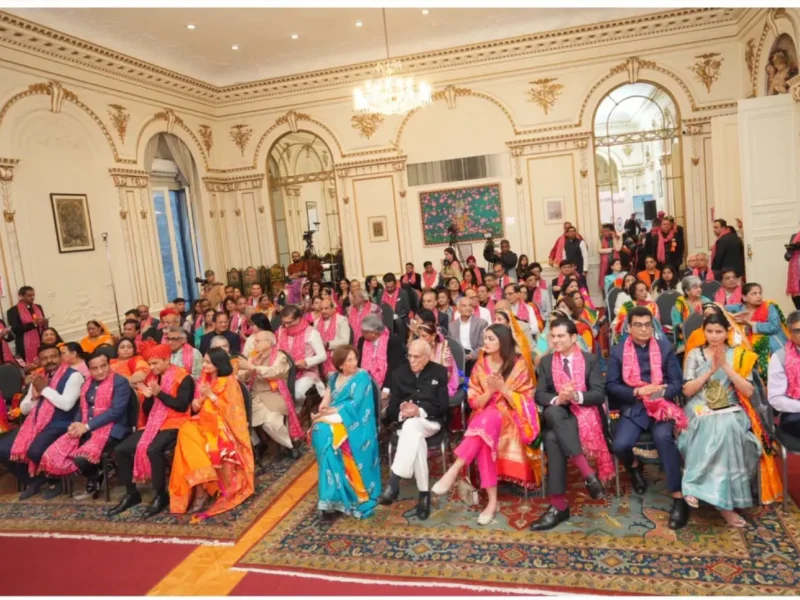
Sri Sri Ravi Shankar led diplomats, UN officials, and spiritual leaders from across the world in a guided meditation session aimed at fostering inner calm as a foundation for global peace. The event was organized by India, Andorra, Mexico, Nepal, and Sri Lanka, the countries that sponsored last year’s General Assembly resolution designating December 21, the Winter Solstice, as World Meditation Day.
Drawing on contemporary examples, he spoke of soldiers in active war zones who have turned to meditation for psychological resilience. Thousands of soldiers in Ukraine and Russia, he said, have been introduced to meditation by Art of Living volunteers. Many of them were struggling with despair, sleeplessness, and a sense of hopelessness. Through regular practice, they experienced improved sleep, renewed energy, and a sense of inner strength, even amid the realities of war.
Sri Sri Ravi Shankar also linked meditation to the growing global mental health crisis, pointing to rising anxiety, loneliness, and social isolation. He described meditation as a proven response that brings clarity, emotional balance, and improved communication. Conflicts, he stressed, do not begin on battlefields but in the human mind. When minds are calm, especially those of decision makers, communication improves and paths to peace become visible. When dialogue collapses, violence follows.
India’s Permanent Representative to the UN, P. Harish, said the recognition of World Meditation Day marked a milestone, acknowledging meditation as a universal practice that transcends culture, religion, and geography. He noted that meditation’s roots stretch back over 5,000 years to ancient India, where Patanjali’s Yoga Sutra articulated dhyana as a state of pure consciousness.
Other speakers echoed the call for inner discipline as a prerequisite for peace. Nepal’s Jeevan Vigyan Foundation co founder L. P. Bhanu Sharma said peacebuilding, like any meaningful habit, must be practiced daily. Expecting leaders to embody peace without cultivating inner stillness, he argued, is unrealistic.
Physicist John Hagelin of the Global Union of Scientists for Peace highlighted research linking social stress to the outbreak of violence and war. While humanity has long tried to address stress through economic and political reforms, he said meditation offers scientifically validated methods to reduce stress at its source, the human nervous system. Even a relatively small number of people practicing meditation, he added, can have measurable effects on social harmony.
Spiritual leaders from Japan and the Brahma Kumaris World Spiritual University also emphasized meditation as a path to enlightenment, balance, and a reversal of humanity’s moral and emotional decline.
Together, the voices at the United Nations converged on a single message. In a fractured world, meditation is not an escape from reality, but a practical tool for restoring mental health, strengthening communication, and laying the groundwork for peace within individuals and across nations. (IANS)