26/11 Terror: Pak Major-General Who Trained 26/11 Attackers Still Remains In The Shadows
NEW DELHI – Eighteen years after the 26/11 Mumbai terror attacks, the identity of a senior Pakistani military officer, referred to by captured terrorist Ajmal Kasab and reconnaissance operative David Headley only as “Major-General Sahab,” remains unknown despite extensive investigations into the attacks.
The officer, described as an influential figure who visited Lashkar-e-Taiba (LeT) training camps and personally supervised aspects of the terrorists’ preparation, has never been conclusively identified.
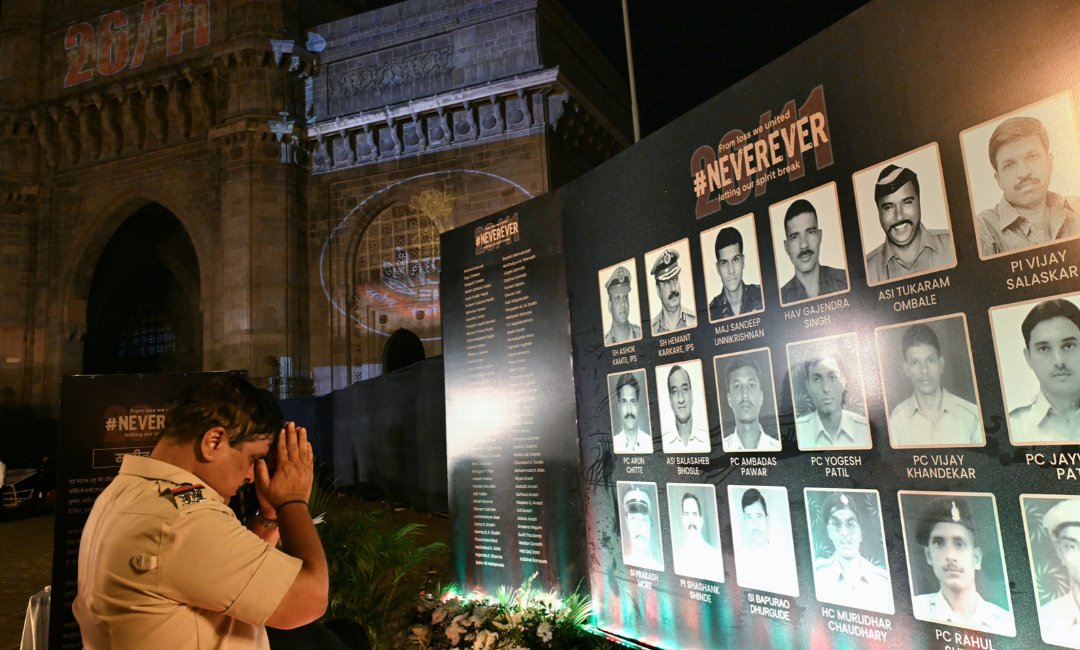
The November 2008 attacks killed 166 people and injured more than 300 after 10 LeT gunmen launched coordinated assaults at multiple locations across Mumbai, including the Taj Mahal Palace Hotel, Oberoi-Trident, Chhatrapati Shivaji Terminus and Nariman House.
The attackers opened indiscriminate fire, hurled grenades and targeted civilians. Nine were eventually killed by security forces, while Kasab was captured.
During his interrogation, Kasab provided investigators with details of the training and preparations preceding the attacks. He reportedly referred to a senior Pakistani officer whom recruits and trainers addressed as “Major-General Sahab.”
According to Kasab’s statements, the officer regularly visited LeT training camps near Muzaffarabad in Pakistan-occupied Kashmir and was treated with considerable deference by both the terror group’s leadership and military trainers.
Kasab recalled that LeT chief Hafiz Saeed and operational commander Zaki-ur-Rehman Lakhvi greeted the officer warmly. He also described the officer personally overseeing portions of the training.
One incident involved a firing exercise in which the officer reportedly inspected the targets and praised Kasab’s shooting skills. He is also said to have revisited the trainees to assess their preparedness and motivation before they were dispatched across the Arabian Sea to infiltrate Mumbai’s coastline.
Despite these accounts, investigators have been unable to establish the officer’s identity. The Mumbai Police chargesheet listed him as “Accused No. 20: Major General Sahab, name unknown.”
He remains the only one among the 32 Pakistani suspects associated with the case whose identity has not been established. No publicly known photograph, sketch or confirmed biographical details of the officer have emerged.
Headley, a Pakistani-American operative who conducted reconnaissance of potential targets before the attacks, also described extensive connections between LeT, Pakistan’s Inter-Services Intelligence (ISI) agency and serving military officers.
In his statements to Indian investigators, Headley named several officials, including Major General Muhammad Khalid Rao, Colonel Sadatullah, Major Iqbal and Lieutenant Colonel Hamza, as individuals connected to the operation. However, his disclosures did not definitively establish whether any of them was the elusive “Major-General Sahab.”
Investigators and analysts have suspected that the officer may have been associated with the ISI’s covert operations wing, commonly referred to as Directorate S. The unit has been linked to the management of proxy militant organisations and clandestine operations abroad. Its leadership has also included officers holding the rank of major general, adding to speculation about the unidentified officer’s possible position.
Subsequent reporting also examined the roles of two former Pakistani military officers, Major General Asif Akhtar and Lieutenant General Nadeem Taj, both of whom held senior intelligence positions around the period preceding the attacks. However, no publicly available evidence has conclusively connected either man to the identity of “Major-General Sahab.”
While Kasab was tried and executed in India, several individuals accused of planning, supporting or overseeing the attacks from Pakistan remain beyond the reach of Indian courts. Islamabad has not cooperated with India’s efforts to bring those responsible to justice.
Eighteen years later, the unidentified “Accused No. 20” remains an unresolved element of the investigation into one of India’s deadliest terror attacks. (IANS)