Modi Govt. Distances Itself From Row Over Women Being Sidelined During BAPS Eiffel Tower Visit
Photo: screengrab from YouTube
India-West News Desk
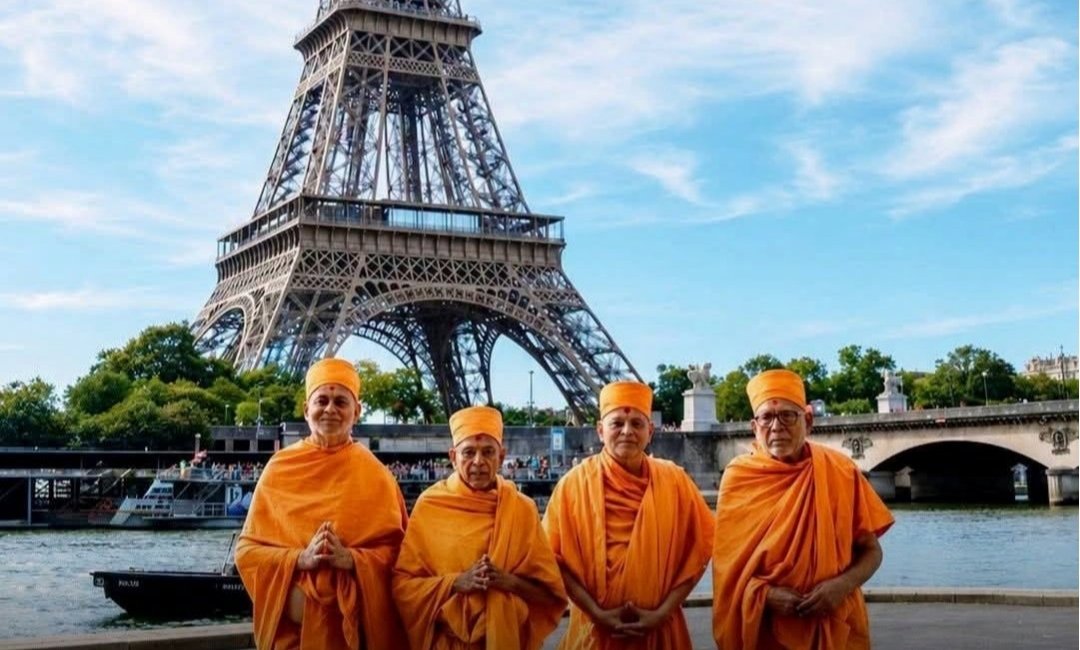
NEW DELHI – India on September 8 distanced itself from the controversy that erupted at Paris’ Eiffel Tower after women employees were allegedly sidelined during a visit by a delegation of 100 men from the Bochasanwasi Akshar Purushottam Swaminarayan Sanstha (BAPS), saying the issue was “purely between the entities concerned.”
Ministry of External Affairs spokesperson Randhir Jaiswal said India was aware of the inauguration of a BAPS temple near Paris but indicated that the dispute over the Eiffel Tower visit did not involve the Indian government. Prime Minister Narendra Modi’s government is known to have close ties with the Gujarat headquartered BAPS and as is the norm on these occasions, had sent in a video message of appreciation.
The MEA’s response came a day after the Eiffel Tower was shut to visitors following a staff strike over allegations that female employees had been asked to leave their posts and avoid certain areas while a BAPS delegation visited the landmark.
The tower reopened on September 8 after employees and management met to address the dispute.
The controversy centers on a private visit by around 100 people associated with BAPS on September 5, amid events surrounding the inauguration of the organization’s new Hindu temple near Paris.
According to Eiffel Tower staff representatives, women employees were instructed to step away from their workstations as the delegation passed through the structure. Some were reportedly replaced by male colleagues, while female workers were told not to enter or cross certain areas during the visit.
In a statement, employees denounced what they described as “professional instructions that led to female employees being sidelined, replaced and made invisible because of their sex.” They said they were shocked to have been placed in a situation they considered contrary to principles of equality and non-discrimination.
The allegations triggered a walkout by Eiffel Tower employees on September 7, forcing the iconic landmark to close for the day and leaving visitors facing signs saying its opening was delayed for operational reasons.
SETE, the company that operates the Eiffel Tower, acknowledged that the visiting delegation had requested arrangements limiting “interactions with women.” The company subsequently conceded that “these conditions should not have been accepted.”
The episode prompted an angry response from officials in Paris, with Mayor Emmanuel Grégoire announcing an investigation into what happened.
“I am taking note of the anger expressed by the employees of the Eiffel Tower, and I want to tell them that their discontent is legitimate,” Grégoire said in a post on X.
He added that it was “urgent that all light be shed on the facts that led to this protest.”
Other French political figures also condemned the reported treatment of the women employees. National Assembly President Yaël Braun-Pivet wrote that “Welcoming others never means giving up our values,” adding that in France, “women are fully present in public life. No one tells them to become invisible.”
Equality Minister Aurore Bergé similarly wrote: “In France, we do not ask women to erase themselves. No dogma, no religion is above the laws of the Republic.”
BAPS, however, said its visit had been arranged in advance with Eiffel Tower management because of the size of the delegation and the need to avoid disrupting other visitors.
The organization said, “To the best of our knowledge, at no point was anyone prevented access to the Eiffel Tower,” while apologizing to anyone who may have been “hurt or inconvenienced by this situation.”
BAPS said it was “deeply committed to the universal values of mutual respect and service to others.”
The Eiffel Tower, one of France’s most recognizable landmarks and a major tourist attraction, was closed throughout September 7 because of the staff action. It resumed normal operations the following day.