Huge Spike: 500,000+ Anti-South Asian Hate Posts In 18 Months Documented
Image: CSOH
India-West News Desk
WASHINGTON, DC – A sharp rise in online hostility toward South Asian communities is being driven by immigration rhetoric, economic resentment, and digital amplification, according to a report released by the Center for the Study of Organized Hate (CSOH).
Titled ‘The Rising Tide of Anti-South Asian Hate in the United States,’ the study tracked online harassment targeting Indian, Pakistani, Bangladeshi, and other South Asian groups across X, 4chan, 8chan, and Gab.
A Dramatic Surge Across Social Platforms
Researchers identified more than 500,000 anti-South Asian hate posts on X between January 2025 and June 2026, with monthly volume surging 75 per cent over the 18-month span. In 2025 alone, X recorded 328,747 such posts-a 60 per cent jump from the previous year. On fringe platforms, researchers logged nearly 400,000 hateful mentions in 2025, with over 90 per cent originating on 4chan.
Slurs, Tropes, Harassment
Immigration discourse and the H-1B visa program featured heavily in the findings. About 45 per cent of the posts analyzed on X depicted South Asians as “invaders,” job thieves, or demographic threats. Racial slurs and dehumanizing tropes were widespread; the slur “pajeet” appeared in roughly 30 per cent of the X posts examined and 45 per cent of mentions on fringe sites. Hygiene-based harassment proved to be the fastest-growing category on X, leaping 171 per cent during the study window.
The report also detailed how generative AI tools are being deployed to produce racist caricatures that frame South Asians as criminals, scammers, or predatory threats.
Core Drivers of the Backlash
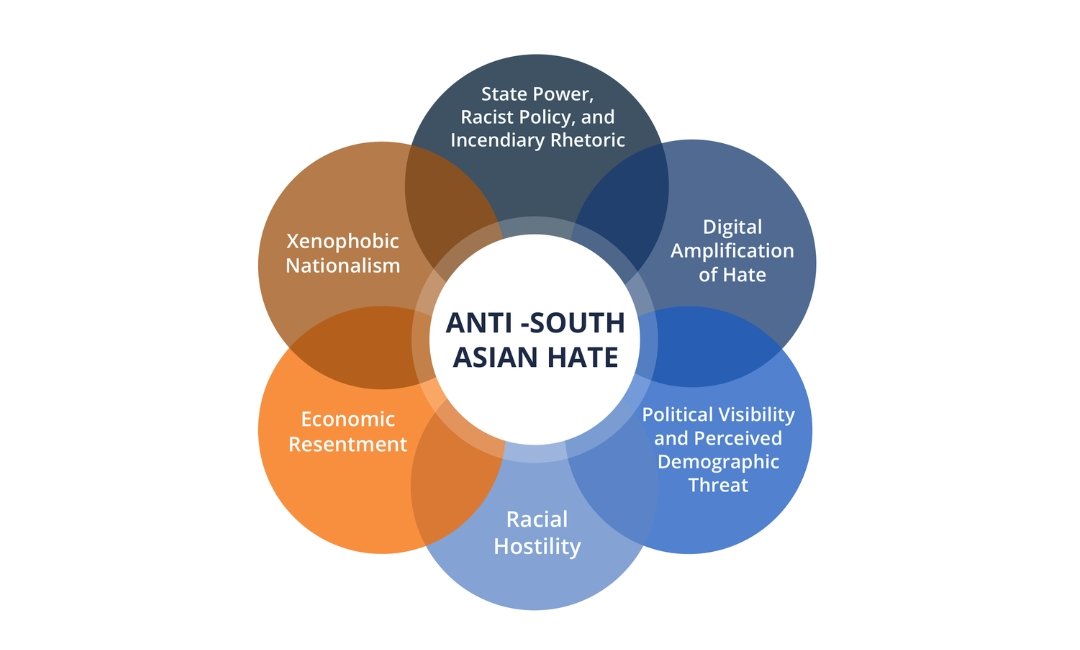
CSOH highlighted six main drivers behind the trend: official policy and rhetoric, xenophobic nationalism, racial hostility, high-profile political visibility, economic anxiety, and algorithmic amplification. The attacks frequently crossed religious lines, targeting Hindus, Muslims, and Sikhs alike.
Escalating into Real-World Violence
Crucially, researchers warned that digital vitriol is translating into real-world harm. The report documented instances of doxxing, filmed workplace confrontations, and physical violence -including the July 2026 hate-crime stabbing of an Indian Muslim mall employee in Utah and the September 2026 stabbing of a Sikh truck driver in Wyoming.
“Online and offline hostility reinforce each other,” the authors noted, as hateful narratives move fluidly from social media into political rhetoric and everyday life.
For detailed report: https://www.csohate.