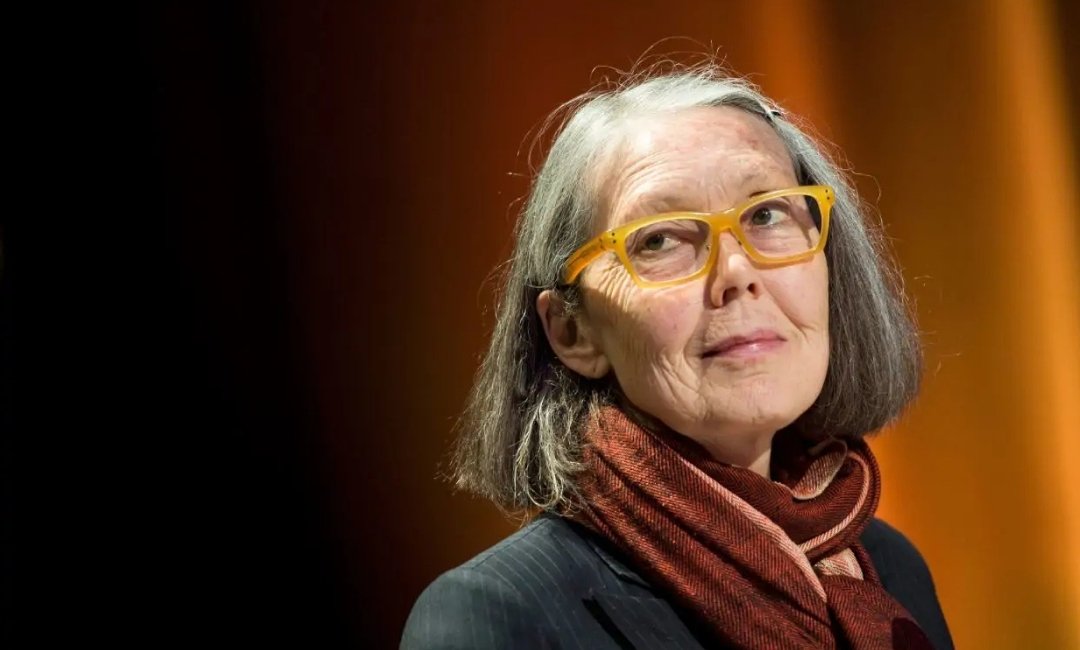
Canada’s Anne Carson’s Genre-Bending Work Wins Nobel Literature Prize
TORONTO-Canadian classicist, author and academician Anne Carson, whose work defies traditional genres by blending poetry, prose, fiction, nonfiction and translation, was on October 8 awarded the Nobel Prize in Literature 2026.
Carson, 76, was awarded “for her bold and inventive oeuvre that, in playful dialogue with the classical tradition, has created new forms for contemporary literature”, the Swedish Academy, which selects the literary laureate, announced.
The third Canadian to win the Nobel Prize in Literature and the first after Alice Munro in 2013, Carson is the fifth woman to receive the award in the last 10 years. The previous female laureate was South Korea’s Han Kang, who won in 2024.
With a background in classical Greek and Latin literature, Carson has drawn extensively on ancient authors including Aeschylus, Euripides, Homer, Sappho, Sophocles and Thucydides of ancient Greece, as well as Catullus of ancient Rome. She has also taken inspiration from modern writers including Emily Bronte, John Keats, Franz Kafka and Virginia Woolf, as well as philosophers Georg Wilhelm Friedrich Hegel and Martin Heidegger.
Carson’s translations of ancient Greek works include ‘Electra’ (2001), based on Sophocles’ play; ‘If Not, Winter’ (2002), based on the works of Greek poet Sappho; ‘Grief Lessons’ (2006), bringing together four plays by Euripides; and ‘An Oresteia’ (2009), which brings together works by Aeschylus, Sophocles and Euripides. Her other translations include Euripides’ ‘Iphigenia Among the Taurians’, as well as ‘Antigone’ and ‘Bakkhai’, both published in 2015.
Her first published work was ‘Eros the Bittersweet: An Essay’ (1986), a reworked version of her 1981 doctoral thesis, ‘Odi et Amo Ergo Sum (I Hate and I Love, Therefore I Am)’, which examined the concept of eros, or the state of being in love, in ancient Greek literature.
The work also found an unexpected connection with American popular culture when it was referenced in the debut episode of the American television drama ‘The L Word’, in an exchange between characters Jenny and Marina.
Among Carson’s other notable works is the poetry collection ‘The Beauty of the Husband: A Fictional Essay in 29 Tangos’ (2001), which combines erotic, painful and heartbreaking scenes from a doomed marriage and is dedicated to Keats, drawing on his definition of beauty in ‘Ode on a Grecian Urn’.
‘Men in the Off Hours’ is another genre-defying collection featuring short poems, verse essays, epitaphs, interviews, scripts and translations, bringing together references to writers, thinkers and historical and mythological figures from different periods.
Carson’s unconventional approach is also evident in ‘Norma Jeane Baker of Troy’, a spoken performance piece that debuted in New York City in 2019 and places Marilyn Monroe alongside the legendary Helen of Troy, loosely drawing on Euripides’ 412 BCE play ‘Helen’.
Another work, ‘The Trojan Women: a Comic’ (2021), reimagines Euripides’ ‘The Trojan Women’ in comic-book form, focusing on the fates of Queen Hecuba, Andromache and Kassandra after Troy is sacked and its men are killed by the victorious Greeks. (IANS)