Dolores Huerta Remembered For Building Bridges Across Communities, Indian American Sikh Farmers
Photo: Ellary Allis
By Fatema Baldiwala
BAKERSFIELD, CA – The life of Dolores Huerta was celebrated in a fitting tribute to a woman whose influence extended far beyond the farmworker movement. At 96, the legendary labor leader and civil rights activist left behind a legacy that crossed ethnic, religious, and cultural boundaries. For California’s Indian American community, her passing also represents the loss of an ally who recognized the contributions and struggles of Punjabi Sikh farmworkers and understood that the fight for workers’ dignity knew no borders.
For Mani Kang, a Punjabi Sikh who had the privilege of knowing Huerta for nearly two decades, the memorial was both a heartbreaking farewell and a celebration of a remarkable friendship.
“I had the honor and pleasure of meeting Dolores Huerta almost 20 years ago, in 2007. During the presidential campaigns, when several candidates were launching their campaigns, she had come down to Orange County for Hillary Clinton events. I happened to be there and was fortunate enough to meet her. What began as an encounter developed into a friendship that lasted almost 20 years,” Kang recalled.
Over the years, Kang would encounter Huerta at political gatherings, community events throughout California and Democratic National Conventions, where she was often present as a delegate.
While Huerta is internationally recognized for standing alongside César Chávez in building the United Farm Workers (UFW), Kang believes an important part of her legacy remains less widely known: her connections with Punjabi Sikh agricultural workers.
Decades ago, Huerta reached out to Punjabi Sikh farmers and laborers in the Imperial Valley, particularly around El Centro. Many Punjabi families had established roots in California generations earlier. Their history is intertwined with that of Mexican American families, including communities formed through Punjabi-Mexican marriages dating back to the early 1900s.
Kang explained that Huerta understood these workers were part of the same struggle for fair wages, dignity, and better working conditions.
Punjabi farmworkers, Filipino laborers and Mexican American families shared workplaces, hardships and aspirations. Huerta recognized that solidarity was more powerful than division.
The memorial events reflected the extraordinary breadth of Huerta’s influence. Following a public tribute at the California State Capitol in Sacramento, where she became the first woman to lie in honor, the celebrations continued in Bakersfield, her longtime home.
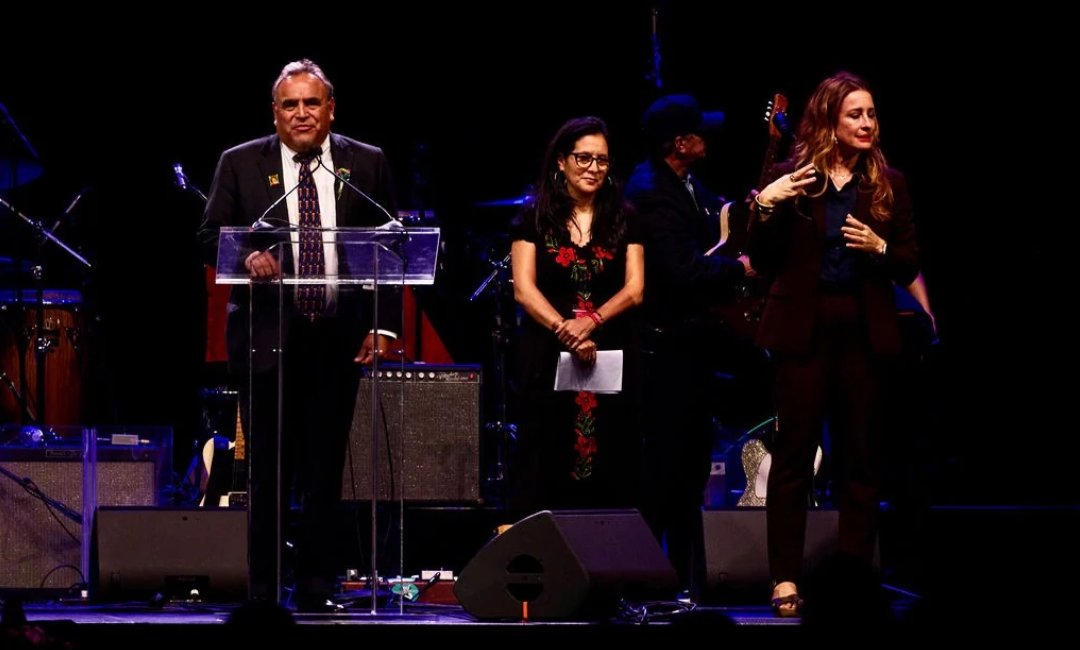
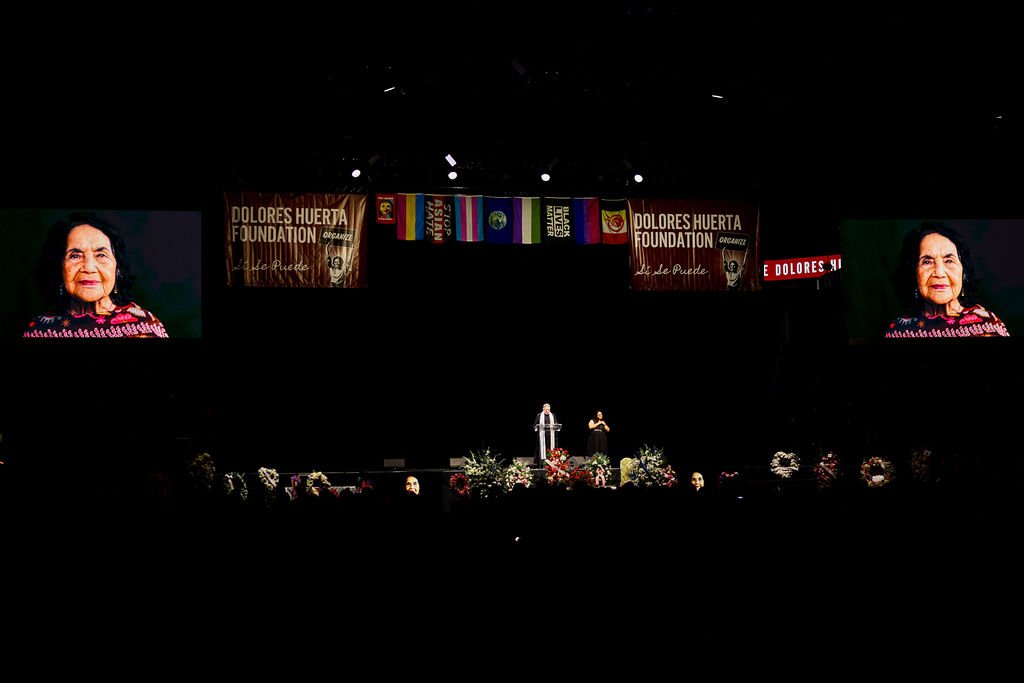
A public rosary and evening vigil took place November 19, at the IBEW Local 428 Hall. On November 20, thousands gathered at Dignity Health Arena for an interfaith memorial service followed by a celebration of life.
Hindu, Muslim, and Sikh prayers and sacred readings were part of the interfaith observance, with contributions from Sikh representative Paran Singh Mangat, Muslim community representative Aziza Hasan, and Hindu representative Dr. Sudarshan Kapoor.
The gathering also featured an extraordinary lineup of public officials, labor leaders, activists and cultural figures. Governor Gavin Newsom, Governor-elect Xavier Becerra, Kathy Spillar and Kerry Kennedy were among those honoring Huerta’s life and contributions.
Music was an essential part of the celebration. Mariachi performances, traditional Mexican music and musical meditations filled the arena.
The tribute was particularly poignant given Huerta’s own place in American political history. She was present at the Ambassador Hotel in Los Angeles on June 4, 1968, when Senator Robert F. Kennedy won the California Democratic presidential primary. Minutes later, Kennedy was shot. Huerta witnessed the tragic events surrounding his assassination.
Huerta’s commitment to activism came at a personal cost. In September 1988, at age 58, she was brutally beaten by San Francisco police officers during a peaceful demonstration against then-presidential candidate George H.W. Bush. She suffered two broken ribs and a ruptured spleen and required emergency surgery. Yet the incident did not silence her.
She continued organizing, advocating for labor rights, encouraging voter participation, and ensuring that communities historically excluded from political decision-making had a voice at the table.
Her famous rallying cry, “¡Sí, se puede!” (Yes, we can!), became much more than a slogan for farmworkers. It evolved into a universal call for empowerment, collective action and social justice.
For Kang, Huerta’s greatest achievement was her ability to recognize humanity in everyone, whether she was working with Punjabi Sikh farmers, Chinese and Asian American communities confronting hate, or Latino families fighting for economic justice.
Her message was simple but enduring: justice belongs to everyone, and the responsibility to fight for it belongs to all of us.