
Protests In Iran Spark Worries In India Over Chabahar Port Project
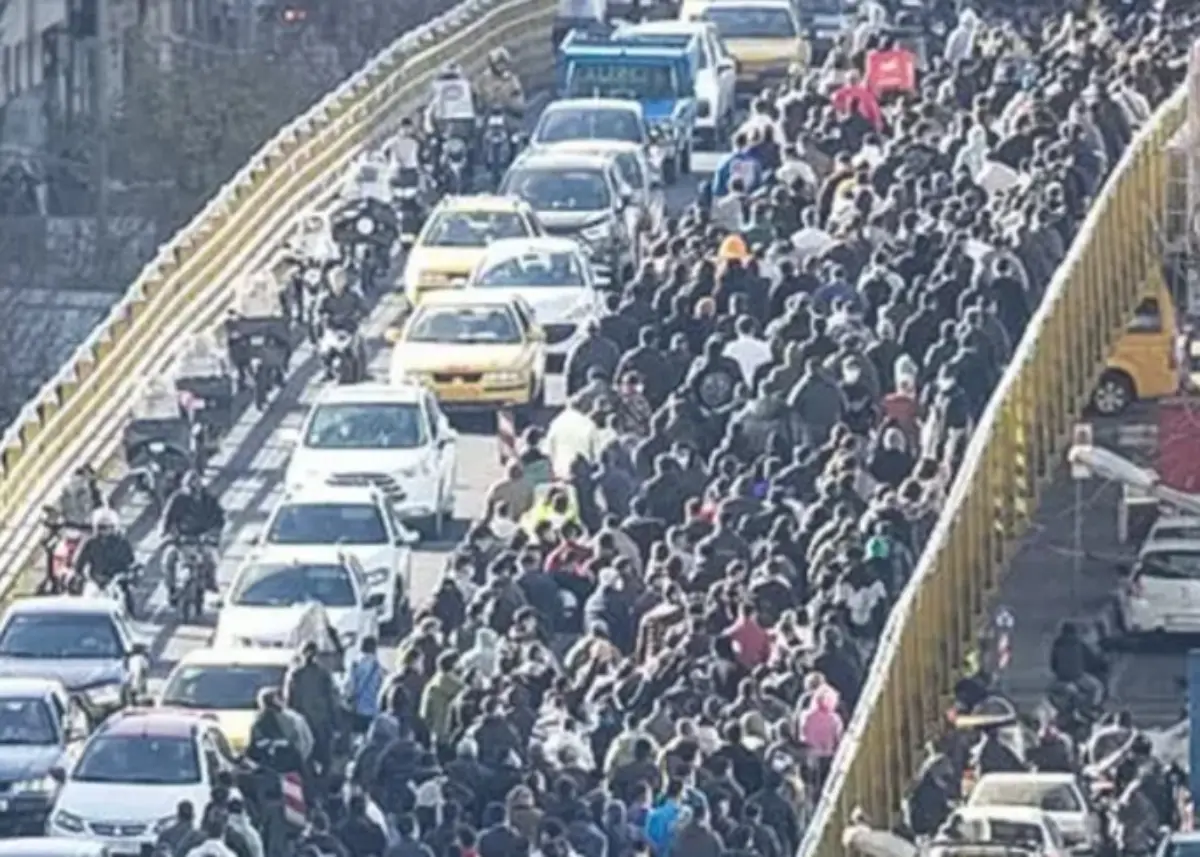
NEW DELHI- The situation in Iran has turned chaotic, and protests have spread across over 100 cities in the country. India is keeping a close watch on the situation as regime instability is rising in Iran. This poses a risk to India’s strategic investment in Iran’s Chabahar Port.
Officials in New Delhi say that these protests are concerning when it comes to the safety and continuity of operations at the critical port, in which India has an investment of nearly $500 million. An official said that there is no threat to the project as the protesters would not look to damage it. However, the concern is about the continuity of the project, and if the protests intensify further and there is a regime change, there would be a major delay, the official added.
The Chabahar Port is strategic for India. It is a gateway for India to bypass Pakistan to access Afghanistan, Russia, Europe and Central Asia. This port helps India in fulfilling its Connect Central Asia policy. Once ready, the port would boost trade with landlocked nations such as Uzbekistan, Turkmenistan and Kazakhstan.
The port is also part of the International North-South Transport Corridor, which is a 7,200 km ship-rail-road network that links India to Iran, Russia, Europe and the Caspian Sea. This reduces transit time by nearly 40 per cent, apart from cutting costs by around 30 per cent.
The ongoing protests are likely to cause a delay in the completion of the project, and this would work against India’s advantage, officials note. A key part of the INSTC is the Chabahar–Zahedan railway project. The ongoing unrest could delay rail connectivity, which will eventually undermine the efficiency of the corridor.
New Delhi is worried that the unprecedented protests that have rocked Iran could delay cargo handling and also the development of infrastructure at Chabahar. The protests have already led to internet blackouts and disruptions in supply chains. All these are affecting the project, and hence, for India, it is important that normalcy returns to Iran.
It has been a nightmare for the security agencies in Iran to handle the situation currently. To add to this, the morale of the low-ranking cadres in the Islamic Revolutionary Guards (IRG) is down due to the growing economic crisis. All these factors have led to insecurity among the labor class, who feel that they could be targeted by the protesters due to a lack of security.
Another factor that India is bearing in mind is the moves that China could make during such a time. China is known to make its moves in a country which is undergoing instability. Chabahar is a counter to China’s growing influence at the Gwadar Port in Pakistan, which is located 170 km away.
Chabahar for India is also important since it helps in monitoring Chinese naval activity in the Arabian Sea and the Indian Ocean. India hopes that the dust in Iran will settle soon, so that its strategic investments are not hurt. Further, India would also be mindful of the fact that the Chinese are scaling up massively in Gwadar. Hence, a delay at Chabahar could delay India’s long-term plans, an official added.
Starting December 28 2025, mass protests erupted in Iran due to the deepening economic crisis and frustration with the Islamic Republic Government. Initially, the protest was about rising inflation, food prices and severe depreciation of the Iranian Rial. However, the protests quickly also changed course and today it is also about seeking regime change.
The protests began with shopkeepers hitting the streets, but today, students and the general public are also part of the protests. What began in a few cities initially has spread across 100 different places in Iran. (IANS)


Girish Modi, Decatur, GA
/
American Protests vs. Iranian Protests
Citizens all over the world possess a fundamental right to protest when government ignores their needs, yet the global response to such dissent is often defined by a stark double standard.
In the United States, a recent event in Minneapolis has highlighted the deadly stakes of domestic civil friction. Recently in Minneapolis, a woman and her partner were just following ICE agents in a car and photographing their actions. They were not carrying any deadly weapon. When the argument got unpleasant, she tried to leave. An agent got in front of her car and shot her through the windshield and killed her. It was shocking, still the Trump administration says this killing was self-defense since agents have immunity. But people ask, why not let her drive away or shoot in the tire and disable the car? This tragedy has sparked nationwide protests and Congress calls for investigations. Furthermore, the Trump administration’s defense of the use of force contrasts sharply with its rhetoric abroad.
In Iran, a similar wave of unrest is sweeping the country. Driven by hyperinflation and a collapsing currency, Iranians took to the streets to demand action. What began as peaceful demonstrations has turned violent following a brutal police crackdown that has claimed dozens of lives. Protesters are now demanding the fall of Ayatollah government established in the aftermath of 1979 Revolution. While this remains an internal Iranian struggle, Trump and Netanyahu are threatening military action to topple the Iranian regime.
Ironically, the same administration that justifies a lethal crackdown on domestic observers in Minneapolis and condemns the Iranian government for its own repressive tactics also uses “national interest” argument against other weak Latin American countries. Two weeks ago U.S. special forces in a midnight raid captured Venezuelan President Maduro to face prosecution in New York. Though Trump argues for a crackdown on drug cartels, the real motive is rooted in Venezuela’s vast oil and mineral reserves.
Yet, no such military action is taken toward autocrat Vladimir Putin, under whom Russians are suffering. Also, instead of negotiating a peace treaty in four-year long Ukrainian war that favors Putin’s demand or selling more high-tech weapons to Ukraine that will prolong the war, why not send American forces and drive out Russian aggressors like America kicked out Saddam Hussein from Kuwait or fought long war against Communists in Vietnam?
As these crises unfold, the United Nations remains largely paralyzed, since meaningful actions frequently stifled by U.S. or Russian vetoes. These events expose a “phony” world order where the definitions of “justice” and “sovereignty” change depending on whose interests are at stake.
Girish Modi, Decatur, GA
January 12, 2026Sam
/
Girishbhai.
Let them fight. This is nature’s way to balance a population of pests.
Enjoy the show while it lasts. Indians have their own problem with Islam in India.
January 13, 2026