Never Done It, No One Has Heard Me Do It: TM Krishna On Viral Claims Of Replacing ‘Rama’ With ‘Allah’ In His Music
By NIMMI RAGHUNATHAN
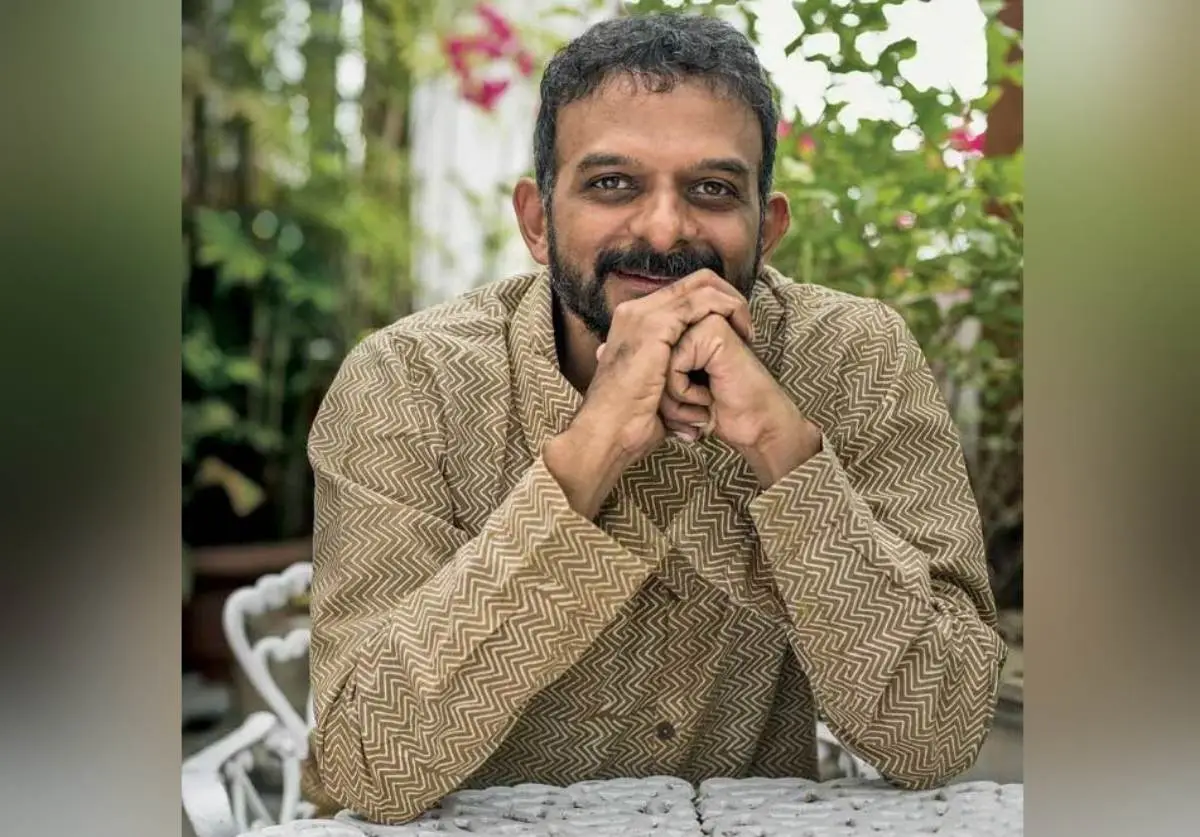
The recipient of a long list of honors, including the Magsaysay Award and the 2024 Sangita Kalanidhi, which exploded into headlines, not all good, T.M.Krishna is a star who shines beyond the confines of his arena. He is like a Rajnikanth or Shah Rukh Khan – you don’t have to have watched a single Tamil or Hindi film to know who they are.
Krishna is a man with as many voices as society has grievances.
Brahmin by birth, he does all he can to make Dalit voices heard. From a wealthy, well-connected family, he is prone to questioning privilege. He is a thinker and writer given to semantics and quarrels with the way things are spelled.
Brimming with unquestioned talent and virtuosity in the hoary Carnatic music tradition, he keeps finding ways to tug and pull classical music into contemporary spaces. To the usually spiritually laden classical music stage, he sets to tune literature, environmental causes, and works of social reformers.
He has also reinvigorated or deconstructed – depending on your point of view – the concert format. He is likely to sing a Thillana, usually done closer to the end of a concert, bang in the middle. Instead of the rat-a-tat 10-12 songs that are the norm, he might give the audience a leisurely, highly technical, and deep exposition of, say, 3 ragas.
For his critics, mostly upholders of tradition, Krishna is a thorn. The trouble for those he critiques is that his audible activism comes with a musical brilliance that cannot be denied. Fans keep pouring in, and the youth are lapping it up.
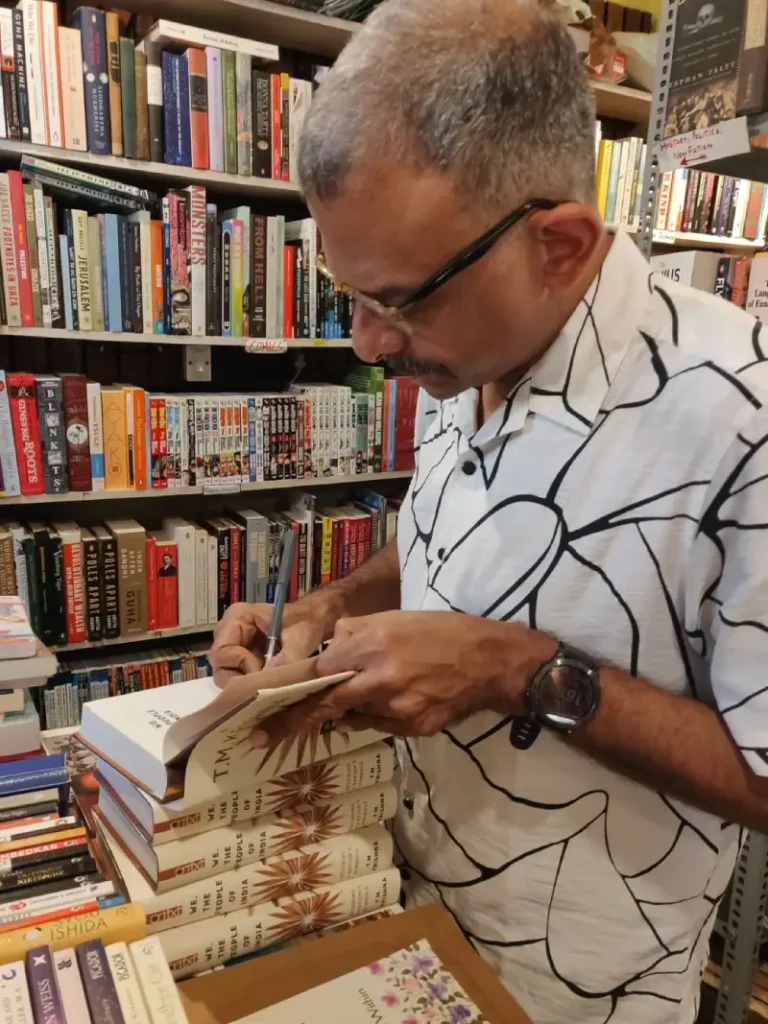
Bucking the system also means speaking truth to power. His progressive views, which have stirred the political pot, have drawn the ire of the right wing. Rejecting their attempts to label him anti-national, Krishna now has a new book, ‘We, the People of India: Decoding a Nation’s Symbols,’ in which he revisits the histories and debates behind the flag, anthem, emblem, motto, and Preamble, and reflects on what it means to be Indian.
Krishna was in Southern California recently to perform at the *Indian Fine Arts Academy, San Diego, when he spoke with India-West about his book and more.
Personable, with the easy assurance and fluency of someone who has lived in the public eye since being declared a prodigy at 12, the now 50-something maestro can tug at you when he pauses, almost retreating into himself as he searches for words to express the human condition. Given his wide-ranging interests and keen intellect, the conversation could easily have gone deeper and stretched longer into the evening, but here are some edited excerpts:
Q: What surprised you most while working on your new book?
A: The reason I wrote this book is because of the present environment of hate and the normalization of “othering” people. I wanted to understand the emotive landscape at the time we became independent, and to compare it with where we are today: was the idea of India always utopian? In many ways, it is a dialog between the past and the present. So, a lot of things surprised me. For instance, almost nothing has been written about the national emblem or motto. Even basic questions, such as how they were adopted, had no clear answers. But perhaps the most striking realization was the sheer honesty and integrity of the people who participated in the freedom struggle and in the making of the Constitution. People from across ideological spectrums came together with a shared belief in the importance of inclusion. That, to me, is extraordinary. Today, people from that period are casually demonized. It is deeply misplaced.
Q: What has been lost between aspiration and reality?
A: The spirit of fraternity. The belief that we can disagree and still respect one another as human beings; the freedom to be who you are and to express that without judgment. That was the aspiration. We also wanted to be a confident and self-reliant nation, not an oppressive replication of colonial powers. The Four Lions, facing the cardinal directions, symbolize the Buddha’s teachings of spreading justice and dignity. But sadly, we have become triggered and angry lions.
Q: The hate business is big in the US now. Are there any parallels with India?
A: A lot. This is happening everywhere, and America is just part of a larger global phenomenon of bigotry and parochialism. That’s why I think we are all struggling, because it has a kind of transnational resonance. But you know what surprises me? Let me put this out, since we’re having this discussion. And I make this generalization with care, great care. (Pauses) When I meet Indians here…what I don’t understand is, when you’re able to recognize what happens when you are attacked as a minority… how is it that the same NRI doesn’t have the same sensitivity to see what is happening to minorities in India? You see yourself as a victim, so how is it that you don’t extend the same empathy? It’s the same frame, just with a different vocabulary.
Q: You have suggested that the Indian anthem could be sung in different languages.
A: The fact is, every language has its own resonance, in vocabulary, in sound, in musicality. If we accept an anthem as something that is meant to create cohesiveness, then people need to feel it emotionally within themselves. And your language is in which you best express the subtleties of what you feel. So, if every person – Telugu, Marathi, Gujarati, Tamil – were singing this song, I think they would have a far more personal relationship with the anthem. I don’t think the political world understood that a unified melody can unify a diverse set of languages. You actually bring those languages together by tying them through sound. Jana Gana Mana is not just lyrics; it is also a melody, something that lives instrumentally and collectively.
Q: Your Twitter bio reads, “musician, author, activist(;) sing, write, speak, and remain silent.” You are not silent.
A: I’d forgotten I put that there! I think compared to 15 years ago, I’m relatively silent! I hope I’ve learned to speak only when I feel I have something substantial to say. I’ve learned that sometimes you don’t need to respond. Silence gives you time to reflect, and occasionally, there’s more nuance to your own thought than before. The most important part of silence, I think, is listening.
Q: Would the world be a better place if people with fame and clout used their voices?
A: Well, I think it’s essential that people who have privilege, not necessarily fame, speak. It’s important that they don’t speak for others, but rather for themselves and to people like them. Who am I to speak for a Dalit, a woman, or someone who truly understands struggle? Those of us with privilege can’t fall back on excuses of threats, losing opportunities, or money. If I’m not willing to take that risk, then something’s simply wrong. People readily align with the majority, choosing what benefits them, and then say they’re not political. But it is political, and we have to be political, but in a way where empathy is the foundation.
Q: How difficult is it to be empathetic at this level? Do you get emotional? Despondent? What happens?
A: All of it. There are mornings when I just feel helpless, I’m not going to make a difference, I’m just one person. It’s a great sadness. And there is the conflict. You feel that sadness, but you recognize you’re fortunate to even be able to feel that, because you are lucky you’re not being beaten, or told you don’t belong in the country. Of course, then something small and lovely will happen, and it lightens the day. We really underestimate the power of those small things that go beyond the immediacy of tomorrow. So yes, it feels like a pendulum in some ways.
Q: Why do you think your popularity has not dimmed despite being so political?
A: (Laughing) A very good question! Maybe that’s why people are more upset with me! I would like to believe I’m a pretty decent musician. I’ve had people say different things to me. One set said they stopped listening to me because of my politics. Others had stopped engaging with Carnatic music but have come back because of what they heard from me. Then there are those who know absolutely nothing about music but come to my concert because of my politics. There are also those who disagree completely with my politics but will come for the music. I think everyone has their entry and exit points. But I will say this: in the last 15 years, the people who engage with me are incredibly diverse because I perform in very, very diverse places. Maybe that has somehow kept it going!
Q: A criticism is that you take this Bhakti music and transpose Krishna and Rama’s names for Allah or Jesus. What are you trying to do?
A: I have NEVER done it in my life. It’s an outright lie that has been going on in social media for the last decade that I’ve taken a Tyagaraja Kirtana and replaced the name of Rama with Jesus. Nobody’s EVER heard me sing this. The lie has now been repeated so many times people believe it. Do I sing songs on Allah? Jesus? Buddha? No god? Yes, I do. Do I sing Tyagaraja Kirtanas, Dikshitar? YES! I believe Carnatic music does not belong to any one religion or section of society. It needs to have the vocabulary, the resonance, even the agnostic and atheistic natures of a diverse society. I sing songs that talk about issues of today. All these different voices coexist in my musical expression. I think Carnatic music must reflect the times it lives in, not just be something from 200 years ago.
Q: Why haven’t you refuted the claims?
A: I did at first, they don’t want to listen.
Q: Bhakti to you is…
A: I can’t define Bhakti in a better way than what I just did now to you. I refuse to make bhakti a narrow notion of one manner of believing in one thing. What you are experiencing is habitual pleasure, which you call bhakti. In its true sense, it cannot have borders of any sort. I think of it as an all-encompassing idea of humanity.
Q: You have basically deconstructed how a Carnatic concert should be. Boredom, defiance, exploration…?
A: No, it’s not like you get up one morning and say, ‘I’m going to throw this out the window.’ That would be frivolous. I believe I asked the question, ‘If I do not sing in the manner that we are used to listening to, does the art form collapse or exist?’ The answer obviously is that it exists. Then there can be different ways in which the art form can be expressed. That’s what drove me organically, to try and just change the way I felt about the music.
Q: How have you been shaped by all the controversy you have dealt with?
A: Ideological differences and debates are perfectly fine, but personal attacks are inexcusable. It is not fun. You worry about not being at home, your children, colleagues, and students. There have been moments when it has gotten to me. 2024 was one such year. I sought help because I was struggling to cope with it. But even in the midst of all that negativity, there are new perspectives that emerge: it has shaped how I think about when to respond and when to remain silent.
Q: How does your wife cope with your activism?
A: Sangeetha is a musician too, and we are completely in sync. We believe in this; we are partners in thought and action. But sometimes my family becomes collateral damage. What do I do? Does that mean I step back from everything and just don’t do anything?
Q: Have they ever asked you to stop speaking?
A: Absolutely never. Not my two daughters, who are completely engaged with our work. Nor my students, who are like family too. And my co-artists… so many have been threatened not to sit on stage with me, but they have, and I have incredible respect for them. I know they’ve been under pressure, even though they may not tell me the details.
Q: Are you an insider or an outsider in all this?
A: Both. I do believe being inside is very, very important. Action is needed within that specific world that you occupy, as well as in the larger idea world. These two have to be in conversation for any kind of evolution. Also, being an insider is important because I love this music. This is my life. I cannot be without Carnatic music.
Q: What’s the story with your shirts, the florals and colors?
A: Sangeetha calls it my phase! I went through brocades and kurtas. Now I like cotton. I just pick up any shirt that feels interesting, wear it, go out in it, and perform in it. I don’t need a separate wardrobe for my concerts. It’s made my life simpler.
Quick Takes:
Ishta devata: My favorite ideas are from The Buddha, Upanishads, Ambedkar, and Krishnamurti
Favorite composer: Muthuswamy Dikshitar
What you treasure most: To be able to breathe freely
Favorite US city: I like academic towns. Cambridge, MA
When you relax, you: Watch brainless thrillers or murder mysteries
A fun thing your kids have told you about you: I don’t know how to have fun!
The last book you read: Edward Said’s ‘Culture and Imperialism’
Museum that blew your mind: African American Smithsonian. We need a similar museum of the Dalit story in India.
Movie you rewatch: Notting Hill
…………………………………
*Indian Fine Arts Academy, San Diego, facilitated this interview. It has been a vibrant cultural institution for 19 years and has become a standard bearer of Indian classical culture in the US. Its signature seven-day annual festival, which ran this year from March 23-29, offers a rich panorama of Indian classical traditions, encompassing both Carnatic and Hindustani music, along with renowned dance forms such as Bharatanatyam, Kuchipudi, Odissi, and Kathak. Under the dynamic stewardship of Shekar Viswanathan, the president of IFAASD, the organization has organized nine youth festivals, hosted more than 300 monthly concerts, conducted over 50 lecture-demonstrations, and featured upwards of 1,000 artists on its stage. For more: www.indianfinearts.org