Falcons From Manipur Make Epic Journey To Africa
India-West News Desk
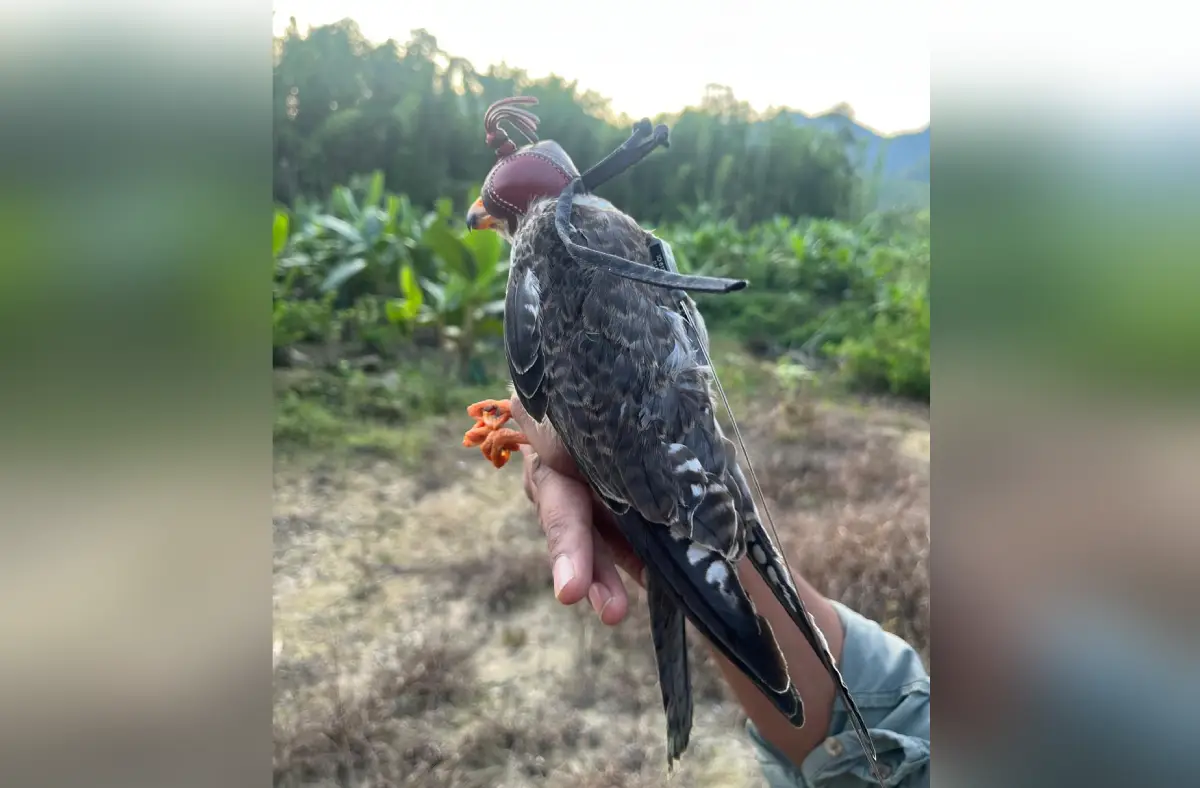
NEW DELHI – Three Amur falcons from Manipur have completed a record-breaking journey to Africa, highlighting one of the most remarkable migrations in the avian world. Tagged with satellite transmitters in November 2025, the birds were tracked to Somalia, Zimbabwe, and Botswana after covering thousands of kilometers in just nine to ten days. The successful tracking marks a milestone for conservation and research efforts led by the Manipur Forest Department in collaboration with the Wildlife Institute of India.
The falcons, named Ahu, Alang, and Apapang, were released from the Chiuluan roosting site in Tamenglong district, a forest-rich area that serves as a crucial stopover during their annual migration. Tamenglong, along with neighboring districts and villages like Chiuluan and Guangram, has long been a hub for these birds, locally known as Akhuaipuina in Manipur and Molulem in Nagaland. Each year, thousands of Amur falcons arrive in early October to rest and feed before embarking on the long journey to southern and eastern Africa.
Amur falcons breed in northern China and southeastern Siberia and travel up to 22,000 kilometers each year, making their migration one of the longest of any bird species. They spend the winter months across several African countries before returning to their breeding grounds in early autumn. Satellite tagging has provided researchers with new insights into their precise routes, stopover points, and survival rates, contributing to a better understanding of their ecology.
The conservation programme has also played a key role in protecting the species. Tamenglong and Noney districts enforce strict bans on hunting, trapping, or selling the falcons during their seasonal stay. Similar measures in Nagaland have transformed the region into a safe haven for the birds, which previously faced heavy hunting pressures until sustained efforts by local communities brought casualties down to near zero by 2013. The Amur falcon is now fully protected under the Wildlife (Protection) Act, 1972.
Beyond research and protection, the falcons’ migration has spurred eco-tourism and community engagement. The Forest Department organizes the annual Amur Falcon Festival in November to raise awareness about conservation and celebrate the spectacle of thousands of birds roosting together. In Nagaland, flocks sometimes number up to 100,000, offering visitors a rare glimpse of nature’s aerial marvels while emphasizing the ecological role of the species in controlling insect populations.
Past tracking efforts have revealed extraordinary feats, including a female falcon flying non-stop for over five days and covering more than 5,700 kilometers before reaching Somalia. Such journeys underscore both the endurance of the birds and the importance of protecting their habitats along the entire migratory route.
The successful migration of Ahu, Alang, and Apapang is a testament to the combined efforts of researchers, local communities, and wildlife authorities. As technology continues to aid conservation, the Amur falcons’ epic journey stands as a symbol of both nature’s resilience and the growing commitment to preserving it. (with IANS inputs)