Google Offers Global Scaling Support To Indian AI Startups
NEW DELHI- Google on January 15 announced the launch of the Google Market Access Programme, a first-of-its-kind initiative aimed at helping Indian startups strengthen their go-to-market strategies and move faster from local pilots to global scale.
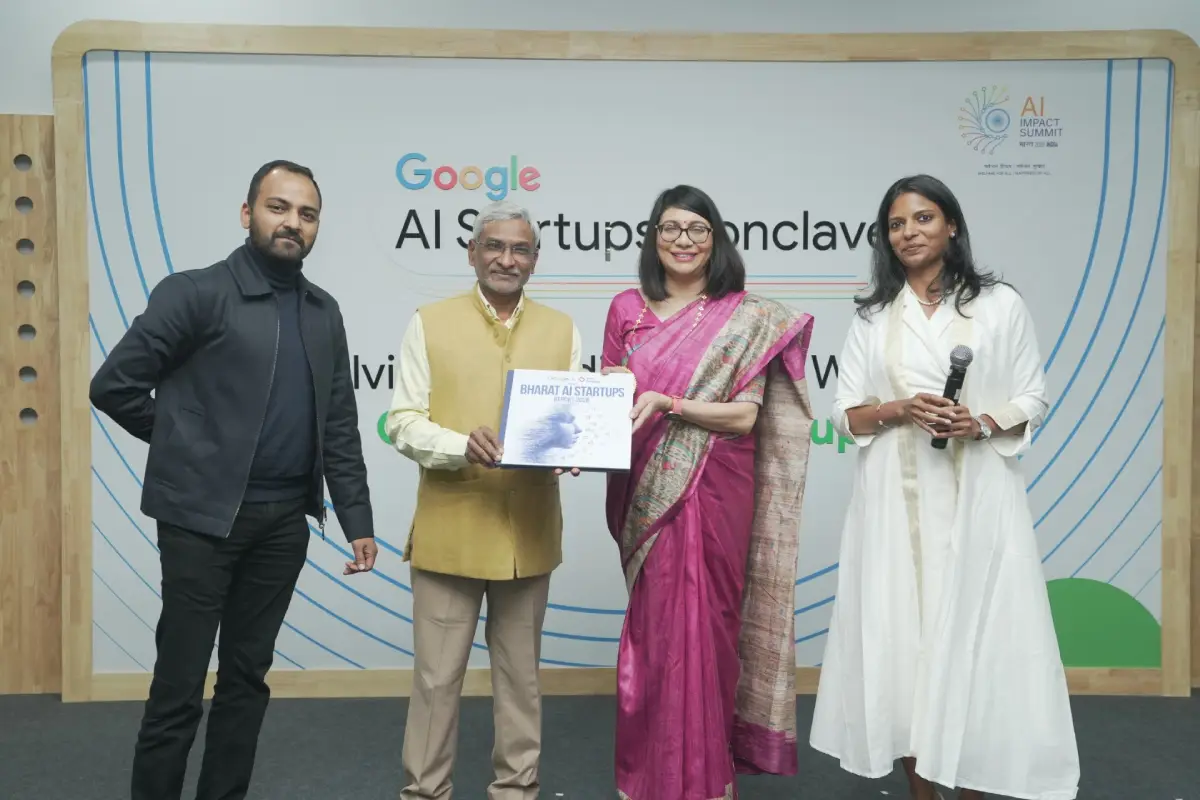
The announcement was made at the ‘Google AI Startups Conclave’ in the capital, where the company reaffirmed its long-term commitment to India’s fast-growing AI startup ecosystem.
The programme targets AI-first startups that have progressed beyond the prototype stage but often face challenges in converting effective pilots into long-term enterprise contracts.
Through structured learning, global exposure, and direct access to senior business leaders, Google said it aims to help founders bridge what it calls the “commercial last mile” of innovation.
Under the Market Access Program, selected startups will receive training on enterprise selling, global pricing models, and international buyer behavior.
They will also gain facilitated access to Google’s global network of CIOs and CXOs, along with immersion opportunities in key international markets in partnership with ecosystem organizations such as TiE Silicon Valley and Alteus.
Speaking at the event, Preeti Lobana, Country Manager for India at Google, said Indian startups are building deep technology and solving problems at population scale.
“India has become strong in turning ideas into prototypes, many startups struggle during the scaling phase,” Lobana added.
Alongside the program, Google announced new additions to its open Gemma model family to support advanced AI applications.
The company introduced Med Gemma 1.5, an open medical AI model that enables startups to work with complex medical imaging such as CT scans, MRI scans, histopathology slides, and medical reports. The model is expected to support next-generation healthcare diagnostics and research.
Google also launched Function Gemma, a lightweight model optimized for function calling and on-device AI agents. It allows applications to convert natural language instructions into real actions on devices, enabling fast, private, and low-latency AI solutions even without constant internet connectivity. (IANS)