GOPIO Says H-1B Visa Fee Hike Will Cripple Small Business In America
India-West Staff Reporter
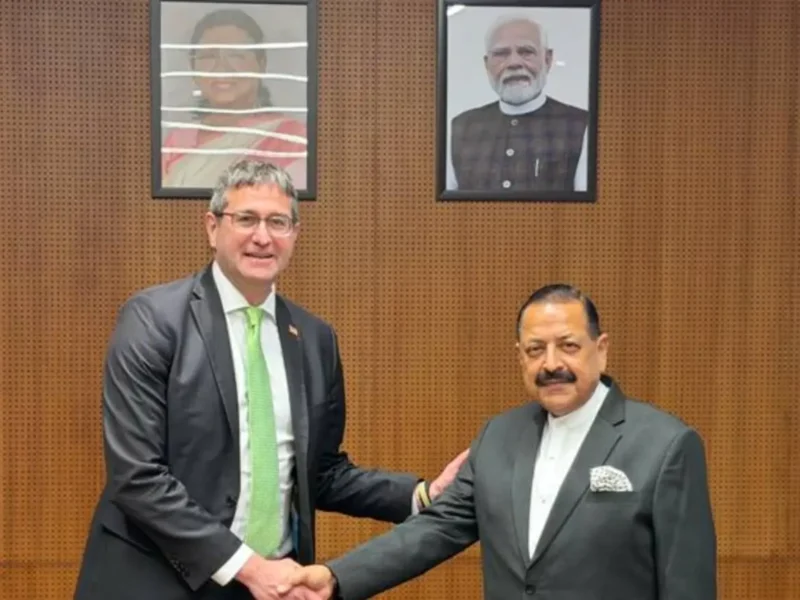
HARTFORD, CT – Congressman Jim Himes (D-CT) fully supported the concerns of the Global Organization of People of Indian Origin (GOPIO) regarding the Trump Administration’s $100,000 H-1B visa fee increase, warning that the policy risked a significant loss of talent for the U.S.
The Congressman’s remarks were made during a virtual meeting with GOPIO-CT on October 9, 2025, initiated by GOPIO Chairman Dr. Thomas Abraham. Himes, who serves as Ranking Member of the House Permanent Select Committee on Intelligence, agreed that highly qualified workers would leave the country, calling it a “great loss.” He also stressed that issues in U.S.-India relations should be resolved soon, though he noted cooperation still continues in commerce, trade, and defense.
GOPIO representatives emphasized that the policy would cripple small and medium-sized American businesses. GOPIO-CT President Mahesh Jhangiani argued that the $100,000 fee would be “unbearable for small and medium businesses” even if larger corporations could afford it.
Business leaders reiterated the direct, negative impact. Prasad Chintalapudi, Founder of Panzer Solutions, stated that small companies relying on H-1B talent are simultaneously “creating local employment and keeping jobs in the US.” He also noted that many successful CEOs, including Sundar Pichai, Satya Nadella, and Aravind Krishna, have roots in the H-1B program.
Attorney Nandita Ruchandani, representing Cameron Engineers, highlighted the diverse, essential roles H-1B holders fill—including doctors in underserved areas, engineers, and teachers. She added that these workers support local services by owning homes and paying taxes, despite their Social Security contributions being inaccessible until they achieve permanent residency.
Ruchandani warned that the fee chaos could force American businesses to shut down, especially small firms like engineering companies building municipal water systems, whose profit margins are too narrow to justify the cost. “The chaos caused by the sudden imposition of this huge fee has already disrupted many lives and businesses,” she said.
Abraham argued that restricting highly qualified immigrants would harm the country’s long-term economic standing. He cited public data suggesting the H-1B program benefits the U.S. annually by over $200 billion compared to a cost of $8.5 billion.
“By making it difficult for highly qualified people to work in the USA, the country will lose out in the long run if they take employment in Canada, Germany and China, which have offered to take them,” Dr. Abraham asserted.
Jhangiani also voiced community concerns over the Trump Administration’s perceived “anti-India policies.” Dr. S.K. Lo, Chairperson of the Asian American Unity Coalition, offered support, stating that such issues require a united response.