Imran Khan-Munir Personal Animosity Is Deepening Pak’s Political Crisis
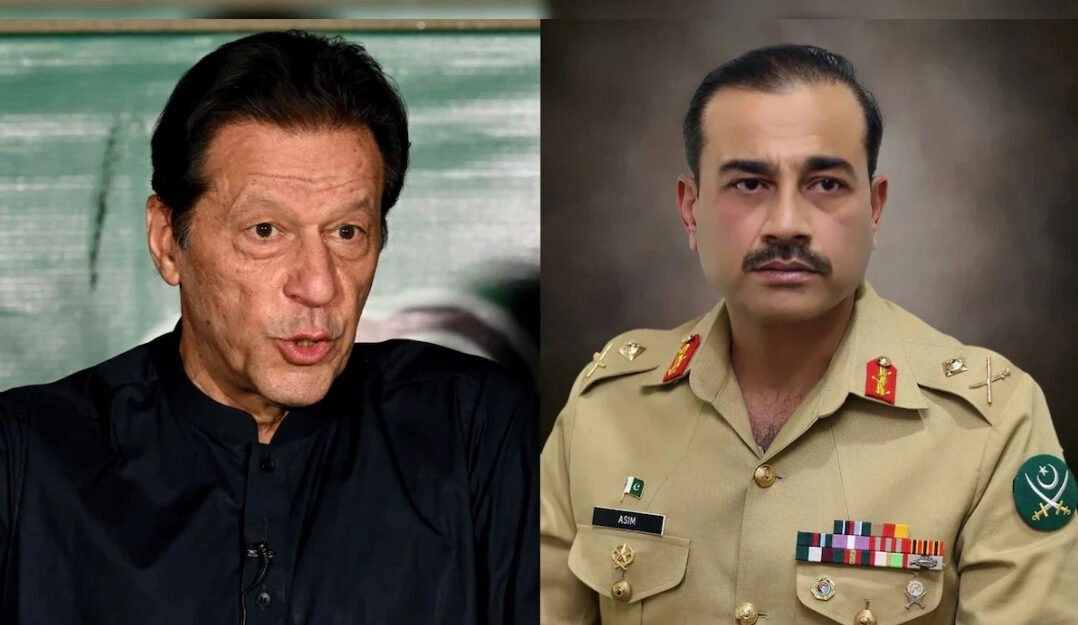
ISLAMABAD-Pakistan’s power struggle between Army Chief Asim Munir and imprisoned former Prime Minister Imran Khan has increasingly taken on a personal dimension, with Khan’s Pakistan Tehreek-e-Insaf (PTI) party under pressure and the Shehbaz Sharif government backing constitutional changes that expand the military leadership’s powers.
While the confrontation is rooted in a broader struggle over the military’s role in Pakistan’s politics, allegations of personal animosity between Munir and Khan have become a recurring feature of the political debate. The precise nature of their relationship remains disputed, and claims that personal retaliation is driving state action against Khan have not been established as fact.
The roots of the friction are often traced to 2019, when Munir served as director-general of the Inter-Services Intelligence (ISI) for about eight months before being replaced by Lieutenant General Faiz Hameed. Khan was then prime minister. Accounts of the episode have linked Munir’s removal to concerns he allegedly raised about Bushra Bibi, Khan’s wife, and corruption. Khan denied that Munir had presented evidence against her or that he was removed for raising such concerns. PTI also alleged that Munir contacted Bushra Bibi after his removal to discuss the matter.
The episode has since become part of the wider narrative surrounding the breakdown of relations between Khan and the military establishment. However, the competing accounts of what happened in 2019 remain disputed, and the episode alone does not establish that personal animosity explains the subsequent political and legal action against Khan.
Khan’s relationship with the military leadership had already deteriorated during the tenure of former Army Chief Qamar Javed Bajwa, particularly over appointments and the direction of the government, including foreign policy. The disagreements exposed the limits of Khan’s relationship with the military establishment, which had been widely viewed as an important factor in his rise to power.
In April 2022, Khan was removed through a no-confidence vote in Parliament, becoming Pakistan’s first prime minister to lose office through that mechanism. Khan alleged that his removal was the result of a conspiracy involving the United States and Pakistan’s military, with Saudi Arabia also implicated in his claims. His opponents maintained that the government had been removed through a constitutional parliamentary process.
Munir became army chief in November 2022, months after Khan’s removal. The political confrontation subsequently intensified, with Khan increasingly challenging the military leadership and the military establishment facing growing criticism from his supporters.
The arrest of Khan on May 9, 2023, triggered widespread protests by PTI supporters. Demonstrators attacked military installations and the residence of a senior military commander in Lahore. The authorities responded with a crackdown on PTI, and some of those accused of involvement in attacks on military property faced trials in military courts. The events marked a major escalation in the confrontation between Khan’s party and the military establishment.
Khan was arrested again in August 2023 and faced multiple cases. His legal troubles included convictions in cases involving state gifts, a classified diplomatic cable and his marriage. Some convictions were subsequently suspended or overturned, while other proceedings continued.
In January 2025, Khan was sentenced to 14 years in prison in the Al-Qadir Trust corruption case. Prosecutors alleged that he and his wife received land from a property developer in exchange for favor in a matter involving funds returned to Pakistan from Britain. Khan and his party have rejected the cases as politically motivated.
The accumulation of legal cases, Khan’s continued imprisonment and the pressure on PTI have fueled allegations that the legal process is being used to sideline a major political opponent. The government and those pursuing the cases have presented them as matters of law and accountability. The distinction between legitimate prosecution and political retaliation remains central to the dispute.
The confrontation has unfolded alongside constitutional changes backed by the Shehbaz Sharif government that strengthen the military leadership’s institutional position. The amendments extended the terms of service chiefs from three years to five years and opened the possibility of a second term. They also abolished the post of chairman of the Joint Chiefs of Staff Committee and created the position of chief of defense forces, which is held concurrently by the army chief.
These changes have intensified debate over the balance of power between elected civilian governments and the military, which has played a dominant role in Pakistan’s political history. For Khan’s supporters, the military’s expanded institutional role and the pressure on PTI reinforce concerns about the space available for political opposition. The government’s backing for the changes, however, is a separate institutional development and does not by itself establish that they were driven by a personal dispute between Munir and Khan.
The conflict between the two men has therefore become part of a much larger question about Pakistan’s political future. The personal dimension may help explain the intensity of the confrontation, but the deeper issue is whether political authority will remain accountable to elected institutions, an independent judiciary and constitutional limits on military power.
Pakistan’s long-running civil-military imbalance cannot be resolved solely by the fortunes of one leader or the tenure of one army chief. Ensuring civilian supremacy, judicial independence and a fair legal process will be essential to preventing accountability from being perceived as retaliation and to restoring confidence in the country’s political institutions. (IANS)