India, Now Closer To EU, Protests “Parallel” Peace Frameworks As Suggested By Trump
India-West News Desk
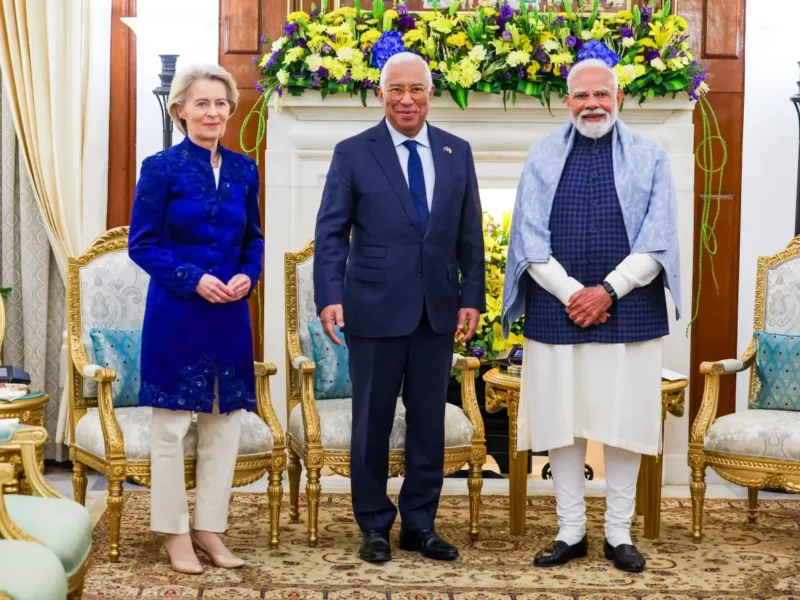
NEW YORK, NY — In a major strategic realignment, India and the European Union have significantly tightened their diplomatic and economic ties, forming a unified front to safeguard the international rules-based order against growing global disruption. This rapprochement, highlighted by the recent finalization of a landmark Free Trade Agreement and a new defense partnership, comes as both powers seek to navigate the unpredictable landscape of “America First” policies and punitive trade measures under President Donald Trump.
The shift was underscored at the United Nations on January 26, where India broke its traditional silence on U.S. unilateralism to express grave concern over the emergence of parallel platforms that threaten to usurp the role of the UN Security Council.
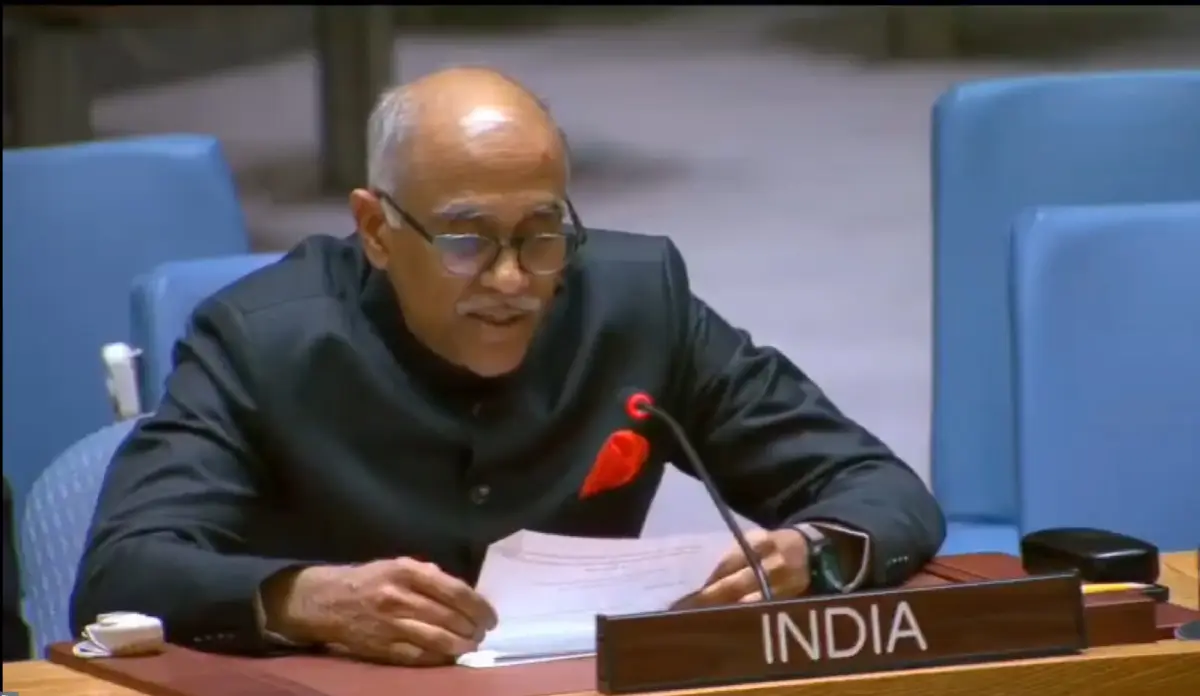
Speaking at a high-level debate on the international rule of law, India’s Permanent Representative P. Harish cautioned that security discussions are increasingly moving toward “parallel plurilateral frameworks” involving private sector actors, effectively creating outcomes on peace and security outside the established UN framework.
This diplomatic friction is a response to Trump’s newly inaugurated “Board of Peace,” which was launched last week at the World Economic Forum in Davos. While initially presented as a mechanism to oversee the reconstruction of Gaza, Trump has since suggested the Board could take on a much broader global security role, asserting that once the body is fully formed, it can operate with near-total autonomy. The Board’s unorthodox structure, which includes offering permanent seats for $1 billion contributions and a membership that notably excludes most Western democracies except for Belgium, has been viewed by New Delhi and Brussels as a “pay-to-play” challenge to multilateralism.
UN Secretary-General Antonio Guterres joined the critique, stating that no “ad-hoc” coalition can legally require member states to comply with decisions on peace and security, nor can they authorize the use of force under international law. He warned that the responsibility of the Security Council is singular and its obligation universal, making comprehensive reform of the Council essential to maintain its effectiveness.
India is leveraging this moment of world order disruption to press for urgent reform of the Security Council, seeking an expansion of both permanent and non-permanent categories to reflect contemporary realities. Harish emphasized that the Council’s current paralysis in tackling conflicts like Gaza and Ukraine has severely tested the UN’s credibility. (with IANS inputs)