

Indian American Firms Under Scrutiny For Snagging SBA Deals
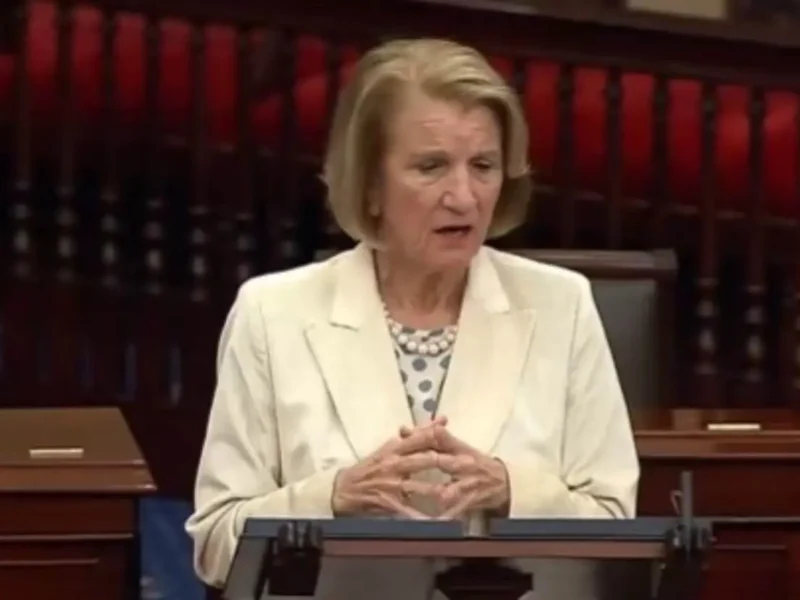
Photo: CSPAN Screenshot
WASHINGTON, DC – Indian American owned businesses are taking advantage of a federal initiative initially designed to help socially and economically disadvantaged small businesses, lawmakers have been told.
Testifying before a Senate panel, investigative journalist Luke Rosiak said that while the 8(a) program was created in 1978 to help Black Americans overcome historic discrimination, its current structure has shifted significantly over time.
“By one measure, South Asians, from the country of India, gobble up a lion’s share of 8(a) contracts, while ‘Black Americans’ get only 15 per cent,” ‘Rosiak’ told senators.
He was testifying before the Senate Small Business and Entrepreneurship Committee during a hearing titled ‘Running Government Like a Small Business’, held to assess whether the Small Business Administration’s 8(a) program, which provides access to government contracts through set-asides, training, and mentorship, continues to align with its original mission.
Rosiak, from Tennessee, argued that ‘Indian Americans’, whom he described as “the wealthiest demographic in America,” are now heavily represented among 8(a) contractors, particularly in information technology, a sector that dominates federal procurement. “Indians have never been underrepresented in IT; they’re overrepresented,” he said.
For example, Rosiak cited ‘OCT Consulting LLC’, an IT firm certified under the 8(a) program. He told the committee that the company’s owner, Atul Kathuria, received 19 federal contracts totaling $43 million without competitive bidding.
“Normally, it would be illegal to give a contract to a company with no competition,” Rosiak said, adding that the awards were legal because the firm was certified as an Indian-American owned small business under 8(a) rules.
Rosiak told members of the Senate committee that such arrangements raise broader questions about whether minority ownership status is being used primarily as a contracting mechanism rather than as a tool to address disadvantage.
“Minority ownership is just to win a contract, not to fix societal disparities at any meaningful scale,” he said.
Rosiak argued that the program has become vulnerable to abuse because contracts can be awarded without open competition and then subcontracted to large firms. According to Rosiak, this structure allows major corporations to bypass competitive bidding while smaller certified firms act as intermediaries, driving up costs and weakening oversight.
The hearing reflected sharp differences among lawmakers. Committee Chair Senator Joni Ernst said the panel was focused on rooting out “waste, fraud, and abuse” in federal programs, while emphasizing accountability for taxpayer dollars.
Democratic Ranking Member Senator Edward Markey defended the original intent of the 8(a) program, arguing that it was designed to counter decades of exclusion from federal contracting.
He warned against dismantling minority-focused programs based on selective examples, saying they have helped expand access for small and disadvantaged businesses.
Other witnesses, including officials from the Government Accountability Office and the Project on Government Oversight, pointed to oversight gaps and weaknesses in fraud prevention but stopped short of calling for the elimination of the program. They emphasized stronger safeguards, better data systems, and more consistent enforcement as ways to reduce abuse while preserving the program’s core objectives.
Rosiak told the committee that recent court rulings have heightened the urgency of the debate. Following Supreme Court decisions limiting the use of race in federal programs, agencies have shifted toward subjective assessments of “social disadvantage,” which he said further increases the risk of misuse.
He noted that ongoing litigation could force the SBA to rewrite the rules entirely. (IANS)

Bharat
/
This is true. Indian-Americans are not economically disadvantaged, but being non-white use 8 (a) and many other federal, state, and local programs meant to help blacks and Hispanics to make lot of money. The law should be changed or canceled.
December 17, 2025iyer
/
However, South Asian Americans are still minority, yes per talent, skill sets they may have achieved success. Then again it is talent/merit, nevertheless, they still constitute under 1-5% of the overall population.
December 17, 2025Natarajan Subramonian
/
Immigrants from India or other countries have no right to take advantage of such US Government programs! Such programs are meant to remedy the economic disadvantage caused to Black Americans by slavery and 250 years of racial discrimination!
December 17, 2025Anonym
/
Finally ! Somebody is taking note of these wrongful squandering and bringing it to attention . Thanks to the T administration ! The programs’s original intention need to be maintained & current state needs to be scrutinized on where incentives go instead . Time for some Indians ( trying to take advantage of not just this but everything from medical to federal grants in this highly generous country ! ) to pack their bags.
December 17, 2025pemba
/
Mr. Rosiaik, Sir, well done for drawing attention to exploitation by Indians, Generally Indians do not believe in what is fair is fair, their Greed make everthing fair. Time to Stop these sort of exploitation. Keep it up with your Investigation Mr. Rosiak.
December 17, 2025Natarajan Subramonian
/
We should all thank the Trump Administration for scrutinizing wasteful and abused US Government Programs such as this and letting people entering this country illegally stay for ever without legal review or deportation!
December 18, 2025