South Asian Healthcare Leaders Fight To Restore Trust In US Medicine
By Fatima Baldiwala
WASHINGTON, DC – The South Asian Impact Foundation on September 16, brought together a panel of leading South Asian voices in medicine and public health to address one of the most pressing challenges of our time: rebuilding public trust in healthcare.
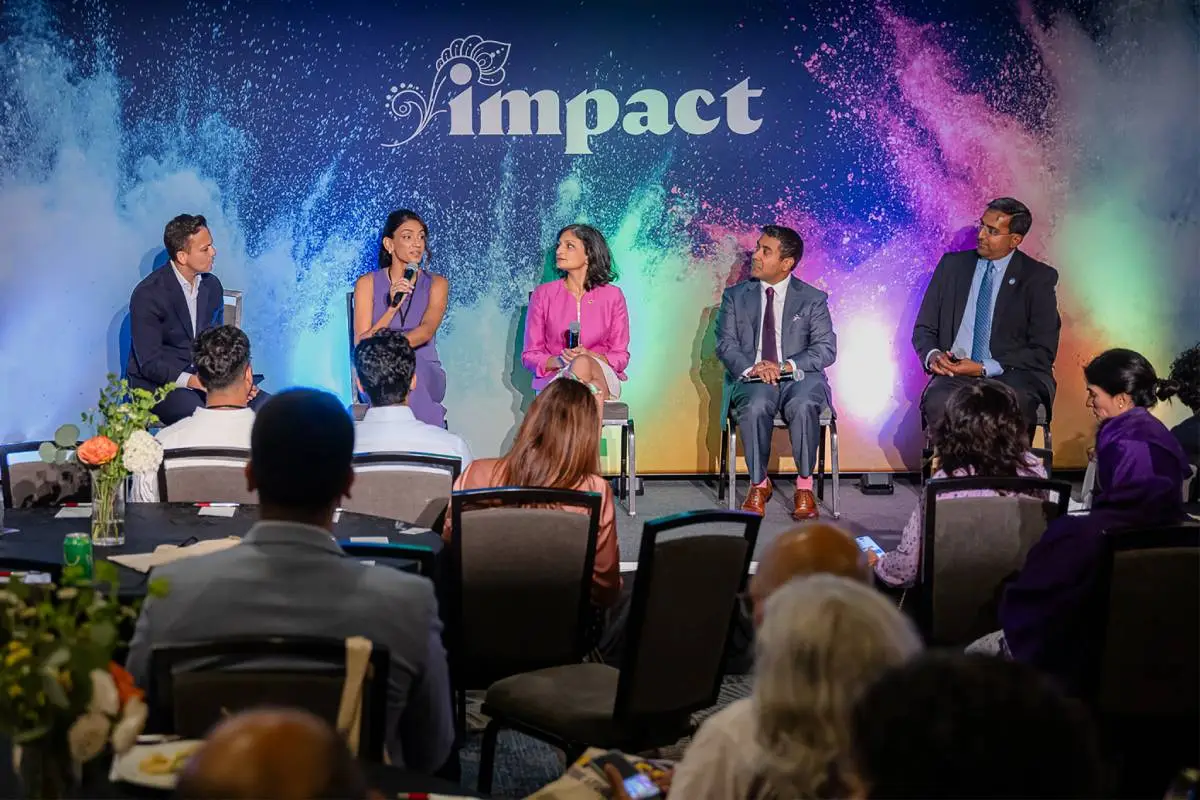
The panel ‘Beyond the Exam Room: South Asian Health Leaders Shaping Public Trust’ featured physicians and public officials whose influence stretches from social media feeds to state capitols.
Moderated by Dr. Vin Gupta, NBC and MSNBC’s medical analyst, the conversation at the Marriott Hotel here, highlighted how South Asian professionals are leveraging their expertise to counter misinformation, build relatability, and safeguard the health of diverse communities.
Panelists included Dr. Meena Seshamani, Maryland Secretary of Health and former head of Medicare; Dr. Arif Kamal, Chief Patient Officer of the American Cancer Society; Representative Arvind Venkat, physician and first Indian American elected to the Pennsylvania State House; and Dr. Mona Amin, pediatrician and founder of PedsDocTalk, whose health and parenting content reaches more than two million people across Instagram, TikTok, YouTube, and podcasts.
South Asians are among the most represented groups in America’s medical workforce, but as the panel demonstrated, their impact extends far beyond clinical care. In an era of rampant health misinformation, they are using every available platform—policy, journalism, organized medicine, and social media—to translate science into accessible, human-centered messages.
‘Relatability is the root of trust,’ said Dr. Arif Kamal, emphasizing that meaningful connections begin with common ground. Dr. Seshamani reflected on her experience leading Medicare’s historic drug price negotiations: ‘Even when we didn’t agree, stakeholders understood why we made the decisions we did. Respect and transparency are how we break down walls.’
Representative Arvind Venkat discussed how his COVID-era advocacy as an emergency physician drew him into politics. ‘All politics is local,’ he said, urging young South Asians to articulate their why and seek mentorship in areas beyond medicine. For him, that meant channeling his expertise into legislative solutions, particularly where healthcare consolidation and regulation affect patients most.
Dr. Mona Amin highlighted the power of digital platforms in reaching millions of families worldwide. Her work in health education, parenting advice, and vaccine advocacy has made her a trusted pediatric voice across continents. ‘You can’t do it all,’ she said, reflecting on the importance of knowing one’s strengths. ‘But you can use your superpower to help the world.’
A common theme emerged throughout the discussion: humility, storytelling, and persistence are essential for navigating spaces where doctors are not traditionally recognized, whether in politics, policymaking, or digital advocacy. ‘Our stories are our strengths,’ said Dr. Seshamani, urging younger professionals to draw on both personal and professional experiences in shaping their public roles.
The panel also acknowledged challenges such as online trolls, political divisions, and institutional inertia, but underscored that South Asian professionals are uniquely positioned to bridge divides. Whether confronting cancer disparities, advocating for fair drug pricing, or answering parenting questions online, their relatability fuels trust when it is needed most.
As moderator Dr. Gupta summarized, the contributions of South Asian health leaders demonstrate that medicine today is about more than diagnoses and prescriptions. It is about fostering resilience, building informed communities, and expanding the definition of what it means to be a doctor, public servant, or health advocate.