UC Berkeley Professor Among 2025 Nobel Prize Winners In Chemistry
Photo: Wikipedia
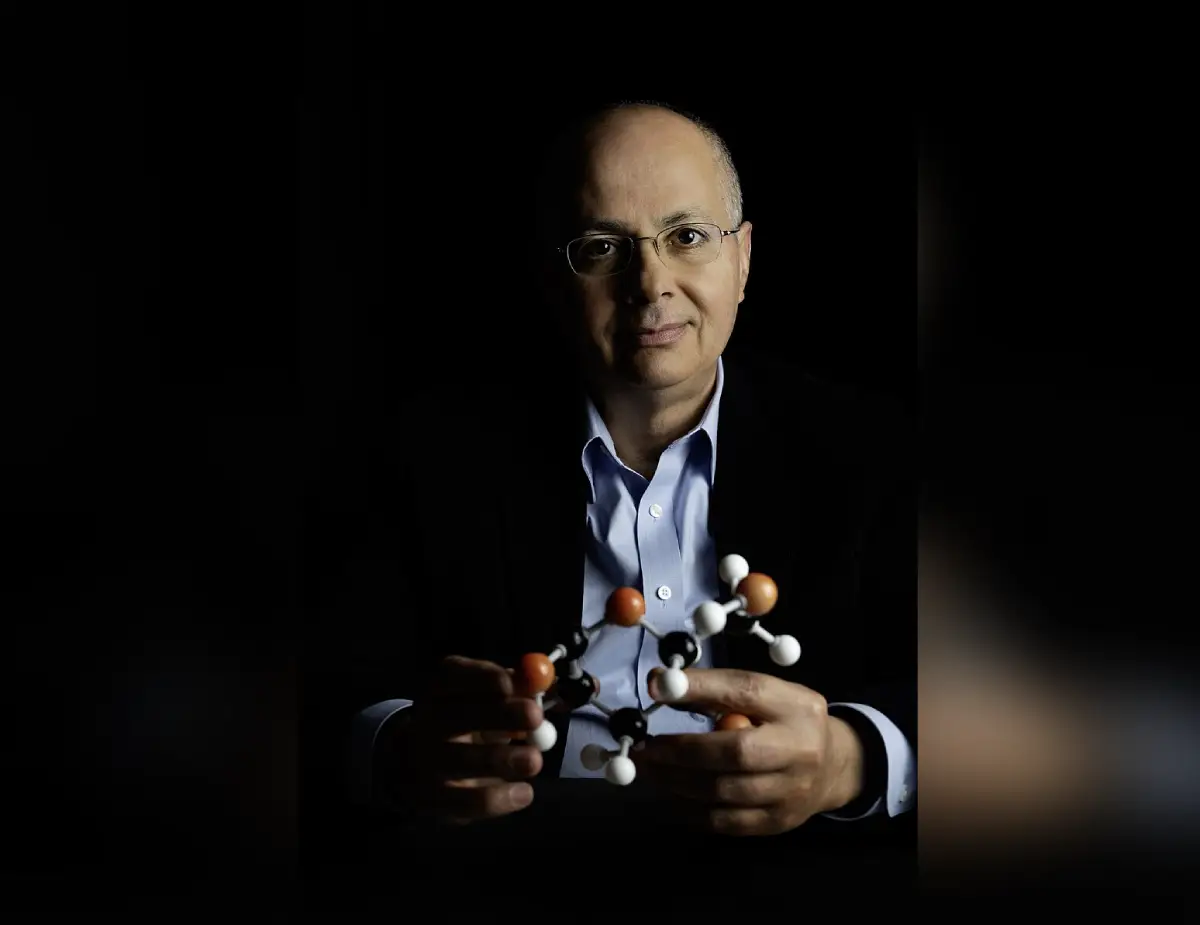
BERKELEY, CA – California, Berkeley Professor Omar M. Yaghi has been awarded the 2025 Nobel Prize in Chemistry, alongside Susumu Kitagawa of Japan and Richard Robson of Australia, for pioneering the development of metal-organic frameworks (MOFs) — materials that have revolutionized the way scientists can capture, store, and manipulate gases and chemicals.
The Royal Swedish Academy of Sciences announced the award on Wednesday, citing the trio “for the development of metal-organic frameworks,” a breakthrough that has opened new frontiers in materials chemistry and environmental technology.
Yaghi, born in Amman, Jordan, in 1965, earned his Ph.D. from the University of Illinois Urbana-Champaign in 1990 before joining UC Berkeley, where he serves as a professor of chemistry. His research focuses on reticular chemistry — the linking of molecular building blocks into extended structures — which gave rise to MOFs.
MOFs are crystalline compounds made up of metal ions connected by organic molecules, forming highly porous materials with vast internal surface areas. These frameworks can trap and store gases like carbon dioxide, capture water from desert air, and even catalyze chemical reactions.
“Metal-organic frameworks have enormous potential, bringing previously unforeseen opportunities for custom-made materials with new functions,” said Heiner Linke, Chair of the Nobel Committee for Chemistry.
The discovery, first demonstrated by Kitagawa, Robson, and Yaghi in the 1990s, has since inspired chemists worldwide to create tens of thousands of MOF variants tailored for specific applications — from removing pollutants and pharmaceuticals from water to developing sustainable energy solutions.
This year’s Chemistry Prize carries a total award of 11 million Swedish kronor, which will be shared equally among the three laureates.