UCLA Student Sohum Bhargava Uses Origami to Spark Kidney Health Awareness
India-West News Desk
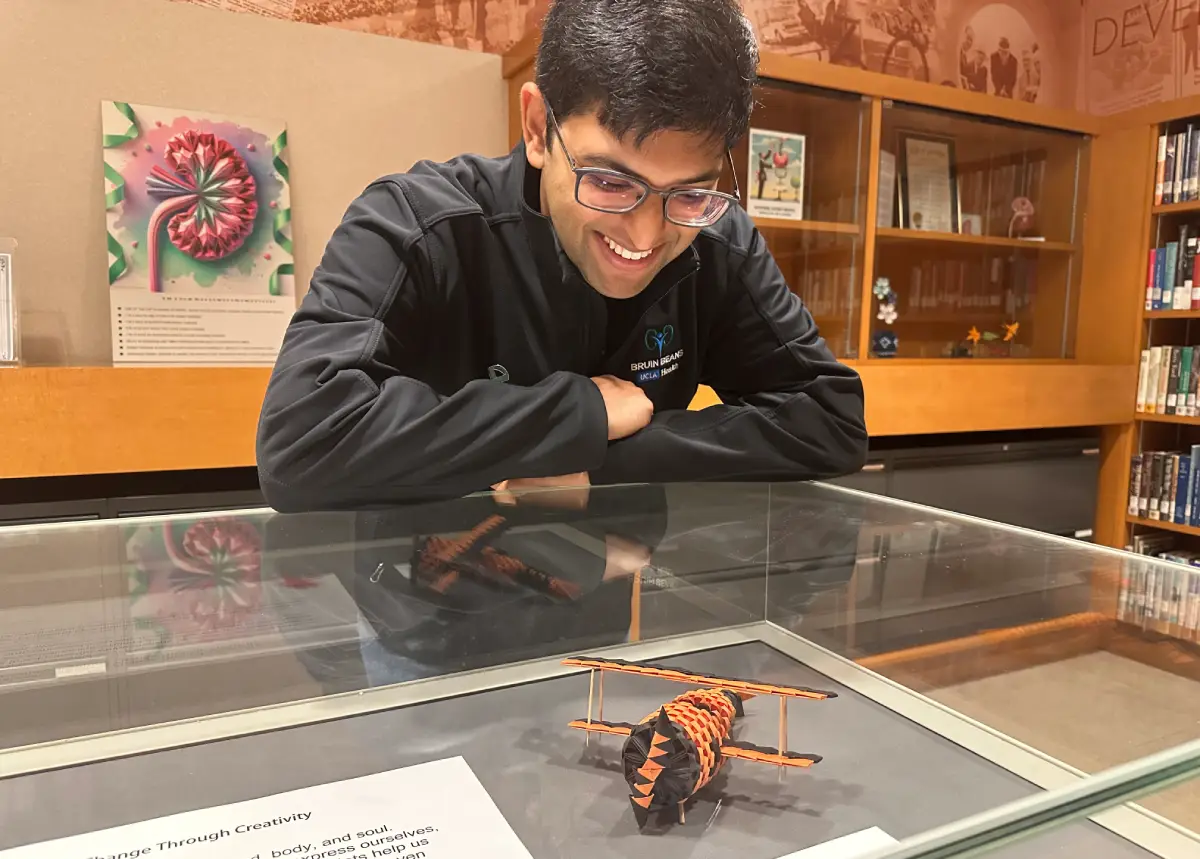
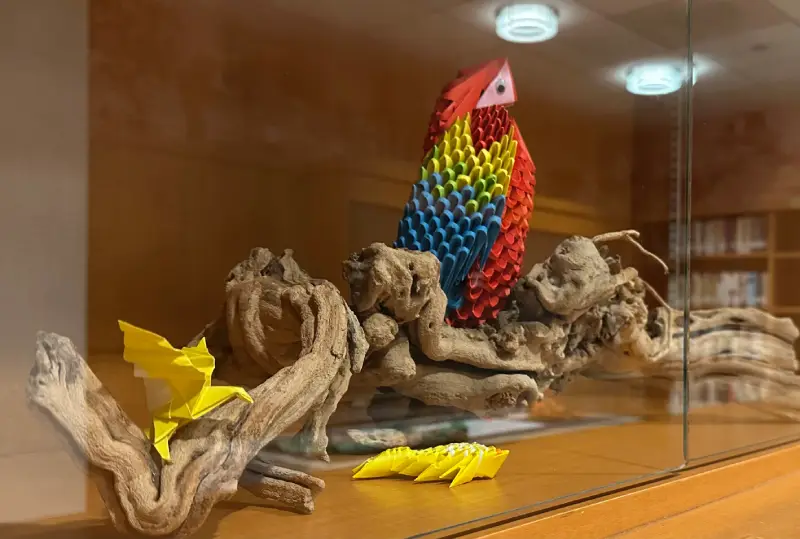
CERRITOS, CA – At the Cerritos Public Library here, visitors this month are encountering an unusual blend of art, science, and public health. Paper cranes, geometric structures, and intricate folded forms fill a display space that is part gallery and part classroom. The exhibition, titled ‘Fold for Life’, has been curated by UCLA student Sohum Bhargava and runs through March 31 as part of Kidney Awareness Month.
Bhargava’s exhibition uses origami to explore a surprising idea: that the quiet, hidden process of folding paper can mirror how organs develop inside the human body. The inspiration came when he learned that three sets of kidneys form during early human development. The first two exist only briefly before the final, permanent kidneys emerge.
While practicing origami, Bhargava noticed a striking parallel. Creating a finished origami model requires many folds that are essential to the structure but disappear from view once the piece is complete. In the same way, the early stages of kidney development are invisible but crucial in shaping the final organ.
That connection sparked a broader question for him. If folding is so central to both art and biology, could origami offer a new way for scientists to think about how organs form? Researchers are already growing miniature kidney organoids from stem cells in laboratories. Bhargava believes that understanding the mechanics of folding in nature could someday help scientists better study organ development and potentially address the shortage of kidneys available for transplant.
But the exhibition is not just about science. Bhargava also hopes it will help people talk about a disease that often remains hidden until it is too late. Kidney disease affects more than 37 million Americans and is frequently described as a silent condition because symptoms often appear only after the illness has progressed.
“Many people feel uncomfortable discussing disease,” Bhargava explains through the exhibition’s messaging. By presenting information through art, he hopes visitors will feel more open to learning about kidney health and discussing it with family members.
One of the exhibition’s most meaningful pieces is a large modular origami installation created collaboratively with patients and caregivers at the Connie Frank Kidney Transplant Center at UCLA. Participants folded individual units that Bhargava later assembled into a single sculpture. The finished piece symbolizes the shared journey of illness, recovery, and support that surrounds organ transplantation.
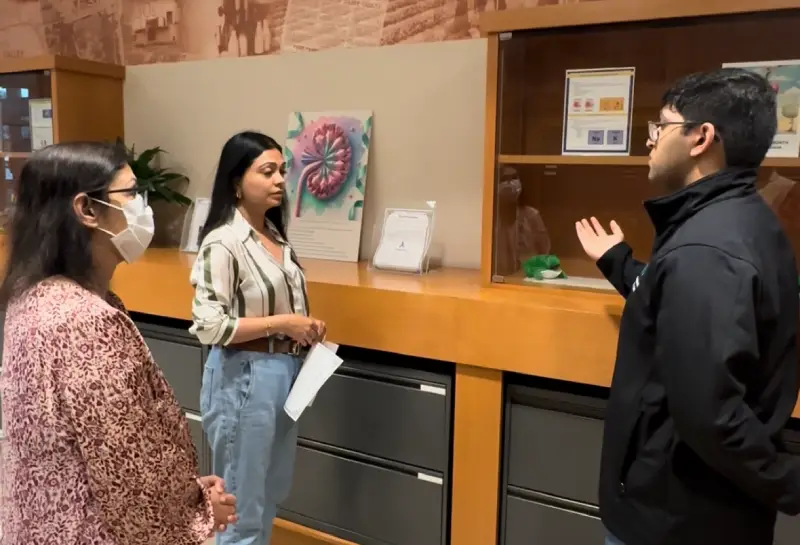
Alongside the collaborative work are several single sheet origami pieces that demonstrate the complexity and beauty that can emerge from simple materials. A series of educational posters accompanies the artwork, illustrating the stages of kidney disease, early warning signs, and the medical tests used for detection.
The exhibit also includes a wearable art piece: a scarf designed by Bhargava and hand embroidered by artisans in India. The fabric features subtle kidney motifs woven into a floral pattern, blending cultural craftsmanship with the exhibition’s health message.
Throughout the display, visitors will also find accessible explanations of kidney structure and function, the stages of kidney disease, and the most common risk factors. Diabetes and hypertension, both increasingly common among Indian Americans and other communities, remain leading causes of kidney failure. Doctors note that two relatively simple tests can often detect kidney problems early and help prevent the need for dialysis if intervention begins soon enough.
Bhargava, a member of the Bruin Beans Health Club board at UCLA, has organized a kidney health awareness exhibit at the Cerritos library for the past five years. Each March, the display aims to make medical education engaging for visitors of all ages.
The exhibit has also drawn attention from community leaders and elected officials who have already visited and others who plan on visiting.
Ultimately, ‘Fold for Life’ invites visitors to see both art and health in a new way. Through folded paper, collaborative storytelling, and accessible information, Bhargava hopes to encourage conversations that could lead to something simple but powerful: earlier testing, greater awareness, and healthier lives.