
2025: As Pakistan Sank, Its Army Flexed Its Muscles
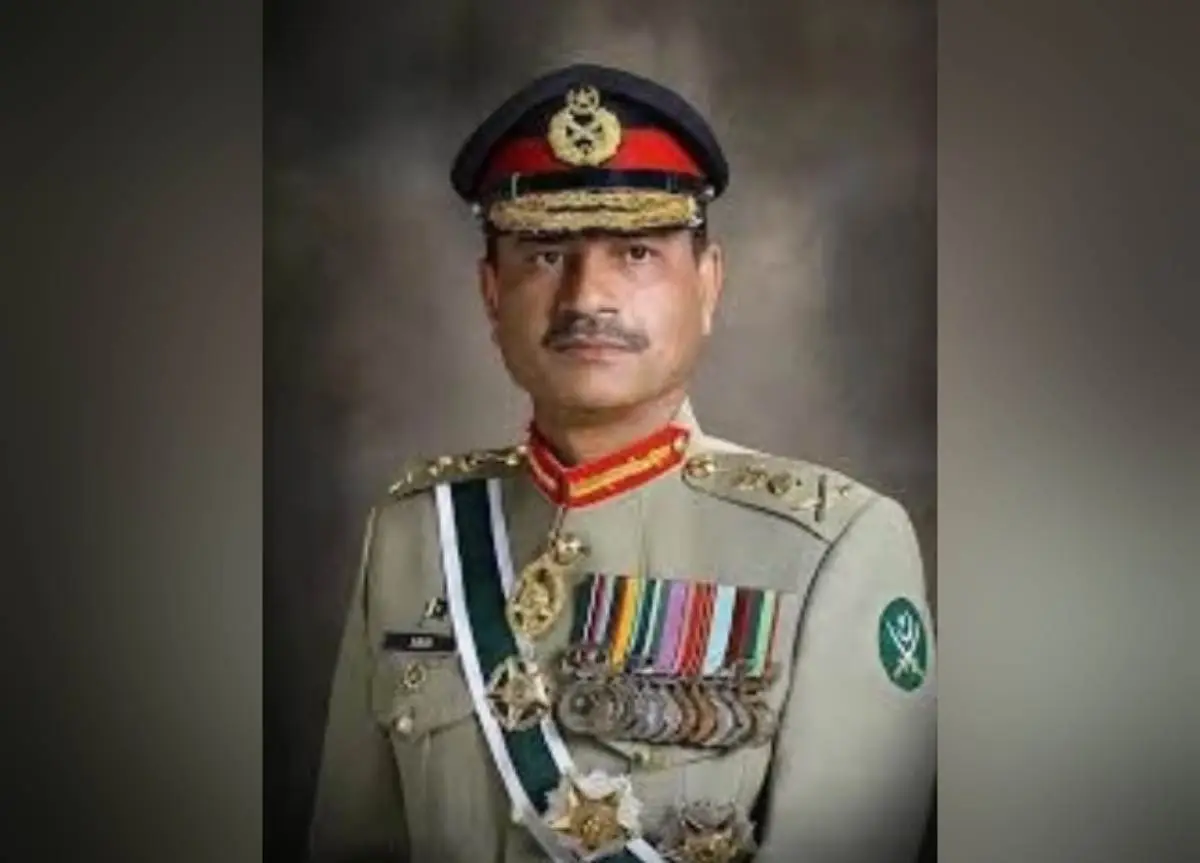
NEW DELHI- The year saw Pakistan Army Chief Asim Munir consolidating unprecedented authority over the civilian government without staging a physical armed coup like earlier instances, yet reshaping constitutional arrangements and foreign alignments while domestic unrest and economic strain deepen. Even as the General rose to be a Field Marshal without exhibiting any valor on the field, the country continued to spiral down, with its internal security and economy remaining fraught. Pakistan is staring at several risk factors, including political instability that could derail reform implementation, slower-than-expected growth that undermines revenue targets, and external shocks such as commodity price spikes.
Balochistan continues to see insurgent attacks and the state’s heavy-handed responses, while tensions in Pakistan-Occupied Jammu and Kashmir and recurring clashes in Khyber Pakhtunkhwa have strained the security services and displaced communities. The Afghan border remains a source of more instability, where trade and traffic are at a standstill since the Taliban’s October 11 attack, reportedly in retaliation for Islamabad’s air raids. Pakistan Tehreek-e-Insaf party has also stepped up protests against the near-solitary imprisonment of its leader, Imran Khan. The overall volatility has complicated counterterrorism operations and refugee management.
Pakistan’s economy, meanwhile, remains under severe pressure with stagnant growth, currency volatility, and conditional external financing limiting the state’s capacity to deliver services, amplifying public discontent and constraining policy choices. Analysts warn that militarized governance amid economic malaise risks prioritizing security spending over structural reforms that could revive investment and jobs. Reports suggest that Islamabad is falling into a debt trap with the ambitious ‘China-Pakistan Economic Corridor’ project, most of which remains incomplete amidst major economic, security, and environmental challenges.
Pakistan must meet over $23 billion in external debt repayments in the current fiscal year, and the central bank’s estimates put total foreign debt repayments and interest at about USD 30.35 billion for the year. According to the ‘Pakistan Economic Survey 2024-25’, the country’s total debt was approximately $267 billion at the end of March this year, comprising domestic debt of Pakistani Rs 51.52 trillion and an external debt of Pakistani Rs 24.49 trillion. Islamabad’s foreign policy has oscillated between courting the United States for security engagement and China for infrastructure and strategic backing. This dual approach fuels strategic uncertainty in the region as partners compete for influence.
Prime Minister Shehbaz Sharif and General Asim Munir met United States President Donald Trump in Washington on September 25, where photographs showed them peddling rare earth minerals, and reports claimed they had offered a port for Washington to develop. Munir’s ascent from army chief to the country’s most powerful security figure has been rapid and institutionally transformative. He was elevated into a new, overarching defense role that centralized command over the army, navy, air force, and the nuclear arsenal — a shift criticized by many as concentrating unchecked power.
Legislators passed what has been widely described as the 27th Amendment, replacing previous collective command structures with a single Chief of Defense Forces post and extending legal immunities and tenure protections for the incumbent. Critics call the move a “constitutional coup” because it rewrote oversight mechanisms, curtailed civilian checks, and effectively insulated the military leadership from parliamentary or judicial review. Munir’s consolidation combined legal change, institutional reshuffles, and public-facing narratives of national security.
The General witnessed army installations and the country’s terror launchpads being destroyed in May during ‘Operation Sindoor’, a high-intensity cross-border confrontation launched earlier in the year. It was New Delhi’s warning in response to Pakistan-trained terrorists killing 25 tourists and a local pony operator in Pahalgam on April 22. Later reports suggest that the state has begun to rebuild the terror network, without learning a lesson from past misadventures. As the sun rises in the New Year, chances are its rays will not be able to light up much of the darker spots that Pakistan bears. (IANS)


Daljit Singh
/
Considering all the economic downslides of Pakistan, we wish them a New Year of hope and success, especially, in the arena of goverment stability and progress, which would allow all neighboring states to refocus on economic development instead of spending on defenses. It will be a “win-win” situation for establishing a common economic market, free of war and hostilities in the region.
December 31, 2025