Trump Says AI Data Centers Should Cover Their Own Power Costs
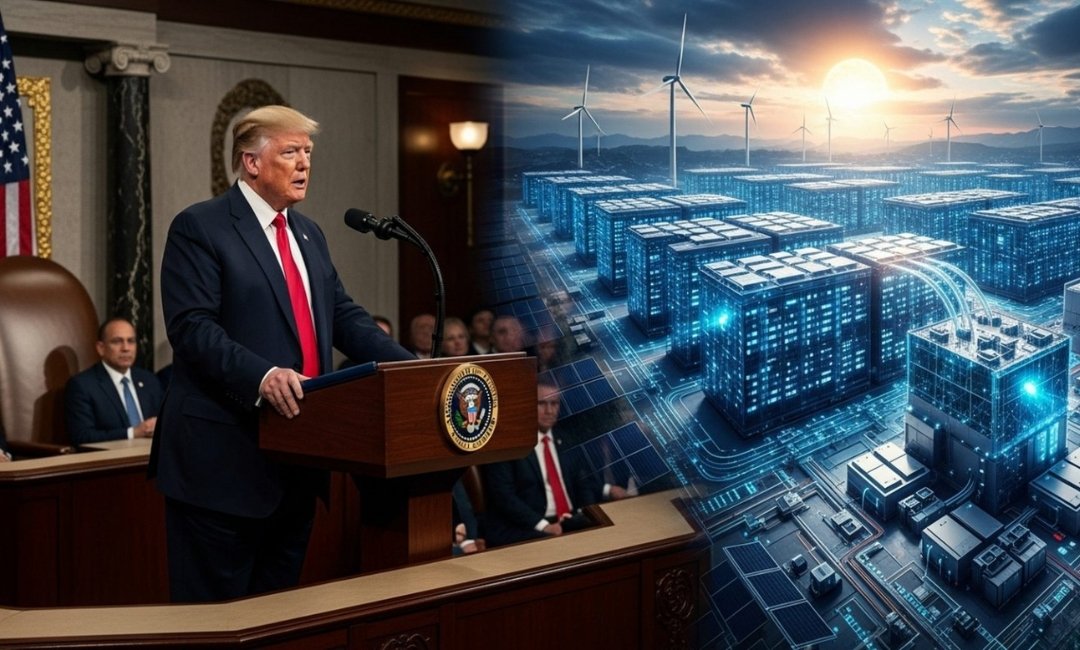
WASHINGTON, DC -President Donald Trump said technology companies developing artificial intelligence must bear the cost of building the energy infrastructure needed to support the industry’s rapid expansion, arguing that the policy would protect American consumers from rising electricity bills while accelerating AI investment in the United States.
Speaking at an event highlighting his administration’s Ratepayer Protection Pledge, Trump said the soaring electricity demand from AI data centers should not be passed on to households.
“We’re insisting that AI data centers and big tech companies pay their own way,” Trump said.
Trump said his administration was allowing companies to build power plants alongside new AI facilities, reducing pressure on the existing electricity grid while enabling surplus electricity to be fed back into the system.
Calling electricity generation critical to AI development, Trump said the technology would require a major expansion in power supply.
The U.S. president said the Ratepayer Protection Plan requires major technology companies to fund or build the energy infrastructure needed to meet the electricity demand created by their AI operations.
“Under this groundbreaking plan, America’s largest tech companies have formally committed to fund or build all energy infrastructure required to meet the demand they are placing on the grid,” Trump said.
According to Trump, more than 220 utilities, technology companies, state governments and other partners have signed the pledge.
Trump said the policy would also bring economic benefits to communities hosting AI data centers through job creation, tax revenue and lower utility costs. He cited projects backed by Google in Georgia and Meta in Louisiana as examples of investments that would benefit local residents, while noting that some utilities had frozen electricity rates under similar agreements.
Trump said communities that reject AI infrastructure risk losing investment to competing regions.
“If you don’t take all that money, somebody else is going to take it,” he said.
He said the policy would benefit both consumers and industry. (IANS)