China’s Brahmaputra Mega Dam Raises Fresh Flood, Water Flow Concerns For India
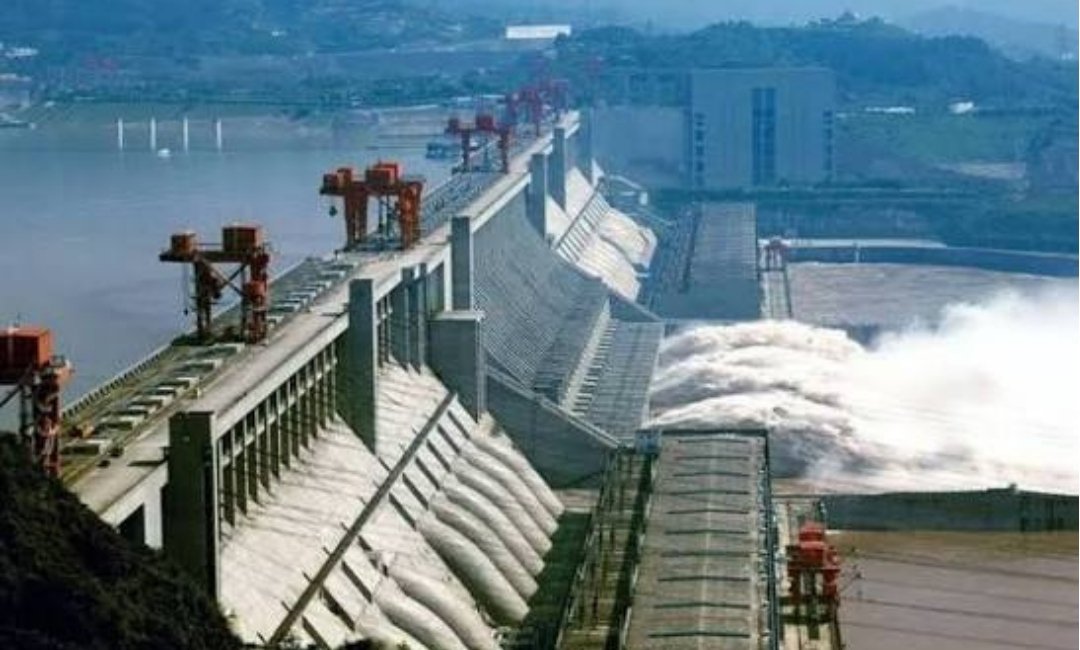
PRAGUE- China is constructing a massive hydropower project on the Yarlung Tsangpo, known internationally as the Brahmaputra, in Tibet near its heavily militarized border with India, raising concerns over the potential consequences for downstream countries, according to a recent report.
The project is located in the Himalayan seismic belt, one of the world’s most earthquake-prone regions, which has a long history of devastating tremors, the report noted.
Writing for ‘Project Syndicate’, Brahma Chellaney, Professor Emeritus of Strategic Studies at the New Delhi-based Centre for Policy Research, said the “most troubling” warning about the project is now coming from Chinese scientists themselves.
Chellaney cited a recent paper published in the Beijing-linked, Mandarin-language journal ‘Sedimentary Geology and Tethyan Geology’, which flagged geological risks at the construction site.
“The geologists conclude that the terrain has a ‘loose structure and weak cohesion’ and warn that fault movement or an earthquake could easily trigger large-scale instability, threatening both the reservoir and surrounding infrastructure. The authors recommend reinforcing the reservoir slopes, installing retaining structures, and redesigning key elements to reduce the risk of catastrophe. When scientists working under a communist regime issue such warnings, the international community must pay attention,” he wrote.
For northeastern India, the Brahmaputra is a vital lifeline, supporting agriculture, fisheries, wetlands and the livelihoods of millions of people before flowing into Bangladesh, where it is the country’s largest source of freshwater.
The report said the super-dam, similar to China’s large-scale dam projects on the Mekong, could alter transboundary water flows and restrict the downstream movement of nutrient-rich sediment that supports river ecosystems and farmland across riparian countries.
“Worse, a catastrophic structural failure — or even an emergency release of impounded water following seismic damage — could unleash devastating floods across densely populated downstream plains with little warning. What begins as an engineering failure in Tibet could become a humanitarian catastrophe extending all the way to Bangladesh, the world’s most densely populated country outside microstates and mini-states,” Chellaney wrote.
“The geological danger is only part of the story. China is increasingly transforming its control of the Tibetan Plateau — the source of most of Asia’s major rivers — into strategic leverage. It has built cascades of dams on transboundary rivers, withheld hydrological data during periods of tension, and resisted entering any water-sharing treaty with downstream states. Water has become another instrument of coercive statecraft,” Chellaney wrote.
The report said the latest evidence suggests that China’s scientific community may have a clearer understanding of the project’s potential dangers than its political leadership.
Chellaney said Beijing should prioritize transparency and acknowledge its responsibilities toward downstream countries before the “potential water bomb” takes shape upstream. (IANS)