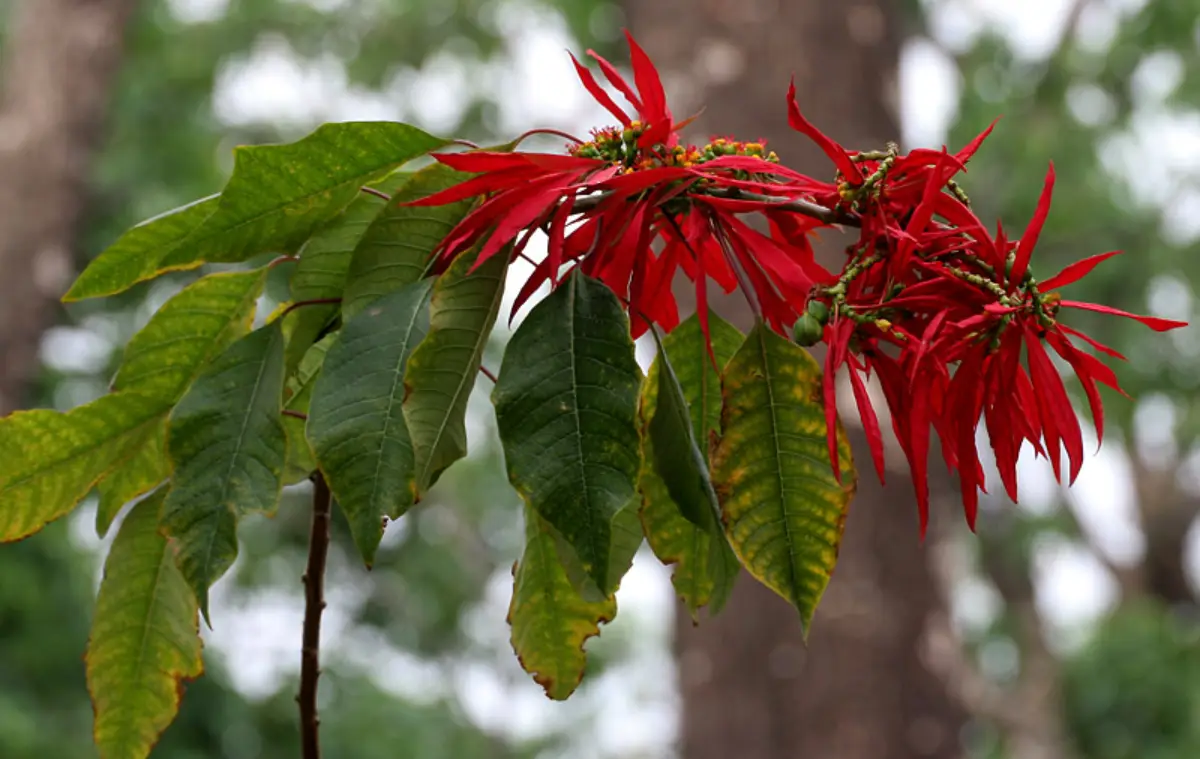
The Poinsettia: Caring For The Plant That Means Holiday Cheer
Photo: Wikimedia
The Poinsettia, originally known to the Aztecs as Cuetlaxochitl, is native to Mexico and was cherished as a divine gift. It was introduced to the United States in 1828 by Joel Roberts Poinsett, the first U.S. Ambassador to Mexico and an enthusiastic amateur botanist, who sent plant cuttings to his home in South Carolina.
Poinsett, who helped establish the organization that eventually became the Smithsonian Institution, passed away on December 12, 1851. In his honor, this date is now observed as Poinsettia Day in the United States.
Over the years, it has come to be closely connected to Christmas and New Year, signifying holiday cheer in many homes.
While we pick up these little beauties from nurseries, there are things that we can to make them last beyond the season. Here are some tips from PlantManagementNetwork.org.:
For indoor care, place it in a sunny window at 60°–70°F. Water only when the soil is dry. Do not fertilize while it is blooming. If you cut a stem, seal the cut end by dipping it in boiling water or briefly holding it over a flame.
To save your plant for re-blooming, cut it back to about 8 inches in late March or early April. Water and fertilize it regularly. Move it outdoors in spring after overnight temperatures are consistently above 55°F. Prune in late June or early July to keep it bushy.
The plant requires long, dark nights to bloom again. Starting October 1, it must be in complete darkness nightly. Light exposure, even from street lamps, can prevent re-flowering. Cover the plant if necessary. Continue regular watering and fertilize every 2–3 weeks until Christmas blooms appear.