
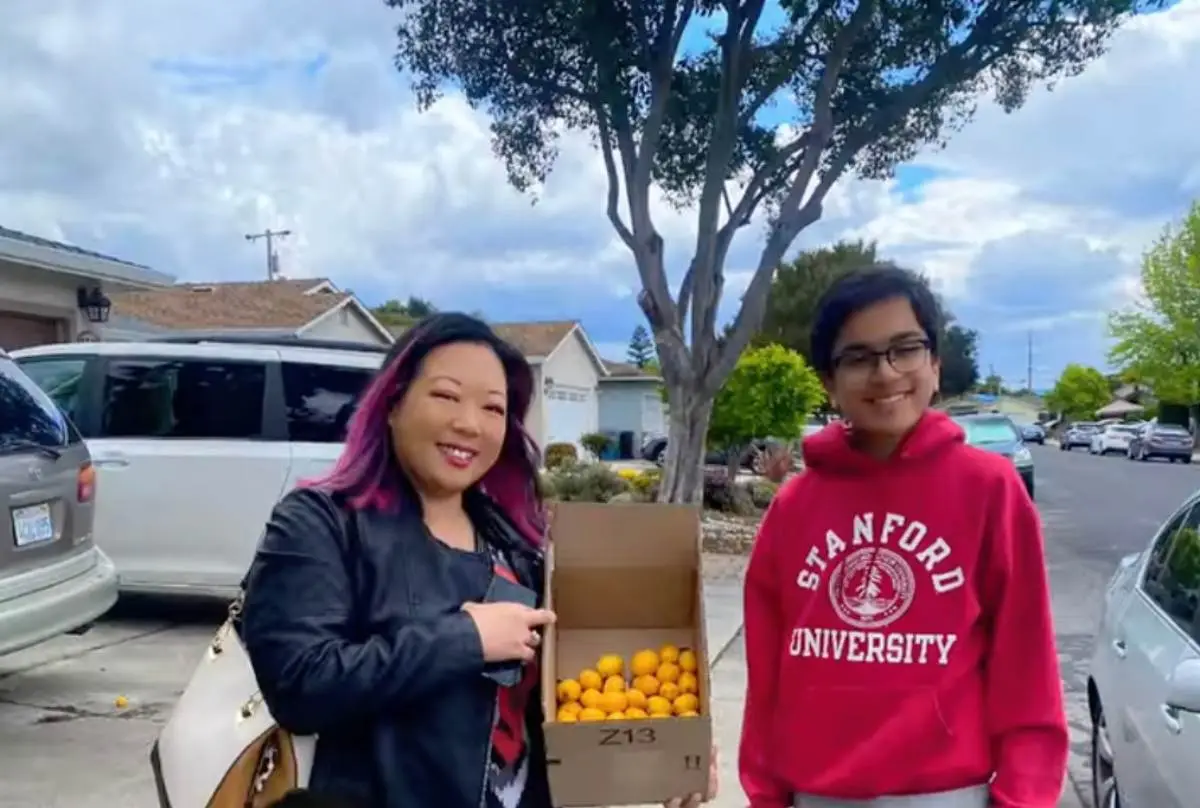
California Teen Turns Surplus Backyard Loquats Fruit Into Lifeline
India-West News Desk
SANTA CLARA, CA – In backyards across Santa Clara, loquat trees are beginning to fill with fruit again, their small golden clusters often ripening faster than families can pick or use them. For Aadit Mehta, that overlooked abundance has become something else entirely a way to give back.
Mehta, a local teenager, is relaunching and expanding Loquat4Humanity, a grassroots effort that turns surplus backyard fruit into direct financial support for families with babies in neonatal intensive care units, or NICUs. What began last year as a single property initiative is now widening to include multiple harvest sites across Santa Clara and, potentially, beyond.
The idea is simple and deliberately low tech. Residents with loquat trees can sign up for harvest slots through an online platform. Community members come to pick the fruit and, in return, make voluntary donations. Every dollar goes toward NICU families, with no overhead or institutional backing.
In its first season, the effort collected more than 61 pounds of loquats and raised funds that were donated to the NICU at Good Samaritan Hospital. The contribution, Mehta’s family says, was meant to be practical rather than symbolic.
“It was a real check,” a family member said, underscoring that the goal is to ease the financial strain many families face during extended hospital stays.
For Mehta, the project is not abstract. He was born prematurely and spent his first 100 days in a NICU, an experience that continues to shape how he thinks about community and responsibility. The idea for Loquat4Humanity grew out of that personal history and a message his parents repeated to him over the years: the world gave you life, find a way to return the favor.
Now, as the new harvest season begins, Mehta is focused on scale. He manages the initiative himself, coordinating schedules, maintaining the website, and tracking donations. The next step is bringing in more households with unpicked loquat trees and expanding the network of donors willing to turn fruit into funding.
The model relies on something uniquely local and fleeting. Loquats ripen quickly and often go to waste. By linking that short window of abundance to an ongoing need, Mehta is trying to build a small but steady pipeline of support.
If it works, the impact will not be measured in pounds of fruit alone, but in how many families find a bit of relief during one of the most uncertain periods of their lives. For more: https://www.loquat4humanity.com/.



John
/
So inspiring. Amazing work!
April 2, 2026