From Orbit To Pitch: The Science Behind The 2026 FIFA World Cup Ball
WASHINGTON, D.C. — Before it takes center stage at the 2026 FIFA World Cup, the tournament’s official match ball has already completed a journey few footballs ever will: a trip to space.
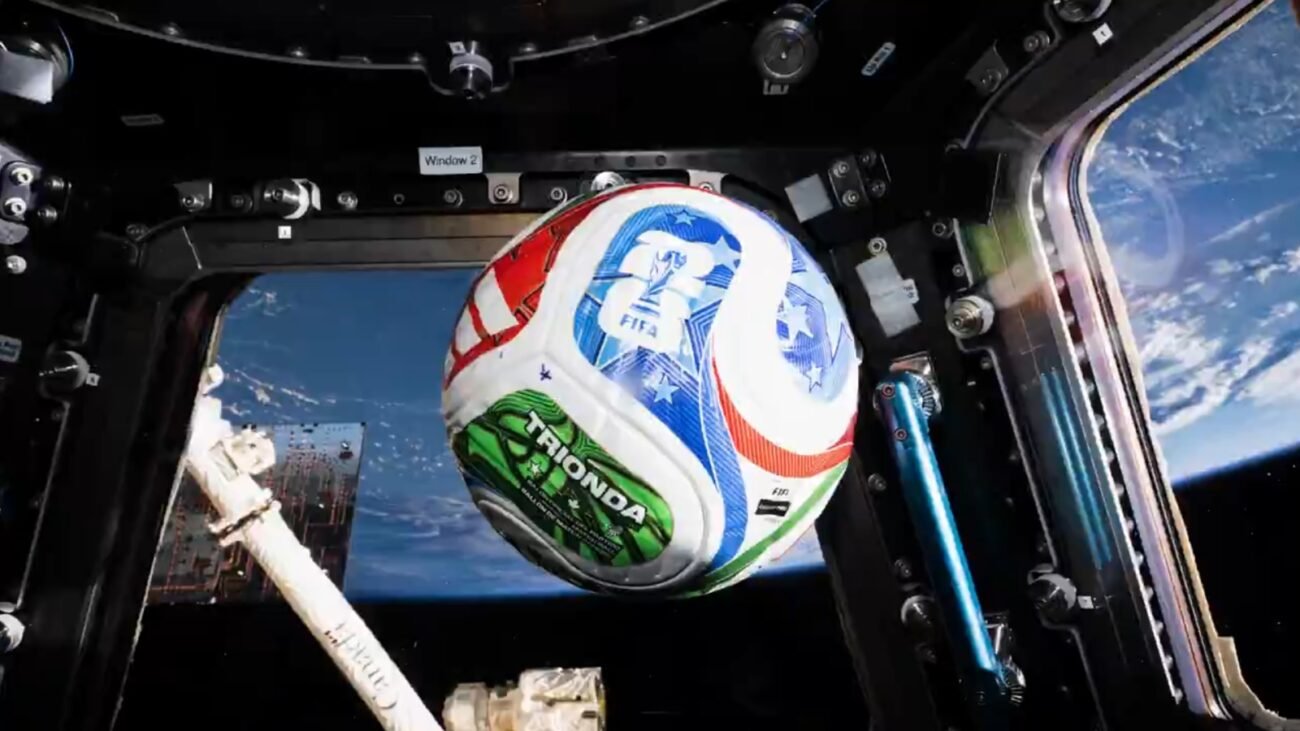
The ‘Trionda’, the official match ball for the 2026 FIFA World Cup, was sent to the International Space Station (ISS) to help researchers study how a football’s center of mass and balance affect its movement in microgravity.
“The official FIFA World Cup ball went to space. Soccer balls need to move predictably, so sports engineers carefully measure and optimize their center of mass and balance,” NASA said in an Instagram post.
The experiment builds on research conducted in partnership with the ISS National Laboratory in 2019, when scientists used the station’s microgravity environment to examine how a football’s internal mass affects its motion, stability and rotation. The findings improved understanding of how embedded technologies, including match-ball sensors, can influence performance during play and contributed to studies used in the development and evaluation of footballs for major international tournaments.
This year, NASA and Adidas recreated the experiment using the 2026 World Cup ball as part of a STEMonstration showing how differently balanced footballs spin and move in microgravity.
“The ISS crew recreated a 2019 experiment with the adidas 2026 Trionda to show the effect of good and bad balance in footballs. The findings from these experiments have improved our understanding of how embedded tech, like match-ball sensors, can influence ball performance during play. Helping to improve the beautiful game is just one of the ways NASA science done on the International Space Station makes life better for people on Earth,” NASA said.
According to NASA, the experiment demonstrates how the same principles of physics that govern motion in space also shape the game played by millions on Earth.
The ball itself reflects the three host nations of the 2026 FIFA World Cup — the United States, Canada and Mexico. Its name, ‘Trionda’, translates from Spanish as “three waves,” a reference echoed in its design.
The ball features a red, green and blue color scheme representing the three host countries and uses a four-panel construction with fluid geometry. The panels form a triangle at the centre of the ball, symbolizing the partnership between the three nations.
National symbols from each host country also appear on the ball, including a maple leaf for Canada, an eagle for Mexico and a star for the United States, while gold embellishments pay tribute to the FIFA World Cup Trophy.
FIFA says Trionda incorporates several performance innovations. Its four-panel construction includes deep seams designed to create optimal in-flight stability by ensuring sufficient and evenly distributed drag as the ball travels through the air. Embossed icons visible up close are intended to improve grip in wet or humid conditions.
Like recent World Cup balls, Trionda also features connected-ball technology. A 500Hz motion sensor chip provides real-time data on the ball’s movement to assist the video assistant referee system, including in offside decisions. (IANS)