
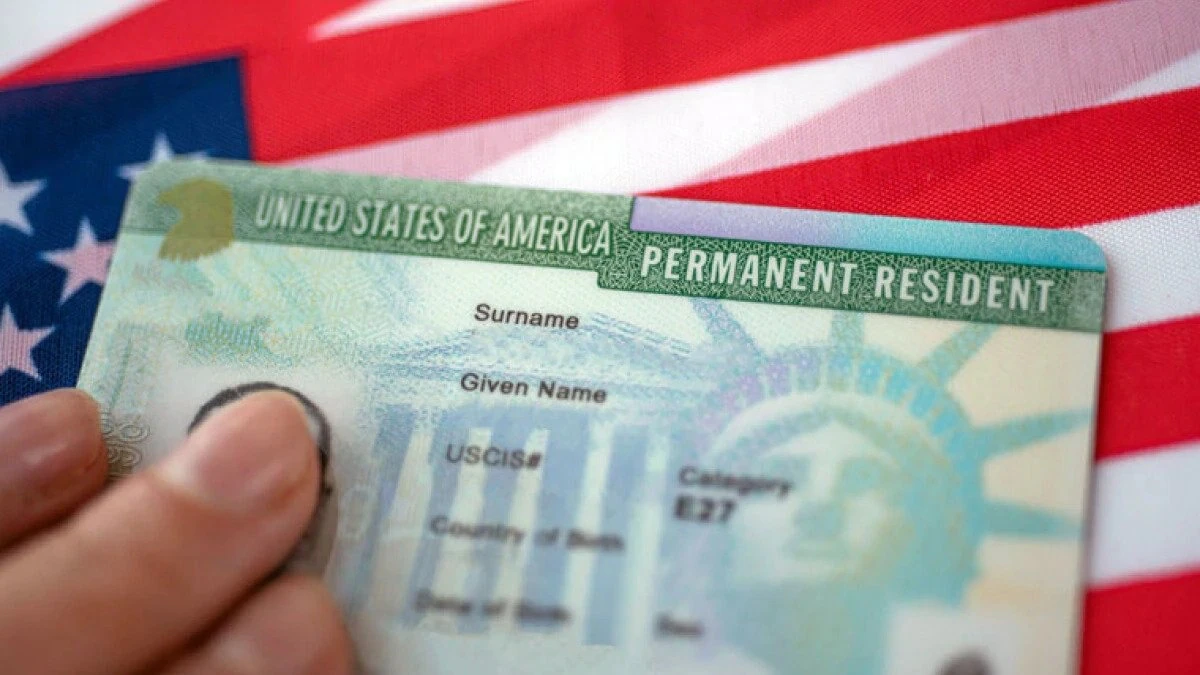
Returning To The U.S.? Some Green Card Holders May Face New Hurdles
India-West News Desk
WASHINGTON, D.C. — In a June 23 ruling, the U.S. Supreme Court said immigration officers can deny normal re-entry procedures to some Green Card holders returning to the country even if a criminal accusation against them has not yet been proven in court.
In the 6-3 decision, the court sided with the Trump administration and overturned a lower court ruling that had required immigration officials to meet a higher standard before treating a returning Green Card holder as ineligible for normal entry into the United States.
The case involved Muk Choi Lau, a Chinese national who became a lawful permanent resident, commonly known as a Green Card holder, in 2007.
In 2012, Lau was arrested in New Jersey and charged with selling nearly $300,000 worth of counterfeit goods. Soon after, he left the United States briefly and returned the following month.
When Lau came back, immigration officers determined that the pending criminal charge affected his eligibility to re-enter the country as a lawful permanent resident. He was allowed to remain in the U.S. temporarily while facing prosecution.
Lau later pleaded guilty to trademark counterfeiting in 2013. Immigration judges subsequently found that he could be removed from the country because of the conviction.
A federal appeals court later ruled in Lau’s favor, saying immigration officers needed stronger proof than a pending criminal charge before taking such action against a Green Card holder.
The Supreme Court disagreed.
Writing for the majority, Supreme Court Justice Clarence Thomas said immigration officers do not need that higher level of proof before deciding whether a returning Green Card holder can be denied normal entry into the United States.
In a dissenting opinion, Supreme Court Justice Ketanji Brown Jackson warned that the ruling gives the government too much power over Green Card holders.
She wrote that the decision amounts to a “massive blank check” for the government to rewrite immigration law.
Although the case originated in 2012, successive administrations defended the government’s position throughout the years of litigation that ultimately led to this Supreme Court decision.
pemba
/
Being green card holder, one has to refrain from committing criminal offence, the offenders should be deported as soon as they land in USA.
June 24, 2026