Trump Accounts And Birthright Citizenship: What H-1B Families Should Know
By Deepak Middha
WASHINGTON, DC – Following the Treasury Department’s official launch of the new “Trump Accounts” program, a wave of confusion has swept through many Indian immigrant families. While political headlines focus on broader debates over birthright citizenship, temporary visa holders are facing immediate, practical questions.
If a child is born in the U.S. to parents on H-1B or H-4 visas, is that child a citizen? If so, could the child qualify for the new $1,000 federal seed contribution? And what about children born in India who later moved to the U.S. on H-4 status?
Navigating these intersecting immigration, tax, and financial rules can be daunting. A child’s legal status can affect everything from family tax filings to long-term college and investment planning. Here is a practical breakdown for Indian immigrant families.
Debunking The “My Visa” Myth
The first point of clarity involves birthright citizenship. Under the 14th Amendment of the U.S. Constitution, anyone born on U.S. soil and subject to its jurisdiction is a U.S. citizen at birth. Recent legal discussions have renewed public focus on this rule, but the foundational principle remains unchanged.
For H-1B and H-4 families, the practical takeaway is straightforward: a child born in the United States is generally a U.S. citizen from birth.
Many parents casually tell friends or tax preparers, “My child is on my visa.” If the child was born in the U.S., that is usually not correct.
While parents may be navigating temporary worker restrictions, their U.S.-born child has independent citizenship rights. The child is generally eligible for a U.S. birth certificate, Social Security number, and U.S. passport, subject to the normal documentation process.
Trump Accounts: Who Qualifies
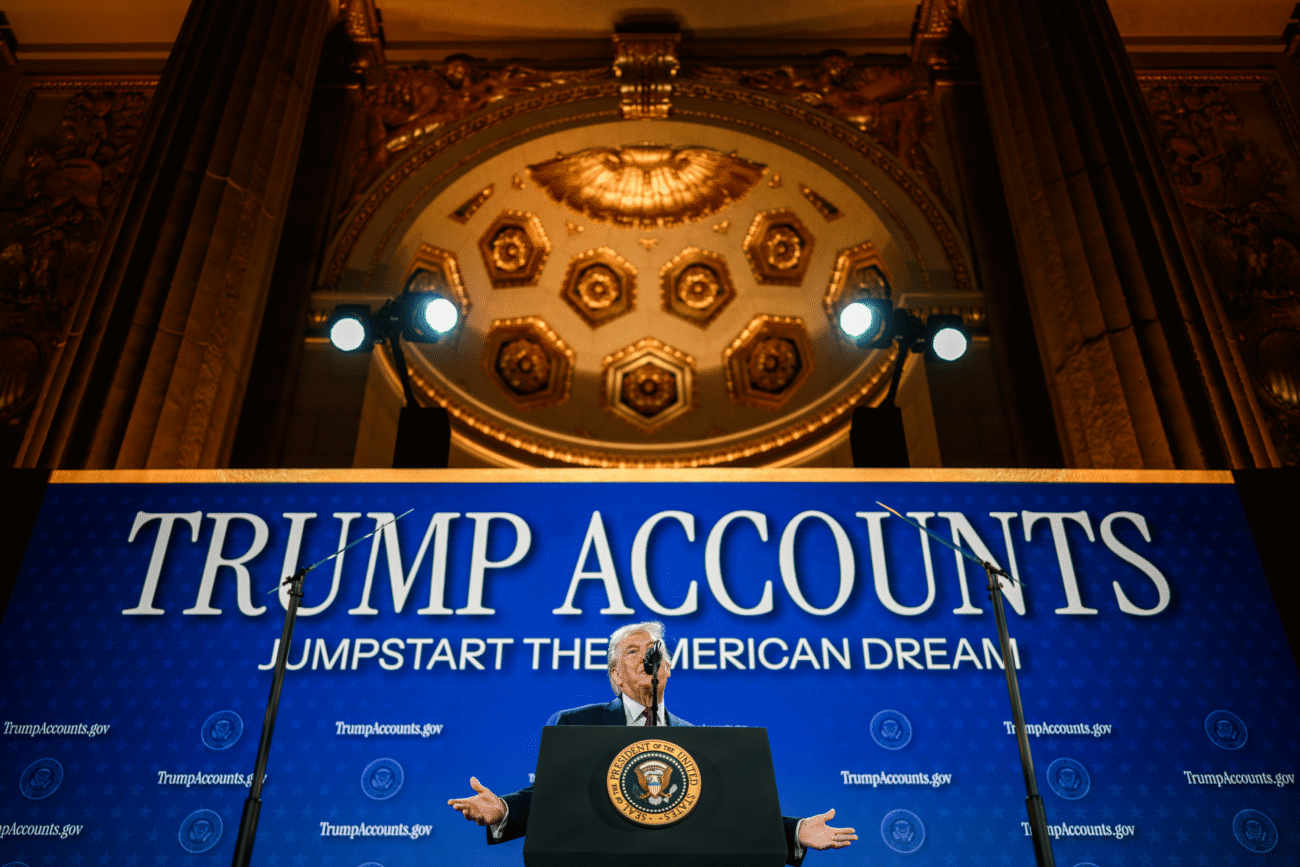
According to the IRS, Trump Accounts are custodial investment vehicles designed to help children build early-life savings. The pilot program includes a one-time $1,000 government-funded deposit for eligible children born between Jan. 1, 2025, and Dec. 31, 2028.
To qualify for the $1,000 pilot contribution, the child must meet specific criteria, including U.S. citizenship and a valid Social Security number.
Because a U.S.-born child of H-1B parents is generally a citizen at birth, the child may be eligible for the program if the birth-year, citizenship, SSN, and other IRS requirements are met. The temporary visa status of the parents does not, by itself, disqualify a U.S.-citizen child.
The H-4 Gap: Why Location Of Birth Matters
The rules look different for children born in India who later move to the U.S. as H-4 dependents.
Living in the United States under a valid visa does not automatically grant citizenship. These children may be lawfully present in the U.S. and may later become eligible for permanent residence or naturalization, but that is different from being a U.S. citizen at birth.
Under current IRS guidance, a child born in India and living in the U.S. on H-4 status would generally not qualify for the $1,000 pilot contribution unless the child independently meets the citizenship and valid SSN requirements.
This highlights a critical distinction that can confuse many families: the difference between an SSN and an ITIN, or Individual Taxpayer Identification Number.
An SSN is generally issued to U.S. citizens and certain noncitizens authorized to work or otherwise eligible under Social Security rules. An ITIN is issued for tax processing to individuals who do not qualify for an SSN.
Some H-4 children born abroad may use an ITIN on a parent’s tax return. However, the Trump Account eligibility language refers to a valid Social Security number, not an ITIN.
A Practical Checklist For Parents
To cut through social media rumors and WhatsApp forwards, families should run through a simple verification framework:
- Confirm where the child was born.
- Confirm whether the child is a U.S. citizen.
- Check whether the child has an SSN or an ITIN.
- Review whether the child was born between Jan. 1, 2025, and Dec. 31, 2028.
- Cross-check official IRS and Treasury guidance before submitting any information.
The Bottom Line
Immigration status and financial eligibility often overlap, but they are not the same thing. An H-1B parent’s stay may be tied to an employer, and an H-4 spouse may face work authorization hurdles, but a U.S.-born child’s legal identity is separate.
For Indian families building long-term lives in the United States, this moment is a reminder to organize critical records early. Birth certificates, Social Security cards, passports, tax records, and immigration documents should be kept accurate and accessible.
The Trump Account discussion is not just about a $1,000 contribution. It is also about understanding a child’s legal and financial identity in the United States. For families living through long green card backlogs, that clarity can make a meaningful difference.
(Middha writes about immigration, citizenship, tax, and financial planning and runs NRItoUSA.com. This column is for informational and educational purposes and should not be construed as legal advice.)