
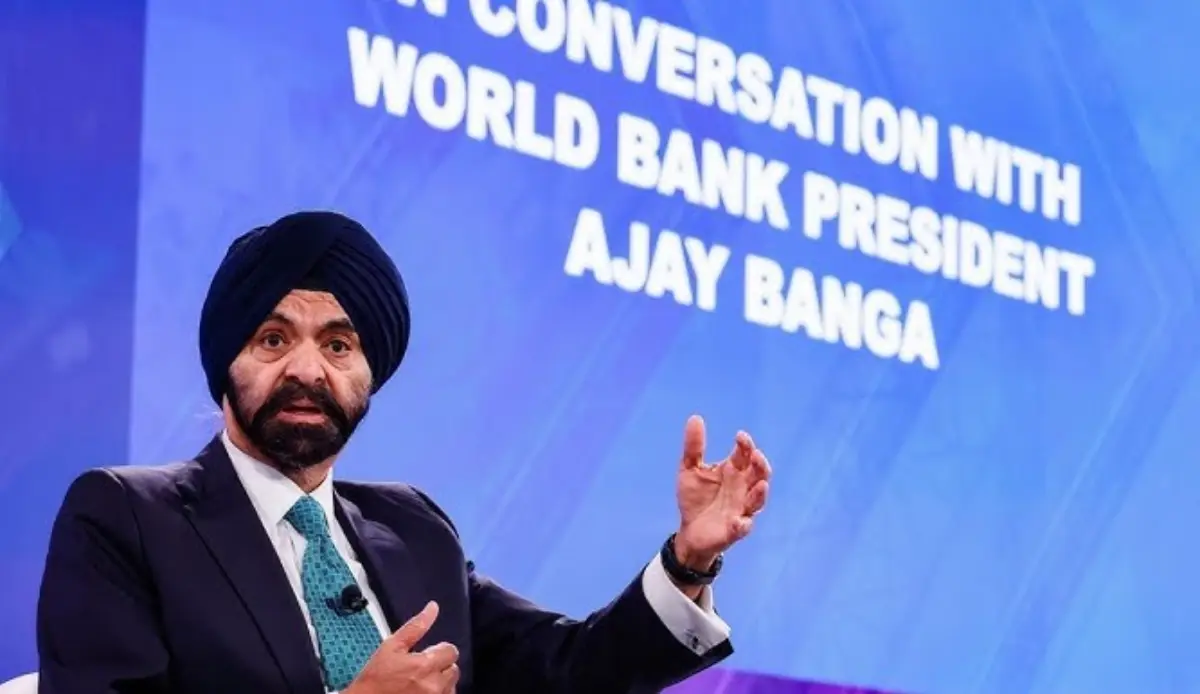
Ajay Banga On Gaza “Board of Peace,” Trump Invites India To Join
Photo:Youtube
India-West News Desk
WASHINGTON, DC – Ajay Banga, the president of the World Bank, has been named to the new governing body envisioned by President Donald Trump to oversee postwar Gaza, as part of a sweeping and complex three tier structure that would concentrate decision making among US leaders, pro-Israel figures and global financiers.
The White House says the framework, known as the “Board of Peace,” is designed to implement Trump’s 20-point plan for Gaza and could later be expanded as a model for resolving other international conflicts. And unsurprisingly, at its apex will be the Nobel peace prize aspirant, Donald Trump himself, with veto authority over all major decisions and control over funding, reconstruction priorities and long term governance strategy.
India is among the countries invited to participate in the initiative, a move that places New Delhi at the center of a controversial diplomatic experiment. India maintains a strategic partnership with Israel while also providing consistent humanitarian assistance to Palestinians, a balance that now comes under sharper scrutiny as it weighs involvement in the Trump led body. Meanwhile, Pakistan has also confirmed it received an invitation to join the Board of Peace, which has drawn a storm of words from Indian political parties who think Pakistan cannot be equated with India when it comes to talks and behavior on peace.
According to the White House statement released January 17, the top tier of the structure would be a Founding Executive Council made up of senior US officials, close allies of Israel, and prominent business leaders. Alongside Banga, the council would include Secretary of State Marco Rubio, US special envoy Steve Witkoff, Trump’s son-in-law Jared Kushner, billionaire investor Marc Rowan, former British prime minister Tony Blair, and deputy national security adviser Robert Gabriel Jr.
Bloomberg News reported January 18 that the Trump administration has asked participating countries to contribute at least $ one billion to secure permanent membership on the Board of Peace, while non permanent membership is free. Invitations have reportedly been sent to around 60 countries.
International reaction has been one of outrage and unease. Hungary, led by a close Trump ally, was the only country to offer an unequivocal public acceptance. Other governments have avoided formal statements, with officials speaking privately expressing concern that the initiative could undermine or sideline the United Nations and existing international frameworks for conflict resolution.
Daljit Singh
/
No one should be pumping their chest for being appointed to the “Peace Board.” It will be a hopeless task, even for experienced public servants. The mission is unclear without any agenda or goals. Mr. Banga will be bored to death with this unfulfilling task for the team, including Mr. Putin, who not only smells bad but also ruins the day for the people seeking action and results in the Middle East. It is a lose/lose proposition.
January 20, 2026