Himalayan Marmot Could Help Monitor Climate Shifts In Mountain Ecosystems
NEW DELHI – Droppings of the Himalayan marmot could offer valuable clues about environmental conditions in the higher Himalayas and help scientists track climate change impacts on fragile alpine ecosystems, according to a study by researchers at the Birbal Sahni Institute of Palaeosciences (BSIP), an autonomous institute under the Department of Science and Technology.
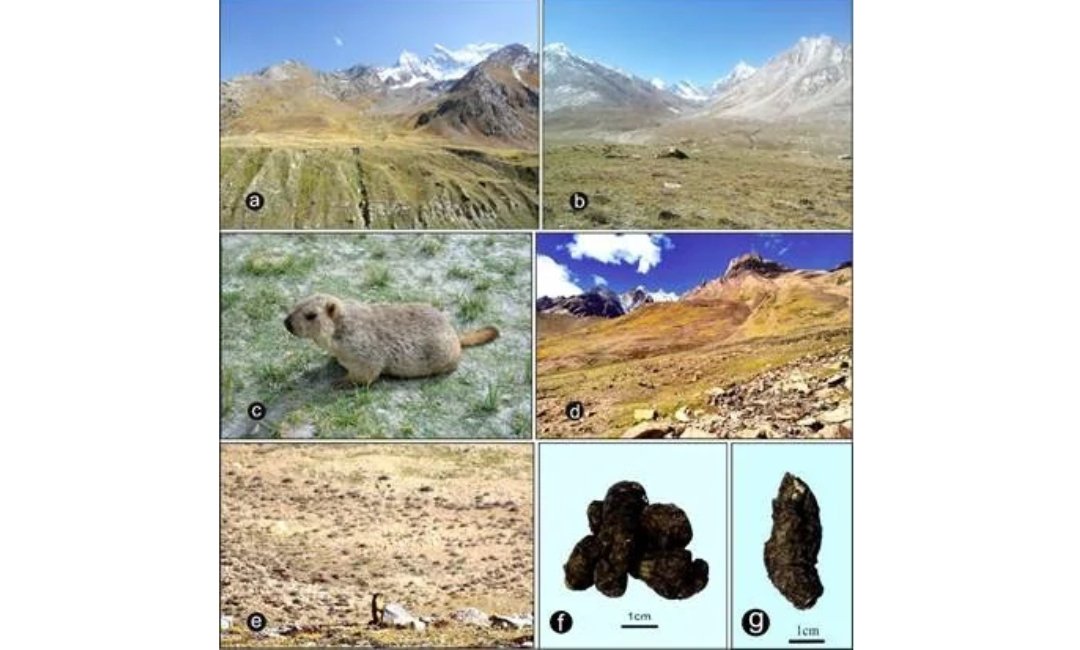
Researchers studied pollen grains, fungal spores and elemental signatures preserved in the faeces of the Himalayan marmot (Marmota himalayana), an herbivorous mammal inhabiting high-altitude, cold and dry regions of the Himalayas, according to a statement from the Ministry of Science and Technology.
The findings suggest that the Himalayan marmot could serve as an indicator species for tracking changes in vegetation and climate in the higher Himalayas.
The study also found that changes in marmot habitats could indicate shifts in altitude in response to changing environmental conditions. Combining pollen, fungal spores and elemental analysis provides a modern reference for future palaeoecological and coprolite studies, which examine fossilized animal droppings to reconstruct past environments.
Published in Plos One, the study could help scientists reconstruct past ecological changes and assess the potential impacts of climate change.
The findings may also aid biodiversity conservation by improving understanding of marmot habitat requirements and informing conservation strategies for wildlife in the region, including the snow leopard, for which marmots are an important prey species.
The research could further support environmental monitoring and climate studies while contributing to the sustainable management of fragile Himalayan ecosystems.
Researchers identified pollen grains and fungal spores in the faecal samples through palynological analysis. (IANS)