Quad Unveils AI, Critical Minerals, Maritime Initiatives Across Indo-Pacific
ATLANTA, GA-India and its Quad partners on Oct. 31 announced plans to provide more than $85 million in assistance to expand access to trusted artificial intelligence (AI) across the Indo-Pacific, alongside a US commitment of $10 million for critical minerals recycling facilities in India and Southeast Asia.
The four countries also announced plans for a business leaders’ forum, an initiative to identify vulnerabilities in semiconductor supply chains and new maritime cooperation activities. They pledged to dismantle cyber scam operations and expressed concern over economic coercion and arbitrary export restrictions.
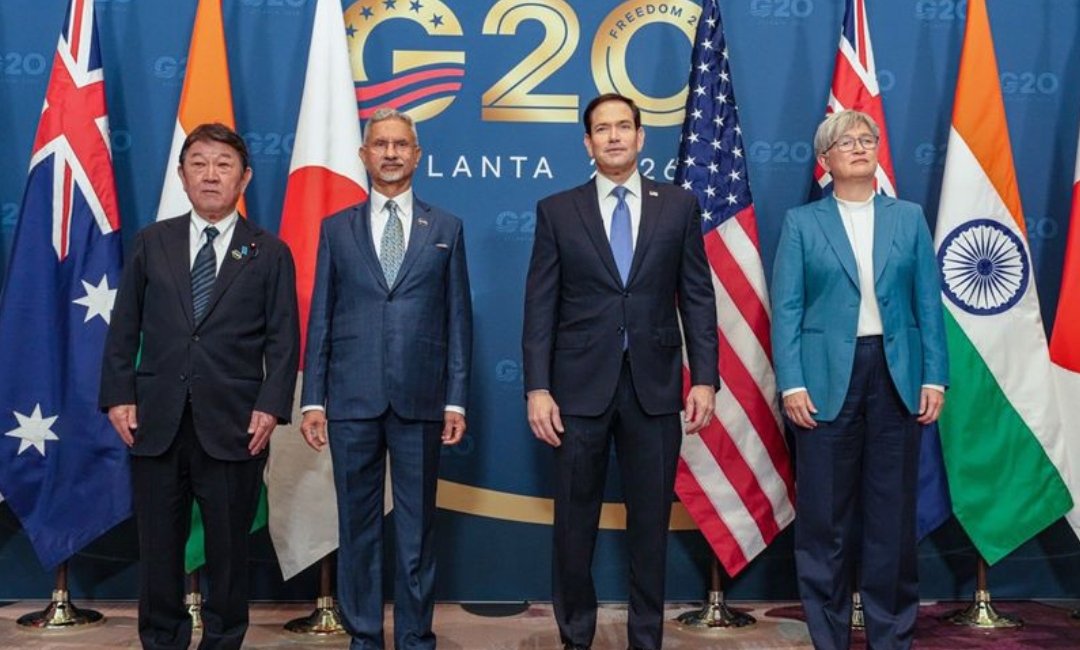
The announcements followed a meeting in Atlanta between External Affairs Minister S Jaishankar, US Secretary of State Marco Rubio, Japanese Foreign Minister Toshimitsu Motegi and Australian Foreign Minister Penny Wong.
Their joint statement outlined initiatives covering economic security, technology, maritime cooperation and disaster response.
The ministers expressed their intention to provide more than $85 million in technical and financial assistance to expand access to trusted technology, including through the Quad SI Accelerator.
The statement used the term “Super Intelligence”, with a footnote clarifying that it refers to artificial intelligence in Australia, India and Japan. It also highlighted initiatives such as Pax Silica as important to future economic growth. The statement did not specify individual country contributions or how the assistance would be distributed.
The partners will work to identify vulnerabilities in semiconductor and AI supply chains before they cause disruptions, stressing the need for secure supplies of advanced semiconductors and AI hardware. They will also identify priority countries for cooperation on 5G, 6G, Open Radio Access Networks and AI-enabled radio access networks, including through a pipeline of trusted 5G projects.
The four countries will continue mapping digital identity standards to improve public-private sector cooperation. Senior Quad cyber officials met this month and pledged further support for a trusted and resilient cybersecurity environment.
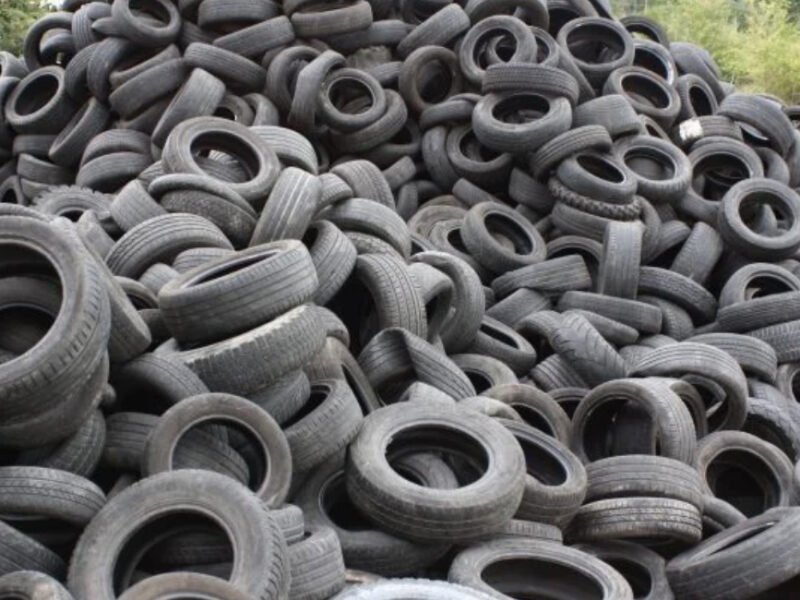
On critical minerals, the ministers welcomed a US commitment of $10 million to support infrastructure and facilities in India and ASEAN countries that recover minerals from waste. The four countries are working to extract minerals from discarded electronics and scrap to reduce reliance on any single supplier, while encouraging private investment in waste collection networks, processing plants and refineries.
They will also explore ways to streamline cross-border export and import procedures for recyclable materials while strengthening the implementation of existing regulations.
The ministers expressed “grave concerns regarding economic coercion, including through arbitrary export restrictions”. They also criticized non-market policies and practices that create overcapacity and disrupt supply chains in critical industries. The joint statement did not name any country.
The first Quad Business Leaders’ Forum will bring together industry leaders, government representatives and policy experts to strengthen commercial ties and promote business opportunities in key sectors. Quad export credit agencies will meet in Tokyo on November 18 to identify areas for practical cooperation.
The partners also reviewed the first Quad Fuel Security Forum, held in September, where discussions included strengthening strategic petroleum reserves and fuel stockholdings across the four countries.
On infrastructure, the four countries are working with Fiji to modernize ports in Suva, Lautoka and Rokobili. The US Millennium Challenge Corporation is supporting a port development framework, while Australia is assessing the feasibility of a new transshipment port facility.
Quad countries have provided more than 2,000 infrastructure fellowships across the Pacific, Southeast Asia and South Asia. They are also advancing trusted, high-speed undersea cable routes with alternative connections and sharing practices to keep the networks secure and resilient.
On maritime security, the ministers stressed the need to protect navigational rights and freedoms in the Strait of Hormuz, the Red Sea and the Bab el-Mandeb Strait, in accordance with international law and the UN Convention on the Law of the Sea. They underlined the importance of uninterrupted commerce, energy security and safe passage for crews and vessels without tolls.
The second Quad-at-Sea Ship Observer mission sailed from Chennai to Perth between September 25 and October 7, with representatives of all four countries travelling aboard an Indian Coast Guard offshore patrol vessel to strengthen cooperation against unlawful maritime activities.
The partners plan to hold their first exercise under the Indo-Pacific Maritime Surveillance Collaboration initiative at Sea Dragon 2027. A Quad Maritime Domain Awareness Track 1.5 Symposium is also planned for early 2027 under the Maritime Training Initiative, or MAITRI, bringing regional partners together to discuss surveillance, technology and information sharing.
The ministers also discussed regional security concerns. According to Japan’s account of the meeting, Motegi raised tensions in the East China Sea, South China Sea and Middle East, opposing unilateral attempts to change the status quo by force or coercion. He stressed the need for North Korea’s complete denuclearization and action against its malicious cyber activities. Motegi also thanked India, Australia and the United States for supporting an immediate resolution of the issue of Japanese nationals abducted by North Korea.
The ministers condemned criminal groups that traffic people and force them to conduct online scams, saying the operations steal tens of billions of dollars annually from citizens of the four countries. They pledged to dismantle these networks and hold transnational criminal groups and their leaders accountable.
On disaster response, the ministers offered condolences for deaths in Nepal’s August 26 flash floods and recognized India’s leading role as the first responder, alongside significant support from the other Quad countries. Australia, Japan and the United States will send observers to India’s annual joint humanitarian assistance and disaster relief exercise in November.
The partners also reported progress on standard operating procedures for the Indo-Pacific Logistics Network following a September tabletop exercise hosted by Japan’s Defense Ministry. Further logistics cooperation is planned at the next Rim of the Pacific exercise.
The Atlanta meeting, held on the sidelines of the G20 Foreign Ministers’ Meeting, lasted about 40 minutes. (IANS)