Rising Crude Prices Weigh Complicates US Policy Path, Impact On Asia Severe
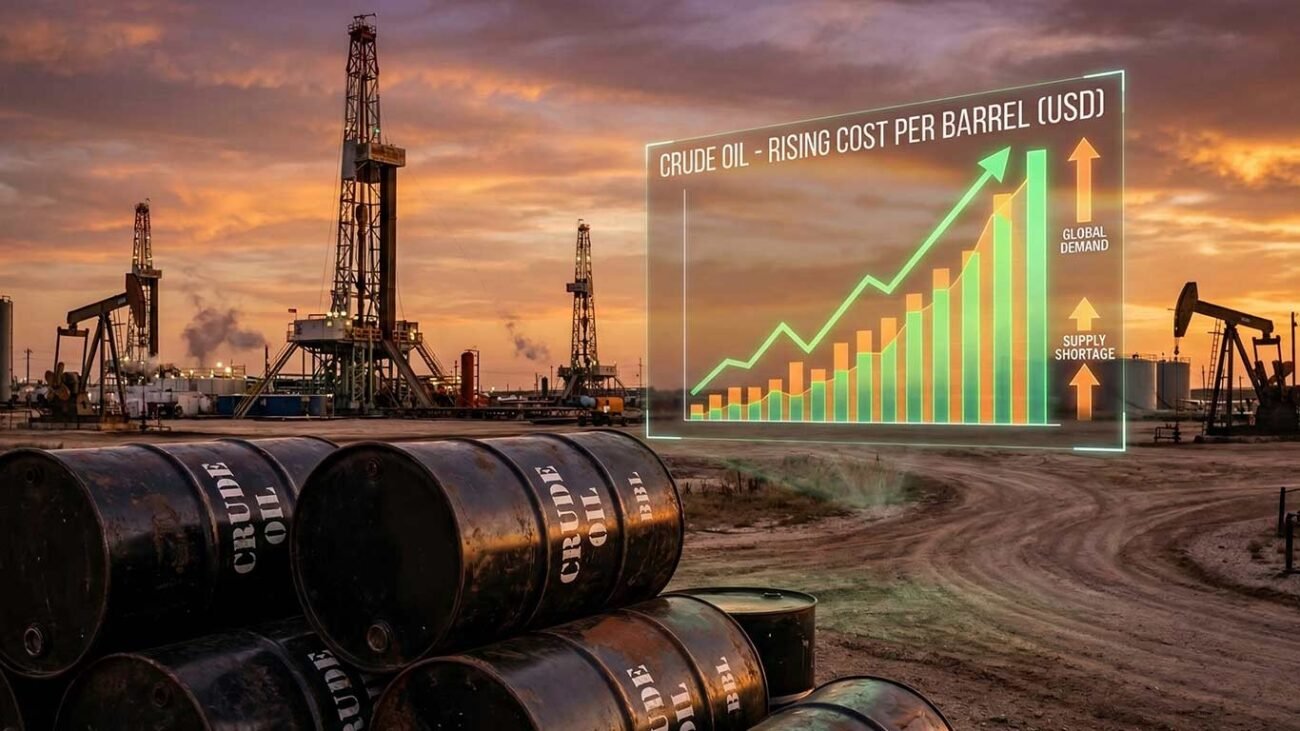
WASHINGTON, DC- Surging oil prices driven by the ongoing Middle East conflict are clouding the US Federal Reserve’s economic outlook, with policymakers warning of rising inflation and uneven global impact, particularly on energy-dependent regions such as Asia.
US Federal Reserve Chair Jerome Powell said higher energy costs are already feeding into inflation, complicating the central bank’s policy path. “Inflation has moved up and is elevated, in part reflecting the recent increase in global energy prices,” he said at a press conference after the Fed held interest rates steady.
The US Federal Reserve left its benchmark interest rate unchanged at 3.5 to 3.75 per cent, signaling caution as uncertainty deepens over the duration and economic fallout of the Middle East conflict.
Powell said the situation has added “a high level of uncertainty about the economic outlook,” warning that “higher energy prices will push up overall inflation” in the near term.
The inflation impact is already visible. Total Personal Consumption Expenditures (PCE) prices rose 3.5 per cent in the 12 months ending March, “boosted by the significant rise in global oil prices that has resulted from the conflict in the Middle East,” Powell said. Core inflation, which excludes food and energy, stood at 3.2 per cent.
While the US economy remains resilient, Powell indicated that the global impact of the oil shock is uneven. “The effects on the United States are really substantially less than those of Western Europe or Asia, who are feeling much greater effects from these things,” he said.
Powell said the Federal Reserve is in no hurry to adjust rates as it assesses how the situation evolves. “Monetary policy is not on a pre-set course,” he said, adding that officials would act based on incoming data and risks.
He noted that energy shocks are often temporary, but the current situation remains unpredictable. “It hasn’t even peaked yet,” Powell said, referring to oil prices, adding that policymakers would want to see how the situation develops before considering any rate cuts.
The US labor market remains stable, with unemployment at 4.3 per cent, though job gains have slowed. Consumer spending, a key driver of US growth, continues to hold up despite rising fuel costs.
However, Powell cautioned that sustained increases in gasoline prices could begin to weigh on household spending. “When gas prices go up, that’s disposable income coming out of people’s pockets, so they’re going to spend less on other things,” he said.
So far, he noted, there is little evidence of a slowdown in spending. “The US economy has just powered through shock after shock, and consumers are still spending,” Powell said.
The Federal Reserve’s wait-and-watch stance reflects broader uncertainty around how long the conflict will disrupt energy markets, including key trade routes and supply chains.
Global central banks are grappling with a renewed inflation challenge following recent shocks, including the pandemic, the Russia-Ukraine war, and ongoing trade tensions. The latest surge in oil prices adds further complexity, particularly for emerging economies dependent on energy imports.
For countries in Asia, including major oil importers, the spike in crude prices risks widening trade deficits and fueling domestic inflation, even as growth remains uneven. (IANS)