
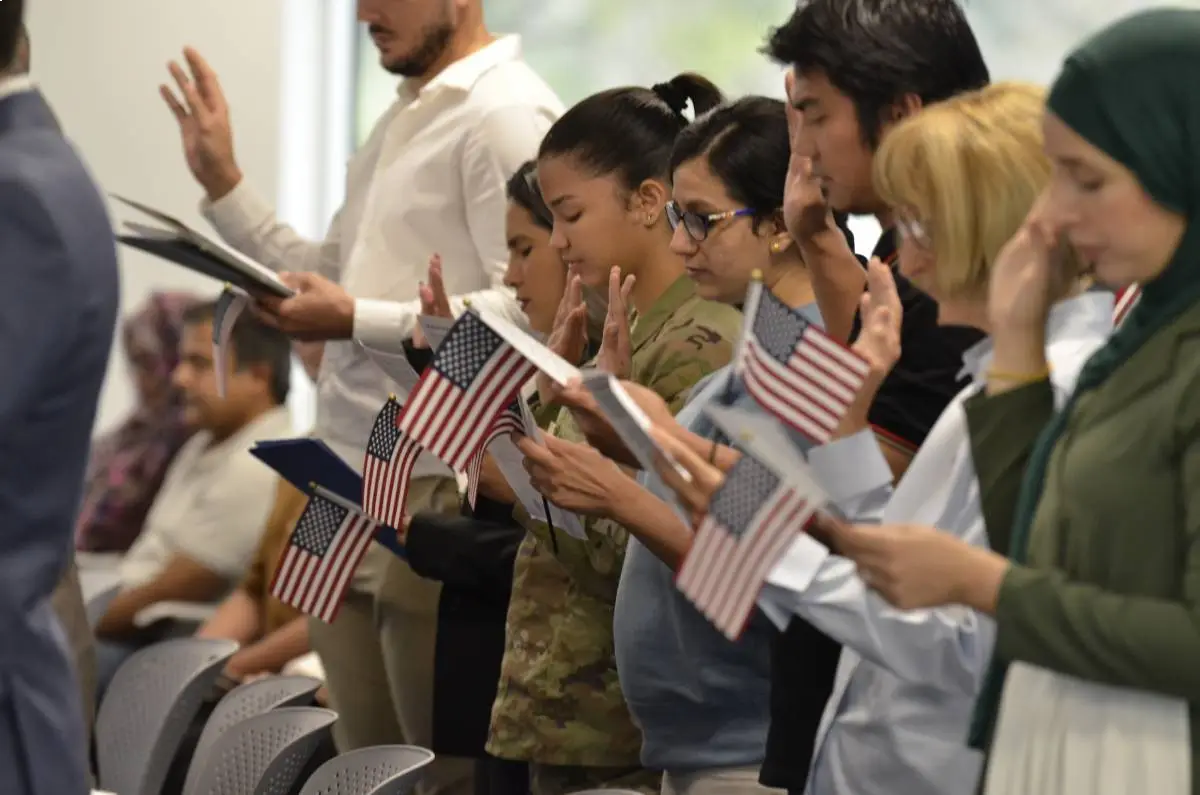
USCIS Updates Naturalization Test, English Language Requirements
Photo: USCIS
India-West Staff Reporter
WASHINGTON, D.C.– The U.S. Citizenship and Immigration Services is implementing a new 2025 naturalization civics test as part of a major overhaul of its American citizenship standards.
The agency, which released a Federal Register notice on September 16, announced that the changes are intended to better assess an applicant’s understanding of U.S. history and government.
USCIS Spokesperson Matthew Tragesser said, American citizenship is the “most sacred” in the world and should be reserved for those who fully embrace the nation’s values and are “fully assimilated.”
The changes are aimed at ensuring applicants can demonstrate their ability to read, write, and speak English, as well as a strong grasp of U.S. civics.
In addition to the new test, USCIS has already announced several other policy changes. The agency is restoring robust vetting for all applicants and tightening reviews for disability exceptions to English and civics requirements.
Furthermore, officers have received new guidance on assessing good moral character, now focusing on an applicant’s positive contributions to American society rather than just an absence of bad behavior.
USCIS is also resuming neighborhood investigations to ensure applicants meet all statutory requirements and are worthy of citizenship.
USCIS plans to announce more initiatives to enhance the integrity of the naturalization process in the coming weeks and months.

Naturalized Citizen
/
According to a recent USCIS announcement, the civics test is getting a notable update for applications filed on or after October 20, 2025. Under the new rules, applicants will be asked up to 20 civics questions (versus up to 10 under the older system), and they’ll need 12 correct answers to pass.
What’s interesting is that the English test—reading, writing, speaking—remains fundamental, but USCIS clarified that applicants must still show ability in all those areas unless they qualify for an exemption. For example, people who are older and have been permanent residents for many years may be exempt from the English requirement, though they still must take the civics test (often in their own language with an interpreter).
Another point I found compelling is the stricter scrutiny around medical disability exceptions. USCIS has updated its policy on Form N-648 to ensure that claims are substantiated and less prone to fraud.
Overall, this feels like a significant shift. The new civics test is more demanding, and the framework underscores that English proficiency is still central—except in specific, well-justified cases. For those preparing, it’s going to be crucial to know which version of the test applies based on when you file and to drill both language and civic knowledge thoroughly.
October 6, 2025