India Says It Already Meets US Labor Goals
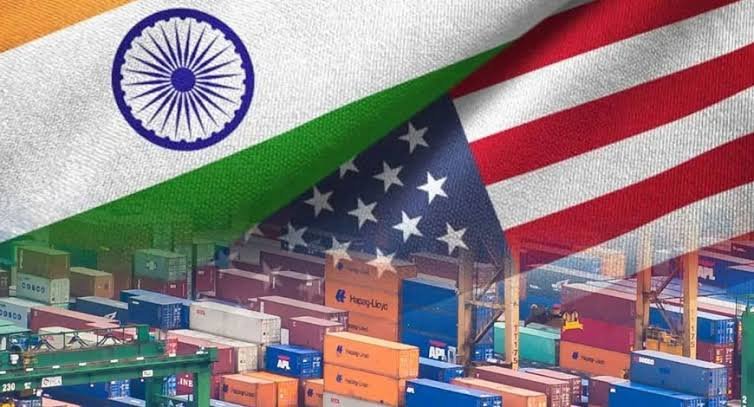
WASHINGTON, D.C.-India has mounted a broad defense of its legal, regulatory and corporate safeguards against forced labor, telling the US Trade Representative that the country already has the institutions, laws and industry compliance systems needed to achieve the objectives Washington is seeking through its proposed Section 301 tariff action.
Appearing before the USTR’s public hearing on July 8, representatives of India’s Ministry of Commerce and Industry, the Agricultural and Processed Food Products Export Development Authority, the Confederation of Indian Industry and the Federation of Indian Chambers of Commerce and Industry argued that India’s framework combines constitutional protections, labor legislation, regulatory oversight and private-sector compliance with internationally recognized standards.
The Indian delegation said Article 23 of the Constitution expressly prohibits forced and bonded labor as a fundamental right enforceable through the courts. These protections, it said, are reinforced by the Bonded Labor System (Abolition) Act, modern labor codes, criminal penalties under the Bharatiya Nyaya Sanhita and India’s ratification of the International Labor Organization’s core conventions on forced labor.
Industry representatives also highlighted India’s growing corporate governance framework.
The Confederation of Indian Industry said the Securities and Exchange Board of India requires the country’s top 1,000 listed companies to file Business Responsibility and Sustainability Reports covering human rights, grievance mechanisms, forced labor complaints, supply-chain assessments and corrective actions. It also pointed to the BRSR Lite framework for small and medium enterprises and voluntary corporate compliance systems that mirror international standards.
The Federation of Indian Chambers of Commerce and Industry told the hearing that most Indian exporters supplying the US market already operate within compliance systems established by American buyers and multinational corporations, including supplier audits, due diligence, ethical sourcing standards and worker grievance mechanisms.
“In many cases, compliance is driven as much by buyer requirements as by domestic regulation,” FICCI said in its written testimony.
The industry bodies also cited sector-specific safeguards. According to CII, aluminum companies undertake formal human rights due diligence, while textile exporters are regularly audited by US buyers and international certification bodies.
The Agricultural and Processed Food Products Export Development Authority said Indian agricultural exports destined for the United States are subject to additional safeguards.
It said rice exports are permitted only from mills registered with India’s Ministry of Agriculture and Farmers Welfare, while exporters must satisfy stringent labor standards required by major US retailers, including Walmart.
Throughout the hearing, Indian representatives maintained that the proposed 12.5 percent tariff would not strengthen labor protections because those safeguards are already embedded in India’s legal and commercial systems.
Instead, they urged the USTR to build on existing cooperation through dialogue, technical engagement and bilateral mechanisms, arguing that evidence-based collaboration would better advance the shared objective of eliminating forced labor from global supply chains than economy-wide tariffs. (IANS)