Far From Home, Closer Together
By Maia Rai and Aimen Ejaz
PALO ALTO, CA – For Indian and Pakistani students living in the United States, friendship does not always need a grand purpose.
They share classrooms, research projects, group chats and professional circles. They attend the same South Asian events, watch cricket together and often find common ground in music, food and films. Sometimes they disagree. Sometimes they discover shared interests. Sometimes they simply become friends.
That everyday interaction is at the heart of the Dosti Project’s work to create more opportunities for Indians and Pakistanis in the diaspora to meet.
There is often a tendency to attach a larger meaning to such encounters. But the project sees value in something more ordinary: students and members of the diaspora getting to know one another as classmates, colleagues and friends, without pretending that personal relationships erase differences in history, politics or experience.
Those differences remain. So can the friendships.
Life in the United States creates opportunities for such connections. Indian and Pakistani students attend many of the same universities and later enter the same industries. Their families shop at the same South Asian grocery stores, while Hindi and Urdu, cricket, music, food and humor often cross community lines with ease.
That familiarity does not mean the communities are the same. Both contain significant differences in language, religion, region, class and personal experience. But disagreement can exist alongside familiarity, and familiarity can make room for relationships that are not defined by politics.
At Stanford University, Indian and Pakistani students have worked together on projects involving disaster resilience, sustainability, food security and technology. Other programs have brought them together through entrepreneurship, research and culture. In many cases, the reason they share a room has little to do with their national backgrounds.
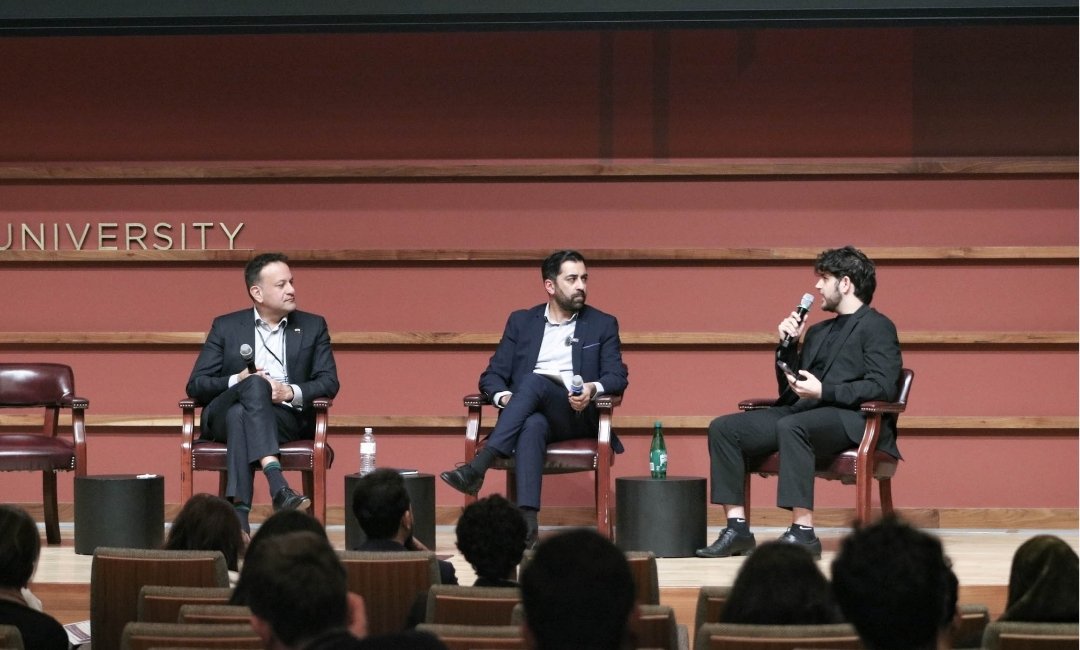
The Dosti Project’s India Pakistan Friendship Conference at Stanford’s Hoover Institution brought that idea onto a larger stage. Held March 31 and April 1, 2026, the conference drew more than 650 people from more than 20 countries. The program included panels, speakers, a Demo Day for entrepreneurs and a discussion featuring Indian Pakistani couples.
For some participants, the relationships continued beyond the conference. Several couples in the Bay Area were still meeting for dinner months later.
Those dinners are meaningful precisely because they do not have to prove anything. They do not demonstrate that decades of history have disappeared or that political differences no longer matter. They simply show that people met, enjoyed each other’s company and chose to meet again.
That is also shaping the Dosti Project’s plans for university chapters across the United States. Rather than requiring every chapter to focus on a single subject, the idea is to let campuses build connections around areas such as public health, technology, entrepreneurship, research or culture.
What follows will depend on the students who participate.
For people living far from their countries of origin, relationships within the diaspora can take on a different character. An Indian and a Pakistani can disagree deeply about history and still work together on a project. They can debate cricket, complain about graduate school, recommend restaurants and invite each other to dinner.
People to people ties do not have to represent a political solution or carry the weight of a diplomatic agenda.
Sometimes, friendship is enough.
For Indians and Pakistanis living thousands of miles from home, some of those friendships simply happen to cross the border that separates their ancestral countries.
(Dosti Project is a Stanford University student-founded, registered 501(c)(3) group focused on friendship and dialog. The authors are students from India and Pakistan.)