
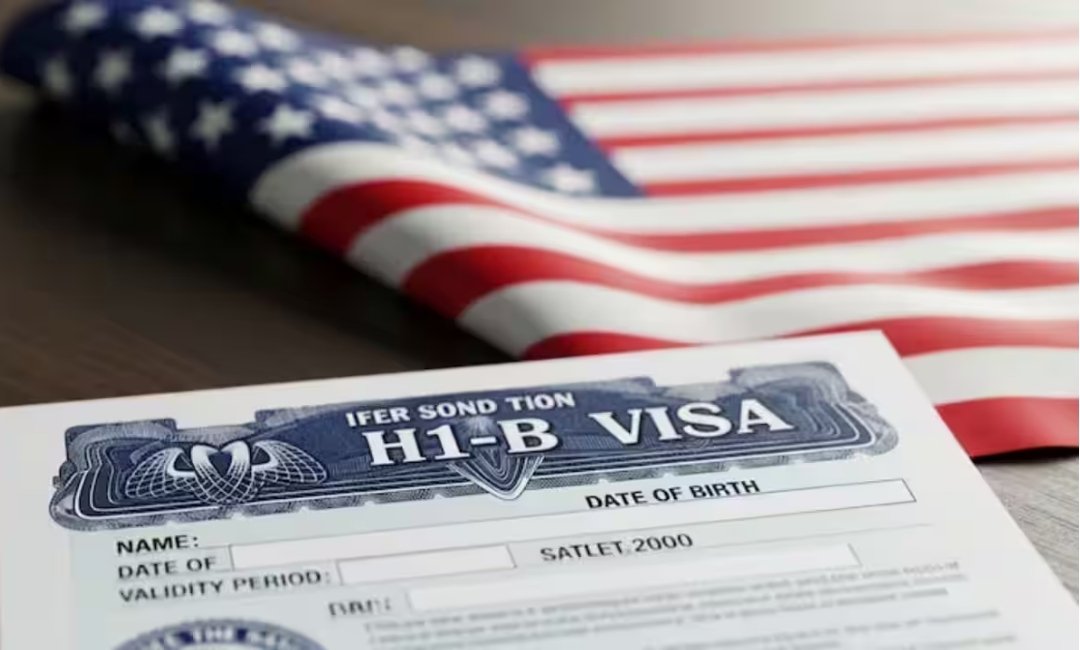
H-1B Workers Might Have To Leave US Immediately If Laid Off
WASHINGTON, DC- The Trump administration has proposed ending the up-to-60-day grace period that allows H-1B workers and several other employment-based visa holders to remain in the United States after losing their jobs, potentially sharply reducing the time available to find a new employer or pursue another immigration option.
The Department of Homeland Security (DHS) proposal, scheduled for publication in the Federal Register on September 11, would remove the provision at 8 CFR 214.1(l)(2), which covers E-1, E-2, E-3, H-1B, H-1B1, L-1, O-1 and TN visa classifications and their dependents.
If finalized, workers whose employment or qualifying activity ends would generally have to leave the United States immediately unless they are otherwise authorized to remain.
DHS said the current grace period “disconnects the alien’s lawful status from the very basis of eligibility” for these employment-based non-immigrant classifications. The proposal would restore what DHS described as its earlier policy, under which a worker was expected to depart once employment with the sponsoring employer ended.
Under the current rule, eligible workers and their dependents may remain in the US for up to 60 days, or until the end of their authorized validity period if that comes earlier, without being considered out of status solely because their employment has ended. The grace period is discretionary and can be shortened or eliminated by DHS.
The proposed change would “better align the regulations with the statutory provisions governing the relevant classifications,” DHS said, adding that it would reduce the administrative burden on US Citizenship and Immigration Services (USCIS).
DHS acknowledged that some workers could lose income if they need additional time to search for a job and are required to leave the country before beginning new employment. The department said the proposal could also marginally increase referrals from USCIS to the Justice Department’s immigration court system, as well as demands on Immigration and Customs Enforcement.
The grace-period rule was introduced in 2016 and took effect in January 2017 to promote “job portability, stability, and flexibility” for high-skilled non-immigrant workers whose employment ended before their petition validity period expired.
The provision also allows some workers to seek a change or extension of status, adjustment to permanent resident status, or a new employer-sponsored petition while remaining in the United States.
DHS said it now believes the earlier rulemaking did not sufficiently consider the negative effects of the grace-period provision. It said removing the provision would improve programme integrity and restore a direct connection between a worker’s legal status and the job or activity that formed the basis of admission.
The proposal is not yet a final rule, and DHS has invited public comments.
DHS data cited in the proposal shows that an average of 65,752 primary beneficiaries in the affected classifications either lost jobs or changed employers annually from fiscal years 2021 through 2025. Of the 328,758 workers covered during that period, 99 per cent were in the H-1B classification.
The department estimated that 3,795 workers annually had a new Form I-129 petition filed by another employer within the existing grace period. The median annual wage in fiscal year 2025 for affected H-1B workers who secured a new petition during that period was $131,000. (IANS)

pemba
/
The best thing the USA is doing by deporting all H-1B laid off workers of Indian and South Asian Origin.
September 11, 2026