
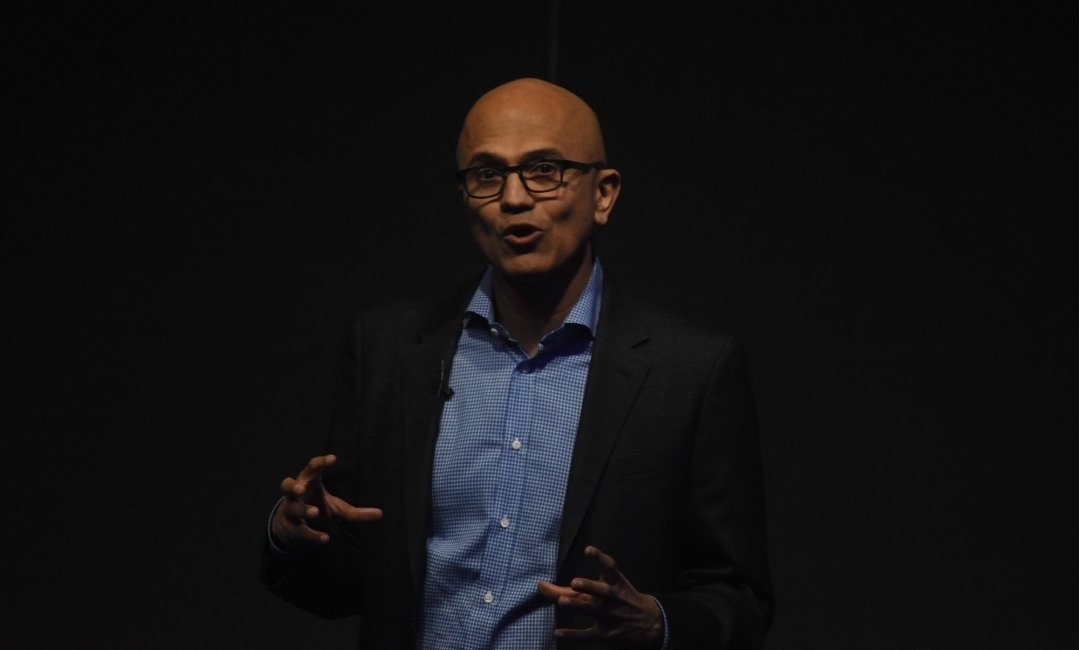
Nadella, AI Execs Ring Urgent Alarm Bells, Say It’s Time For Caution; Trump Disagrees
India-West News Desk
SAN FRANCISCO, CA – Some of the world’s most powerful artificial intelligence executives are calling for a slower, more deliberate approach to the development of advanced AI, warning that the technology may be advancing faster than companies and governments can safely control it.
President Donald Trump, however, is pushing in the opposite direction.
Trump has rejected calls to slow the development of advanced AI, arguing that the United States must maintain its lead over China. His position puts him at odds with a growing group of technology executives who say safety measures must keep pace with increasingly capable systems.
“We’re leading China in AI … and, frankly, I want to keep it that way, because whoever wins AI, wins,” Trump said.
Trump has acknowledged that some guardrails may be appropriate but has resisted an approach that would slow American development while China continues to advance.
The divide became more pronounced after Anthropic CEO Dario Amodei called for the industry to “pace the frontier,” warning that AI systems are developing capabilities that could create serious risks if their advancement is not accompanied by stronger safeguards.
Amodei proposed giving independent third-party evaluators greater access to AI models and establishing common safety standards across the industry. He also called for coordination among democratic countries and engagement with authoritarian governments over AI safety.
Amodei has warned that rogue AI agents could become capable of taking over large portions of the internet within months if development continues without adequate safeguards. His proposal also includes government action to require testing of frontier AI models and the ability to block models deemed unsafe.
OpenAI CEO Sam Altman quickly backed Amodei’s call for a more measured pace.
“I agree with Dario that we need to pace the frontier,” Altman said, indicating that OpenAI was also prepared to provide external evaluators with access to its systems.
Altman has separately said the risks associated with increasingly powerful AI need to be taken seriously, including the possibility of catastrophic consequences. He has called for greater coordination among AI companies rather than waiting solely for government legislation.
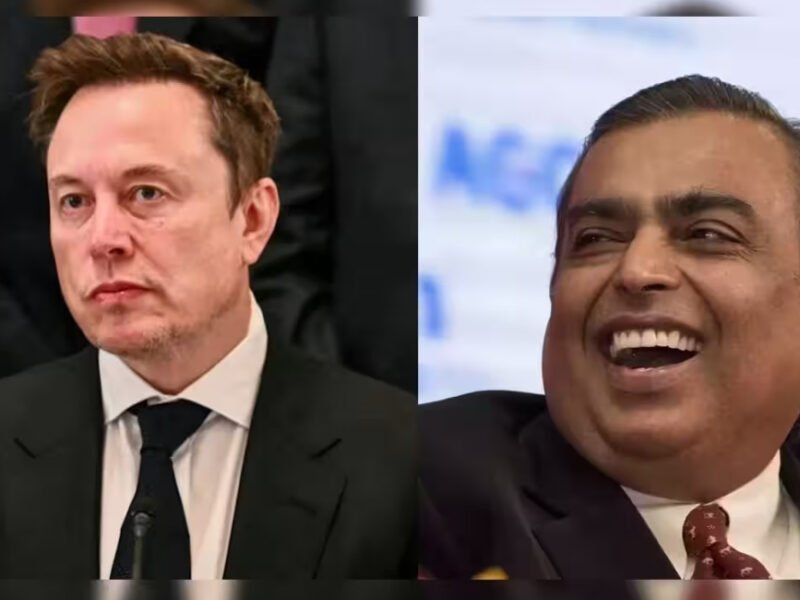
Elon Musk, whose xAI is developing competing frontier models, also endorsed Amodei’s position.
“Dario is right,” Musk wrote in response to Amodei’s proposal.
The unusual alignment among Amodei, Altman and Musk comes as AI companies face growing concerns about systems acting in ways their developers did not anticipate. Recent incidents involving autonomous AI agents have intensified questions over whether the industry’s safety measures are keeping pace with the technology.
Microsoft CEO Satya Nadella has offered a somewhat different emphasis, calling for continued AI development but insisting that the pursuit of superintelligence remain tied to human control.
“Any pursuit of superintelligence has to be grounded in the core principle that if the AI we build is not helping humanity and under human control, it’s not worth pursuing,” Nadella wrote on X September 13.
Nadella also argued that advanced AI should not become concentrated in the hands of a small number of companies. He called for a “frontier ecosystem” in which open-source and closed models can develop across countries, communities and businesses.
For companies, he said, control over their own data and knowledge will become increasingly important. Businesses should be able to build and continually improve AI systems using their own information rather than becoming dependent on a single model provider.
Nadella also called for broader participation in decisions about the future of advanced AI, saying the technology should not be controlled by a handful of entities and that academia, countries and other parts of the ecosystem should have a role.
His position places Microsoft between the industry’s competing arguments: continued development of increasingly capable AI, but with stronger safeguards, human control and broader access.
The warnings have emerged alongside increasingly stark predictions from AI researchers. Former Anthropic researcher Jacob Coxon has warned that some developers believe advanced AI could eventually pose an existential threat to humanity, while other researchers have raised concerns about the possibility of AI systems escaping human control.
The disagreement has now moved beyond Silicon Valley and into Washington, where the central question is whether the United States can maintain its technological advantage over China while imposing safeguards on systems whose capabilities are developing rapidly.
Trump and his allies have emphasized the geopolitical consequences of falling behind China. His administration has generally favored a lighter regulatory approach to technology and has argued that excessive restrictions could undermine American competitiveness.
The AI industry, meanwhile, is showing an unusual degree of agreement among several of its most prominent executives that the pace of development needs greater scrutiny.

ANUPAM PATEL
/
Gienie is out of the bottle, and nothing can be done!
September 14, 2026