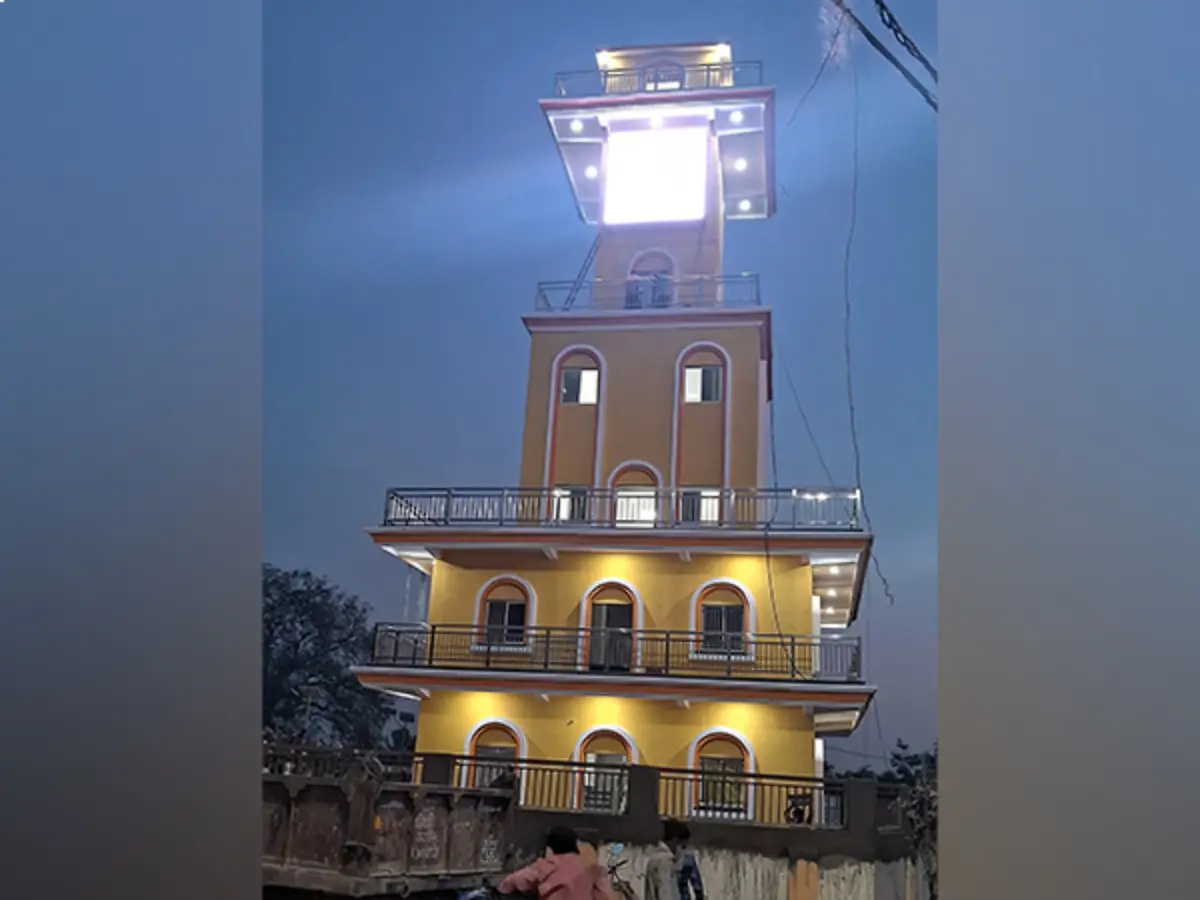
Plans Afoot To Install Vedic Clocks In India
India-West News Desk
NEW DELHI – Across India’s temple towns, a striking new timepiece is quietly reshaping how time is seen and understood. Rooted in astronomy, ritual, and the rhythms of sunrise, the Vedic Clock is emerging as both a technological innovation and a cultural revival, reconnecting public life with one of India’s oldest systems of timekeeping.
First installed in Ujjain, one of Hinduism’s most sacred cities and historically a major center of astronomy, the clock draws from the ancient Indian tradition of ‘kaal ganana’, or reckoning time through celestial movement. Unlike the conventional clock governed by midnight and the Gregorian calendar, the Vedic Clock follows a different logic: the day begins with sunrise and concludes at the next sunrise.
Its creators told the Deccan Chronicle that they see it as more than an instrument to tell the hour. It is an attempt to restore an older relationship with time, one shaped by the sun, moon, planetary movement, and ritual observance.
Designed by the Ujjain-based Vikramaditya Research Chair after extensive study of traditional Sanskrit texts and astronomical calculations, the clock translates Vedic time principles into a digital public display. The project combines heritage scholarship with contemporary engineering, offering a modern interface for an ancient worldview.
Three such clocks, known as ‘Vikramaditya Ghadi’, have already been installed the newspaper reported. More are expected to follow at prominent temple sites nationwide, with plans underway to place them at the country’s Jyotirlinga shrines in the first phase of expansion.
The clock’s display departs sharply from the familiar 24-hour format. It divides the day into 30 ‘muhurtas’, each lasting roughly 48 minutes. Sunrise marks 0:00, and sunset typically falls around the 15th muhurta, creating a time cycle aligned with natural light rather than the stroke of midnight.
Alongside the hour, the clock also presents key elements of the Hindu ‘panchang’, including ‘tithi’ or lunar day, ‘nakshatra’ or constellation, and other calendrical details significant to ritual life. It can also provide information related to festivals, eclipses, and astrological timings. Indian Standard Time and Greenwich Mean Time appear alongside the traditional display, allowing ancient and modern systems to coexist on a single face.
Get breaking news headlines today covering politics, business, entertainment, world affairs, technology, and major developments followed by readers across Canada.