Sam Pitroda Says CJP Has Galvanized Society
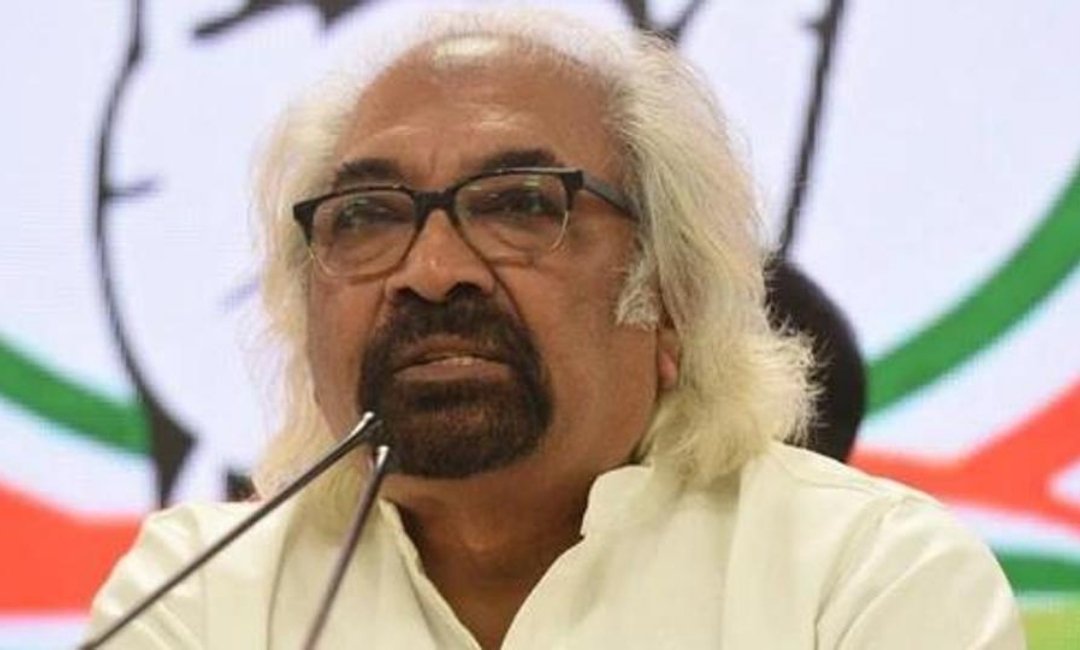
WASHINGTON, DC- Indian Overseas Congress chief Sam Pitroda has praised the young people behind the Cockroach Janta Party (CJP) movement for their courage in speaking up on issues affecting students and society, saying their protests have encouraged others to overcome their fear and raise their voices.
Pitroda said the movement emerged at a time when concerns over examination irregularities, paper leaks, poor educational infrastructure, rising tuition fees, coaching classes and unemployment had come together to galvanize young people.
“A small group of students who felt hurt after someone called them a Cockroach. They came together at the right moment because there were issues with the examination, paper leak, poor infrastructure, bad education, increasing tuition fees, coaching classes and unemployment. All that affects the next generation came together, which really galvanized young people,” he said.
He said the protesters had demonstrated courage and fearlessness, even though some had used language he did not approve of.
“Some people spoke loudly. Some spoke in bad language. Not that I approve of it, but you could see their anger. That opened up a whole lot of opportunities,” Pitroda said.
He added that the movement had given people who were previously afraid to speak up the confidence to express themselves and raised hopes of change within civil society.
“Those who were afraid to speak got courage. Civil society felt, hey, maybe something will happen now,” he said, describing the movement as one of fearless opposition and awakening.
In one of his articles, Pitroda said he had called the movement the “Indian Monsoon”, comparing it with the “Arabic Spring”.
“Who spoke up, took charge – some right, some wrong. But they galvanized society,” he said, crediting young people with bringing wider attention to issues affecting the country.
Pitroda placed the CJP movement within a broader set of concerns, including what he described as attacks on democratic institutions, mistrust in the electoral process, the underrepresentation of minorities, Other Backward Classes (OBCs), Dalits and tribals, and the government’s record on jobs, education and healthcare.
He said many people from disadvantaged communities felt their voices were not being heard and that they were being left out of the benefits of economic growth. He questioned whether rising growth was translating into better wages and purchasing power for ordinary people, arguing that wealth remained concentrated among a small section of society.
On education, Pitroda questioned why so many Indian students continued to go abroad for higher studies despite the country’s expanding educational infrastructure. He said India needed to improve the quality of education and invest more in fields such as liberal arts, philosophy, economics, art, culture, psychology and anthropology.
He also highlighted shortcomings in public schools and primary healthcare, arguing that improvements in infrastructure and economic growth needed to translate into better services for ordinary citizens.
Pitroda said the CJP movement could make a greater contribution by acting as an independent watchdog, irrespective of which party was in power, rather than becoming a political party.
“They have rightfully said that they are not a political party. I also personally believe they would do a much better job for the nation if they become more of a watchdog for anybody, for everybody,” he said.
He cited the need to improve schools, primary healthcare centers and teachers’ training, saying young people could press for better public services regardless of the political party in power.
“They have to really be more of a moral force or pressure group to get things done. And I think there is room for that also in democracy,” he said.
Asked about reports that the CJP was an offshoot of the Aam Aadmi Party (AAP), Pitroda said he did not have enough information to comment. He described the group as young people who were articulate and willing to challenge the system.
“I take them for what they say they are. And as far as I understand, they’re a bunch of young guys, young people, very smart,” he said.
Pitroda also praised YouTuber Dhruv Rathee, saying he had a large following and was entitled to express his views as an Indian citizen.
“I think he’s a bright young man. I think he has a really large following. And it is his right as an Indian citizen to be there and express his views,” he said, adding that he appreciated Rathee’s courage.
On whether Rathee and other young public figures should join the Congress, Pitroda said the decision rested with them and the party. He reiterated that independent voices could make a greater contribution by campaigning for specific causes regardless of which party held power.
On the possibility of a change of government following the protests, Pitroda said the decision ultimately rested with the people of India. He said the judiciary had a role in addressing questions concerning elections and democratic institutions, while clarifying that he was not directing the courts to intervene.
“I personally believe that, at some point, the courts will have to intervene. You need courage in the judiciary system to be able to see the reality. They are the guardians of democracy,” he said.
Clarifying his remarks, Pitroda said judicial intervention was only one option and that it was for the courts to decide what action, if any, was appropriate.(IANS)